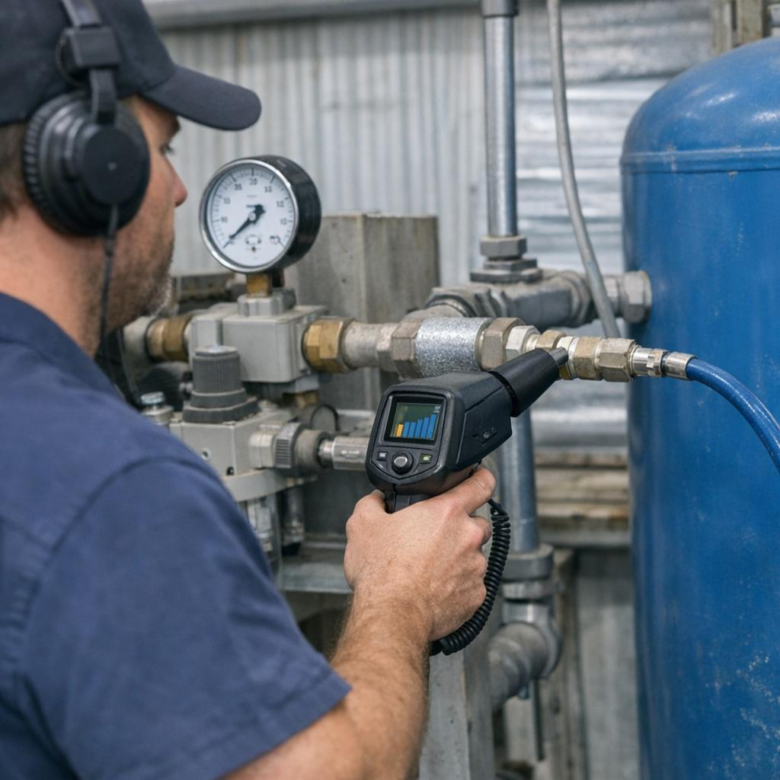
Start with safety, set baseline pressure, scan lines slowly with an ultrasonic detector, tag leak points, record dB levels, repair, then verify savings with a follow-up survey.
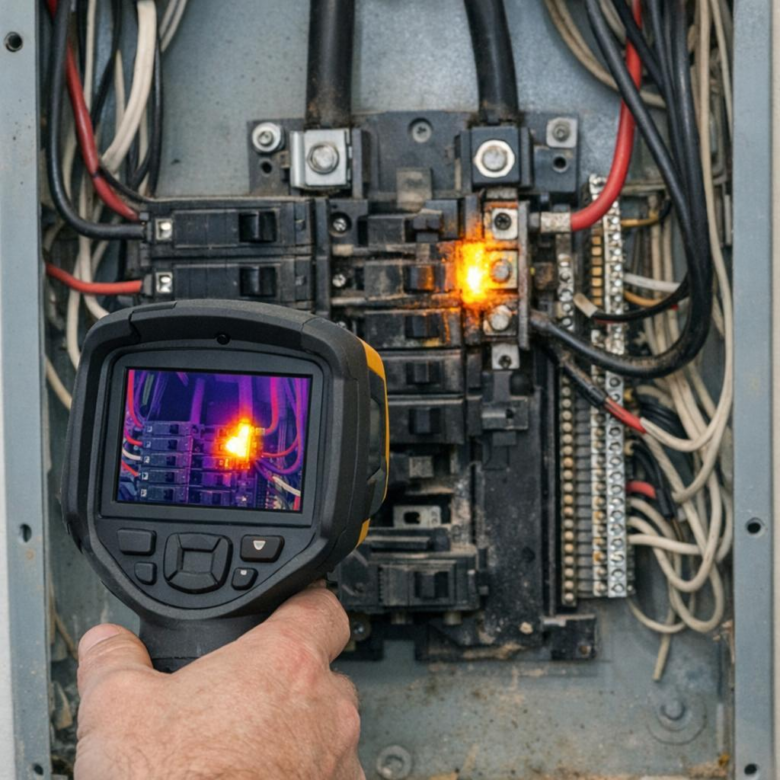
Thermal imaging should be performed under normal load, with panels safely opened, emissivity set, and findings benchmarked against similar phases to flag abnormal heat rise.
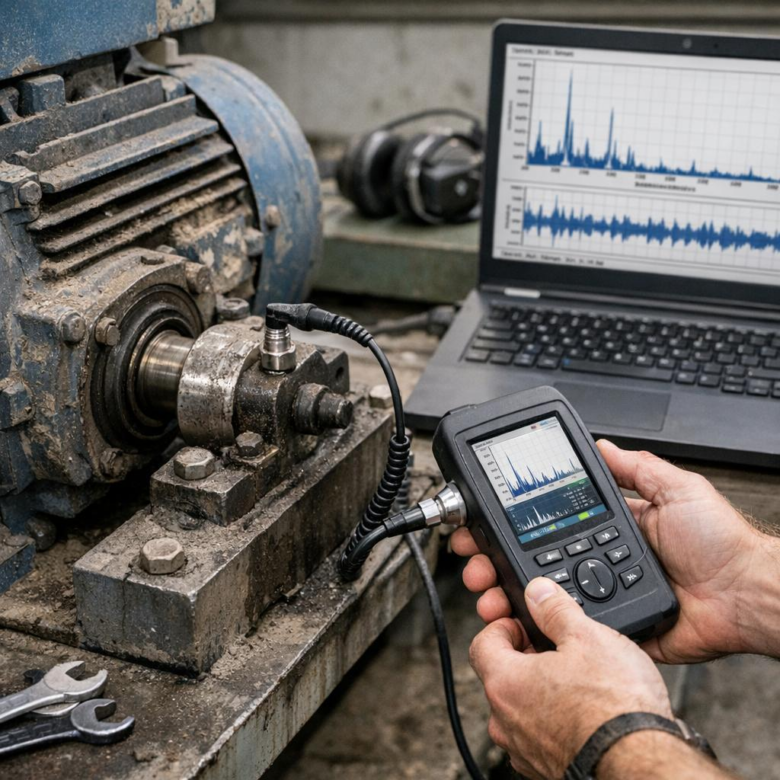
Early bearing failure appears as rising harmonics at BPFO, BPFI, BSF, or FTF, often with sidebands. Compare peaks to baseline trends to separate defects from normal load changes.
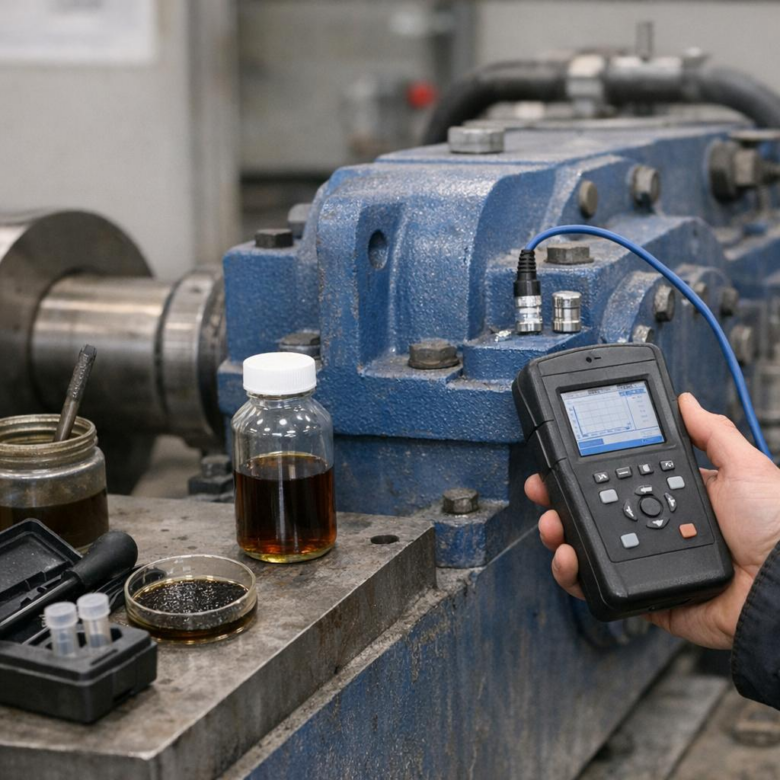
Oil analysis reveals lubricant health and wear debris, while vibration monitoring detects misalignment, imbalance, and bearing faults-together extending gearbox life.
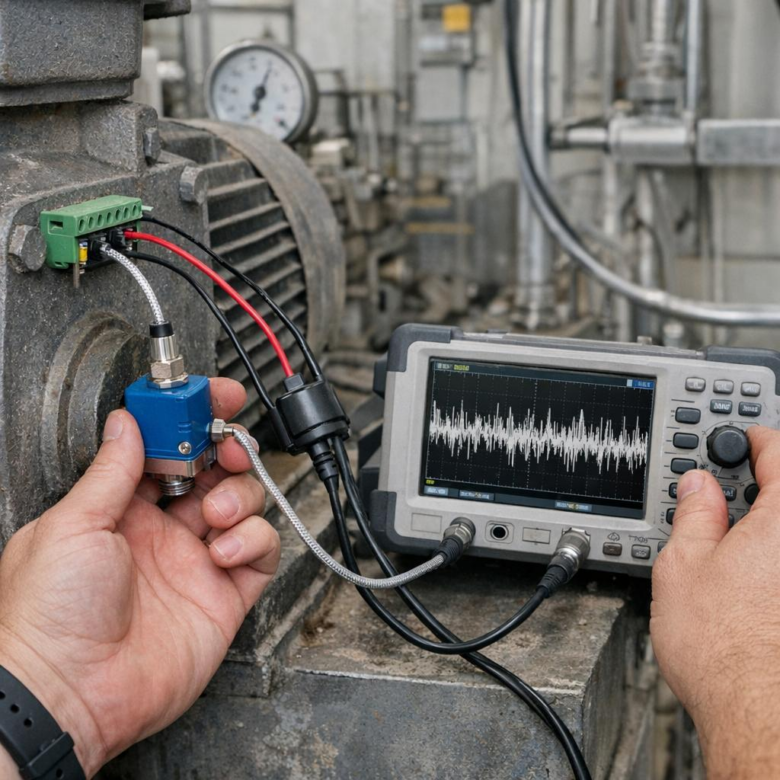
Reduce sensor noise by verifying grounding, shielding cables, tightening mounts, separating power and signal runs, and applying calibrated filtering without masking fault signatures.