What if your coffee recipe isn’t failing-your water is moving the target?
In specialty coffee, extraction consistency depends on more than grind size, dose, and brew time. Minerals, alkalinity, pH, and chlorine can quietly change sweetness, acidity, body, and clarity from one brew to the next.
Stabilizing water chemistry gives you control over how coffee dissolves, buffers acids, and expresses origin character. It turns “almost right” cups into repeatable results across pour-over, espresso, and batch brew.
This guide breaks down the key water variables, how to measure them, and practical ways to build or adjust brewing water for cleaner, more consistent extraction.
What Defines Stable Water Chemistry for Specialty Coffee Extraction
Stable water chemistry means your brew water stays within a predictable range for hardness, alkalinity, pH, and total dissolved solids. For specialty coffee extraction, consistency matters more than chasing a “perfect” number, because sudden shifts can make the same coffee taste sharp, flat, chalky, or muted from one day to the next.
In practical terms, a good starting point is water that has moderate mineral content, controlled alkalinity, and no chlorine odor. Calcium and magnesium help extract sweetness and body, while bicarbonate controls acidity; too much bicarbonate can dull bright coffees, especially washed Ethiopian or Kenyan lots.
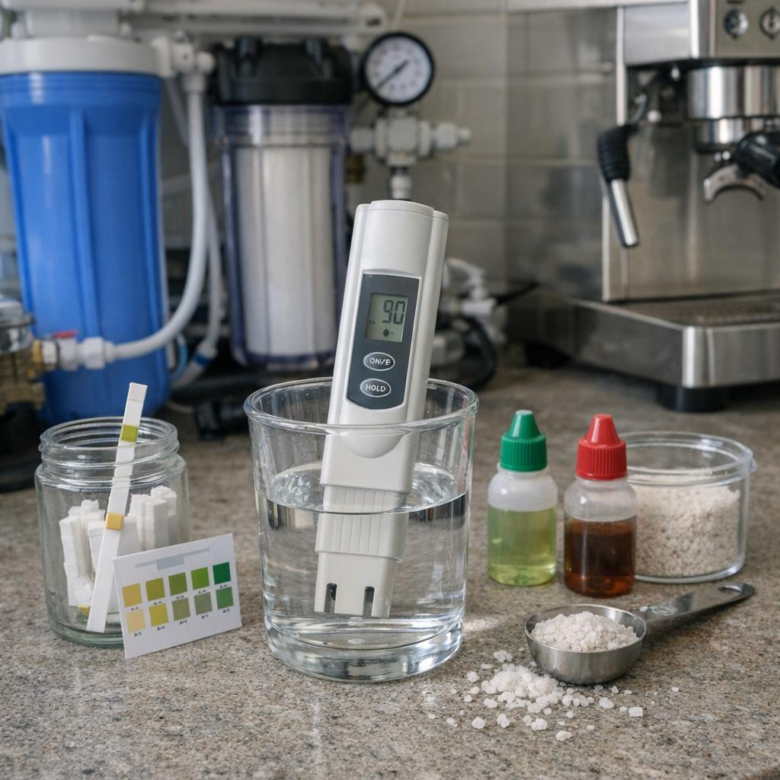
- TDS meter: useful for quick daily checks, but it does not tell you mineral balance.
- Water hardness test kit: helps track scale risk in espresso machines and brewers.
- Reverse osmosis system: often used with remineralization for cafés needing tighter control.
A real-world example: in a café using a commercial espresso machine, water may read the same on a basic TDS meter but still cause different espresso flavor if alkalinity changes after a filter cartridge ages. That is why many shops pair a filtration system with scheduled testing, rather than waiting for scale buildup, sour shots, or rising equipment maintenance cost.
For home brewers, stability can be as simple as using the same filtered water source, checking it monthly with a kit like LaMotte or API, and avoiding random bottled waters with unknown mineral profiles. The goal is repeatable extraction, better flavor clarity, and fewer surprises.
How to Measure and Adjust Hardness, Alkalinity, and pH for Repeatable Brews
For repeatable specialty coffee extraction, measure water before adjusting it. A reliable digital TDS meter, aquarium-style KH/GH test kit, and a calibrated pH meter such as the Apera Instruments PH60 are more useful than guessing from taste alone. Test your source water weekly if you use tap water, because municipal water chemistry can shift after rain, pipe maintenance, or seasonal treatment changes.
Focus on three numbers: general hardness for extraction strength, alkalinity for acidity control, and pH as a final stability check. In practice, many cafés and home brewers get better consistency by starting with low-mineral water, then adding a controlled mineral concentrate instead of trying to “fix” unpredictable tap water. For example, if a washed Ethiopian tastes sharp and thin one week, then flat the next, changing alkalinity is often the hidden cause-not the grinder or roast date.
- Hardness: adjust with magnesium or calcium mineral drops to improve sweetness, body, and clarity.
- Alkalinity: use small bicarbonate additions to buffer acidity without muting the cup.
- pH: confirm stability, but do not chase pH alone; alkalinity usually matters more for flavor control.
Use a simple brew log with water recipe, grinder setting, dose, yield, and tasting notes. If you run a prosumer espresso machine, also consider a water filtration system or reverse osmosis setup with remineralization, since scale prevention can reduce repair cost while keeping extraction predictable.
Common Water Chemistry Mistakes That Cause Inconsistent Coffee Extraction
One of the biggest mistakes is relying only on a TDS meter and assuming “low TDS” means good brewing water. A cheap meter can tell you dissolved solids are present, but it cannot show whether those minerals are calcium, magnesium, bicarbonate, sodium, or something that affects flavor and espresso machine scale differently.
Another common issue is using reverse osmosis water straight from the filter without remineralization. RO water can taste flat, extract coffee unevenly, and in some cases increase corrosion risk inside boilers, valves, and fittings, which can raise long-term espresso machine maintenance cost.
- Ignoring alkalinity and focusing only on hardness
- Changing bottled water brands without checking mineral content
- Using a water softener that removes scale but leaves flavor unbalanced
In cafés, I often see inconsistency after a filter cartridge is replaced but not flushed properly. For example, a barista may dial in a bright Ethiopian espresso in the morning, then struggle with sour shots later because the new water filtration system is still releasing unstable mineral levels.
A better approach is to test brewing water with a reliable kit such as the LaMotte BrewLab or compare readings with a calibrated TDS meter and alkalinity test strips. Track hardness, alkalinity, pH, and filter change dates so you can spot problems before they affect extraction yield, crema, and cup clarity.
Also avoid making multiple changes at once. If you adjust grinder settings, water recipe, and brew temperature on the same day, you will not know whether the issue came from coffee extraction or unstable water chemistry.
The Bottom Line on How to Stabilize Water Chemistry for Consistent Specialty Coffee Extraction
Stable water chemistry turns extraction from guesswork into a controllable variable. The goal is not “perfect” water, but repeatable water that supports the coffee you want to taste.
For daily brewing, test your source water, choose a filtration or remineralization approach, and track changes alongside grind, dose, and yield. If flavors drift without a clear brew-variable cause, water should be your first suspect.
- For consistency: use measured mineral recipes or calibrated filtration.
- For decision-making: adjust water only when it improves clarity, sweetness, and balance in the cup.