Is your grinder revealing the coffee-or quietly rewriting it? At the high end, the choice between conical and flat burrs is less about “better” and more about how each geometry shapes clarity, texture, sweetness, and aromatic separation.
Flat burrs are often prized for precision and flavor definition, especially when chasing transparent, tea-like cups and distinct tasting notes. Conical burrs, by contrast, can bring depth, body, and a more integrated sweetness that many espresso lovers find compelling.
But the real story is more nuanced than burr shape alone. Alignment, burr diameter, geometry, RPM, retention, roast style, and brewing method can all change whether a grinder delivers crystalline clarity or a richer, more blended profile.
This comparison breaks down how conical and flat burrs influence high-end flavor clarity, so you can choose based on the cup you actually want-not just the grinder trend of the moment.
What Conical vs. Flat Burr Geometry Changes in Flavor Clarity
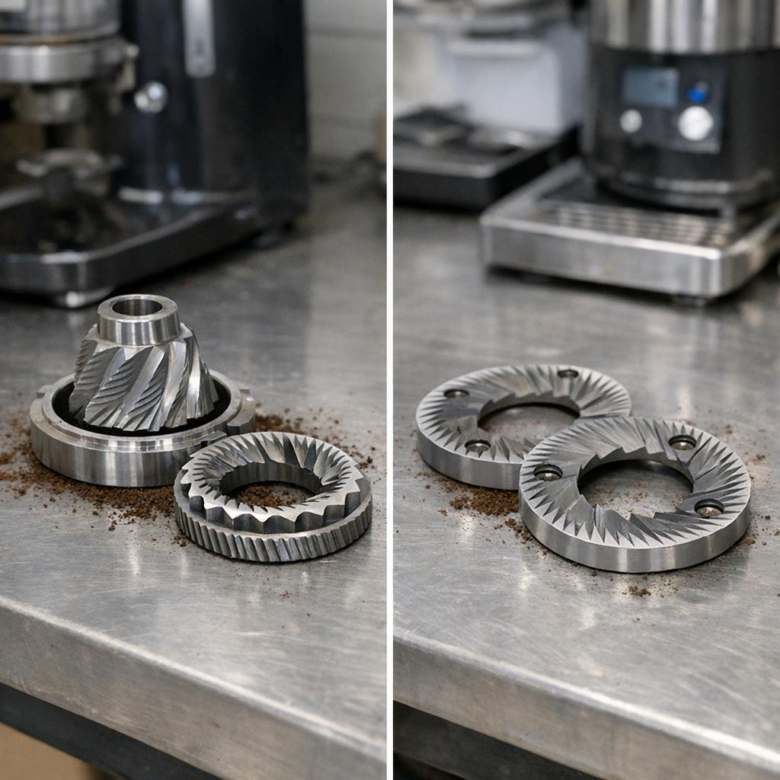
Conical and flat burrs do not just look different; they shape how evenly coffee particles are cut, which directly affects flavor clarity. In practical terms, flat burr grinders often produce a narrower grind distribution, helping separate acidity, sweetness, and finish more clearly in high-end coffee brewing.
Conical burrs usually create more fines, which can add body and texture but may soften delicate tasting notes. That is why a washed Ethiopian coffee might taste more floral and tea-like on a flat burr espresso grinder, while the same coffee on a Niche Zero can feel rounder, sweeter, and heavier in the cup.
- Flat burrs: better for clarity, layered acidity, filter coffee, and modern light roasts.
- Conical burrs: better for body, forgiving espresso, milk drinks, and medium-to-dark roasts.
- Key factor: burr alignment and grinder build quality can matter as much as burr shape.
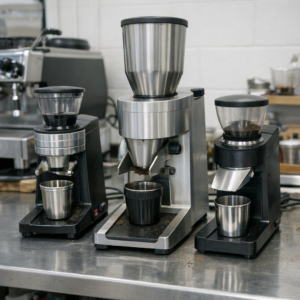
For buyers comparing premium coffee grinder cost, the real question is not “which burr is best?” but “which flavor style do I want every morning?” A flat burr single-dose grinder like a DF64-style platform can highlight origin character, while a conical grinder may make espresso extraction easier and more consistent in a busy home setup.
In real use, clarity also depends on grind size, water quality, brew recipe, and grinder maintenance. Clean burrs, proper calibration, and a consistent scale often unlock more flavor improvement than upgrading burr geometry alone.
How to Dial In Each Burr Type for Cleaner High-End Coffee Extraction
With conical burrs, start by controlling the fines. They often produce a broader particle distribution, so cleaner extraction usually comes from a slightly coarser grind, lower agitation, and a longer ratio-especially for light roast espresso or pour-over coffee.
For example, on a premium espresso grinder like the Niche Zero, I’ll often open the grind a touch if the shot tastes heavy, woody, or muddy, then stretch the yield from 1:2 to around 1:2.3. That small change can separate sweetness from bitterness without making the coffee taste thin.
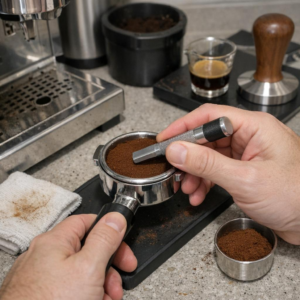
- Conical burrs: use gentler puck prep, avoid excessive WDT, and watch for bitter finish or drying aftertaste.
- Flat burrs: grind finer in smaller steps, monitor channeling, and use precise dose control with a scale like the Acaia Pearl.
- Both: change one variable at a time: grind size, dose, yield, or brew temperature.
Flat burr grinders usually reward tighter control. Because they create a more uniform grind, you can push extraction higher, but the margin for error is smaller; a tiny adjustment can move a shot from bright and transparent to sharp and hollow.
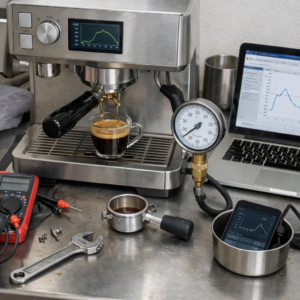
If you use tools like a refractometer or VST CoffeeTools, compare taste against extraction data rather than chasing numbers alone. In real café use, the cleanest high-end flavor profile usually comes from matching burr geometry to the coffee’s roast level, not from copying someone else’s grinder setting.
Common Burr Selection Mistakes That Blur Origin Notes and Cup Definition
One of the most common mistakes is buying burrs for “more clarity” without matching them to the coffee, roast level, and brew method. A high-uniformity flat burr set can make washed Ethiopian coffee taste vivid and layered, but the same setup may make a darker espresso blend feel thin, sharp, or less forgiving.
Another issue is confusing grinder price with flavor precision. I have seen home baristas upgrade to premium espresso grinders, then keep using the same grind setting, dose, and water recipe; the cup gets cleaner, but also exposes channeling, poor puck prep, or an unsuitable basket. Tools like the Fellow Ode Gen 2 or Weber Workshops EG-1 can improve definition, but they will not fix extraction habits.
- Choosing burrs before defining the use case: filter-focused flat burrs may not suit milk-based espresso or traditional Italian-style shots.
- Ignoring seasoning and alignment: new burrs often taste inconsistent until they settle, and misalignment can smear acidity and sweetness.
- Overlooking retention and workflow: retained grounds can mute origin notes, especially when switching between light roast single origins and decaf.
A practical example: if you brew light roast Gesha on a V60, a flat burr grinder with low fines and careful alignment can highlight jasmine, citrus, and tea-like texture. For a syrupy Brazil espresso served with milk, a conical burr grinder may deliver better body, crema, and chocolate depth at a lower equipment cost.
The best burr choice is not the most expensive one. It is the one that supports your daily coffee style, extraction tools, and flavor goals without making the workflow harder than it needs to be.
Final Thoughts on Comparing Conical vs. Flat Burrs for High-End Flavor Profile Clarity
The best burr choice is the one that supports your preferred cup language. If you chase separation, acidity, and transparent tasting notes, flat burrs are usually the better high-end tool. If you value sweetness, body, and a more blended expression, conical burrs remain deeply compelling.
- Choose flat burrs for clarity-focused filter coffee and precise flavor analysis.
- Choose conical burrs for richer texture, forgiving extraction, and comfort-driven espresso.
For most serious buyers, the decision should follow taste preference first, workflow second, and brand reputation last.