Most “zero-retention” grinders are lying to you-especially in a commercial workflow.
Single dosing in a café, roastery, or high-end brew bar demands more than low retention on a spec sheet; it requires fast grind times, repeatable particle distribution, clean purging, and burr geometry that can keep up under pressure.
The best commercial coffee grinders for zero-retention single dosing minimize waste, protect expensive beans, and let you switch between coffees without contaminating the next dose. That matters whether you’re dialing in competition lots, serving rotating espresso menus, or grinding rare filter coffees to order.
This guide focuses on grinders built for serious use-not hobby-grade machines dressed up with a bellows-so you can choose a model that delivers precision, speed, and genuinely low retention where it counts.
What Defines a True Zero-Retention Commercial Single-Dose Coffee Grinder?
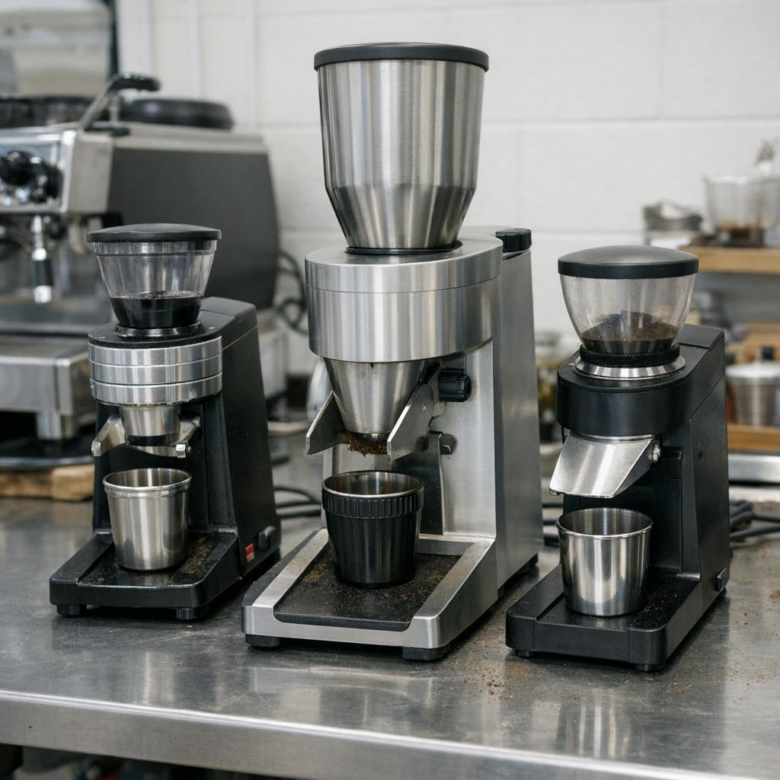
A true zero-retention commercial single-dose coffee grinder is designed to grind one measured dose and release almost all of it into the dosing cup or portafilter, with minimal coffee trapped inside the burr chamber, chute, or declumper. In a busy café, roastery lab, or espresso bar, this matters because retained grounds can cause stale flavors, inaccurate recipes, and wasted specialty coffee.
The key is not just a low retention number on a product page. Look for a grinder with a short grind path, vertical burr orientation, minimal internal ledges, and an effective bellows or purge system. For example, when switching from a washed Ethiopian espresso to a darker house blend, a true single-dose grinder should not require multiple purge shots to remove the previous coffee.
- Low exchange retention: old grounds should not mix heavily with the next dose.
- Consistent output weight: a 20 g input should return very close to 20 g in normal use.
- Easy cleaning access: burrs and chutes should be reachable without complex service tools.
In real use, I’d test any commercial coffee grinder with a precision scale like the Acaia Pearl: weigh the beans in, grind, then weigh the output over several doses. Also check workflow speed, static control, noise, burr alignment, and whether the grinder can handle back-to-back espresso service without overheating. “Zero retention” is really about repeatability, cup quality, and reducing operating cost-not just a marketing label.
How to Evaluate Burr Design, Grind Path, and Workflow for Single Dosing
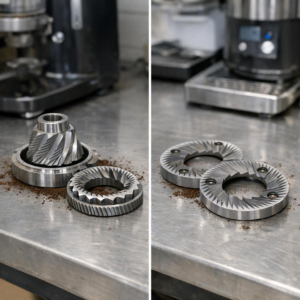
For zero-retention single dosing, burr design matters as much as motor power. Flat burrs usually give more clarity and consistent particle distribution for espresso, while conical burrs can be more forgiving for milk drinks and high-volume café service. If you are comparing a commercial coffee grinder, look beyond burr size and check burr geometry, coating, alignment access, and replacement cost.
The grind path should be short, vertical, and easy to clean. A grinder with a long chute, hidden corners, or aggressive declumper can trap grounds even if the manufacturer claims “low retention.” In real use, I have seen cafés waste time purging between decaf, single-origin espresso, and house blend because the grinder retained enough coffee to affect flavor and extraction consistency.
- Burr access: Can you remove and clean the chamber without losing grind calibration?
- Exit chute: Is it direct, polished, and free of tight bends where grounds collect?
- Workflow: Does it support bellows, dosing cups, portafilter forks, or a scale-based routine?
Use a precision scale such as the Acaia Lunar to test input-versus-output weight over several doses. For example, dose 18.0 grams, grind, then weigh the output before and after a quick bellows pump or knocker tap. If the grinder repeatedly holds back more than a small visible trace, it may create extra coffee waste, higher operating cost, and slower barista workflow during busy service.
Also consider noise, heat buildup, and grind adjustment feel. A zero-retention espresso grinder should make switching recipes practical, not turn every shot into a cleaning project.
Common Mistakes to Avoid When Choosing a Commercial Zero-Retention Grinder
One of the biggest mistakes is assuming “zero retention” means no coffee is ever left inside the grinder. In a busy café or roastery, even premium commercial coffee grinders can hold small amounts in the chute, burr chamber, or declumper, so always check real workflow tests, not just the product page.
Another common issue is buying based on burr size alone. Large flat burrs can improve speed and consistency, but they also increase grinder cost, heat management needs, and maintenance requirements; for a low-volume espresso bar, a well-designed 64mm or 75mm single-dose grinder may outperform an oversized machine that is harder to dial in.
- Ignoring cleaning access: If you need tools for basic burr chamber cleaning, downtime will add up fast.
- Overlooking workflow: Bellows, dosing cups, and portafilter holders should match how your baristas actually work.
- Skipping scale compatibility: Pairing the grinder with an Acaia Lunar or similar coffee scale helps control dose accuracy and reduce waste.
A real-world example: a café switching between espresso, decaf, and single-origin filter coffee may save money with a low-retention single dosing grinder, but only if grind adjustment is fast and repeatable. If baristas spend extra time purging, recalibrating, or brushing out the chute during rush hour, the “benefit” disappears.
Also avoid choosing the cheapest commercial zero-retention grinder without checking replacement burr cost, warranty support, and parts availability. The upfront price matters, but long-term service, consistency, and repair access often decide whether the grinder is profitable in daily use.
The Bottom Line on Best Commercial Coffee Grinders for Zero-Retention Single Dosing
The best zero-retention grinder is the one that protects both workflow and cup quality. For commercial single dosing, prioritize consistent alignment, fast burr access, low exchange retention, and repeatable grind settings over headline burr size alone.
If your bar serves rotating coffees or high-value beans, invest in precision and cleanliness. If speed is the main pressure, choose a model that balances low retention with efficient dosing and minimal staff intervention. The right choice should waste less coffee, reduce dialing-in time, and keep every shot intentional.