What if your industrial microgrid is already one outage away from exposing its biggest weakness?
Solar storage can turn an existing microgrid from a cost-control asset into a resilience engine-but only if it is integrated with precision, not bolted on as an afterthought.
For factories, mines, ports, campuses, and process facilities, the challenge is rarely whether batteries and solar make sense; it is how they interact with legacy generators, switchgear, protection schemes, load priorities, and control systems already in place.
This article breaks down the practical path to integrating solar storage into industrial microgrids without compromising uptime, power quality, safety, or return on investment.
What Solar Storage Adds to an Existing Industrial Microgrid: Reliability, Peak Shaving, and Energy Resilience
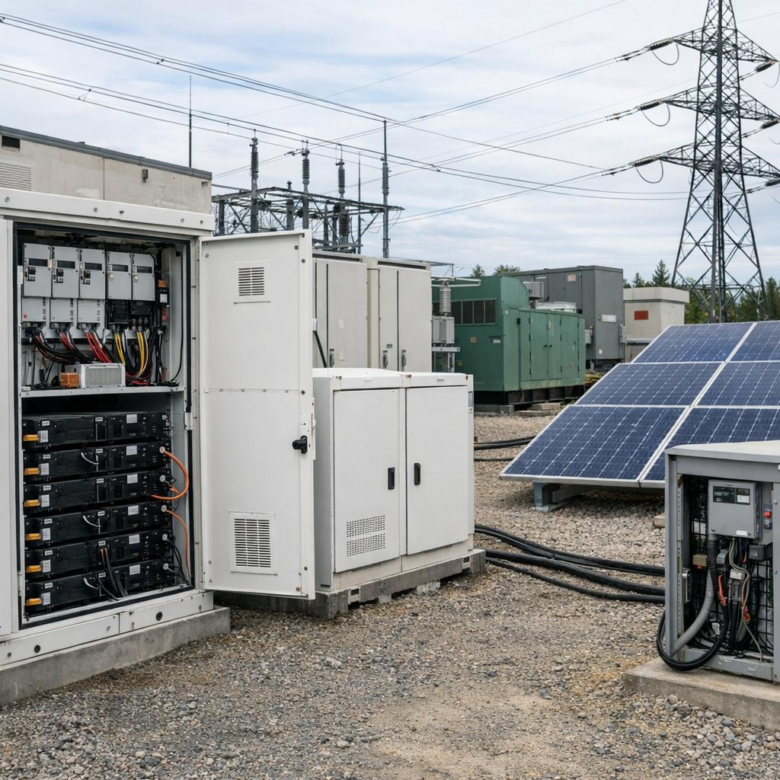
Adding solar storage to an industrial microgrid turns on-site solar from a daytime-only asset into a controllable energy resource. A battery energy storage system can absorb excess PV generation, discharge during expensive utility peak periods, and support critical loads when the grid becomes unstable. In practice, this is often where the strongest business case appears: lower demand charges, better power quality, and fewer production interruptions.
For example, a cold storage facility with rooftop solar may still hit its highest demand charges late afternoon when compressors, lighting, and loading docks run together. With properly sized lithium-ion battery storage and an energy management system, the site can discharge stored solar during that peak window instead of buying high-cost grid power. Tools such as Schneider Electric EcoStruxure, Siemens Spectrum Power, or other industrial EMS platforms help coordinate solar inverters, batteries, generators, and switchgear without relying on manual operator decisions.
- Reliability: Batteries provide fast response during voltage sags, short outages, or generator start-up delays.
- Peak shaving: Stored solar reduces utility demand charges and improves the return on solar investment.
- Energy resilience: Critical equipment can stay online during grid faults, storms, or planned utility interruptions.
One important field lesson: storage should be designed around the facility’s load profile, not just the solar array size. A battery that is too small may look affordable but deliver limited savings, while an oversized system can increase project cost without improving resilience. Reviewing interval meter data, utility tariffs, and critical load priorities before procurement gives the microgrid integration team a much cleaner path to reliable performance.
How to Assess Load Profiles, Battery Sizing, and Control System Compatibility Before Integration
Start with a measured load profile, not a guess. Pull at least 12 months of interval data from the utility meter, SCADA system, or power quality analyzer, then separate base load, peak demand, motor starting loads, and critical process loads. Tools like HOMER Grid, ETAP, or Schneider Electric EcoStruxure can help model solar generation, battery dispatch, demand charges, and backup power scenarios before you spend on equipment.
Battery sizing should match the business case. A plant trying to reduce peak demand charges may need a battery with high power output for short periods, while a cold storage facility may need longer-duration energy storage for outage protection. For example, a factory with large compressors starting at 9 a.m. may benefit more from a battery energy storage system that clips morning demand spikes than from simply adding more solar panels.
- Check peak kW: Identify the highest 15-minute or 30-minute demand intervals and what equipment caused them.
- Check usable kWh: Size storage based on actual runtime needs, depth of discharge, and reserve margin.
- Check power quality: Review voltage dips, harmonics, and frequency events before connecting inverters.
Control system compatibility is where many industrial solar storage projects get delayed. Confirm that the battery management system, solar inverters, microgrid controller, switchgear, and existing PLC or SCADA platform can communicate using protocols such as Modbus TCP, DNP3, IEC 61850, or BACnet. In the field, I often see technically sound battery systems underperform because the controls were treated as an afterthought rather than part of the design from day one.
Common Integration Mistakes to Avoid When Connecting Battery Storage to Industrial Microgrid Operations
One common mistake is treating the battery energy storage system as a simple backup device instead of a controllable grid asset. In an industrial microgrid, the battery must coordinate with solar PV, diesel or gas generators, switchgear, protection relays, and the energy management system. If the control logic is weak, the site may still face peak demand charges, nuisance trips, or poor power quality.
Another issue is undersizing the inverter or ignoring short-duration load spikes from motors, compressors, chillers, and welding equipment. I have seen manufacturing sites install enough battery capacity on paper, but the inverter could not respond fast enough during equipment startup. The result was voltage sag, generator cycling, and unexpected downtime.
- Skipping a detailed load profile and power quality study before battery sizing.
- Failing to integrate the battery controls with SCADA, protective relays, and the existing microgrid controller.
- Using generic charge-discharge settings instead of site-specific demand charge management and tariff optimization.
Industrial facilities should also avoid selecting battery storage based only on upfront cost. Lifecycle cost, thermal management, warranty terms, fire safety compliance, and maintenance access matter just as much as battery price. Tools such as HOMER Grid, ETAP, or vendor EMS platforms can help model operating scenarios before procurement.
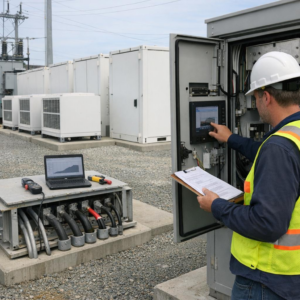
Commissioning is another area where shortcuts become expensive. Test islanding, black start support, generator synchronization, emergency shutdown, cybersecurity access, and remote monitoring before going live. A well-integrated battery storage system should reduce energy costs and improve resilience, not create another operational risk.
Summary of Recommendations
Integrating solar storage into an existing industrial microgrid is ultimately a business-risk decision, not just an energy upgrade. The best outcomes come from matching battery design to operational priorities: peak shaving, resilience, power quality, carbon reduction, or all of the above.
- Start with load data and outage risk, not equipment specifications.
- Prioritize controls compatibility and future expansion.
- Validate ROI against demand charges, downtime costs, and tariff changes.
A well-planned system should make the facility more flexible, less exposed to grid volatility, and better prepared for long-term electrification.