A single dropped CAN frame can turn a healthy battery system into a costly operational fault.
In commercial battery management systems, communication errors are rarely “just network issues”-they can signal wiring degradation, grounding problems, firmware mismatches, noisy power electronics, or failing modules.
Troubleshooting these faults requires more than clearing alarms; it demands a structured approach that connects error codes, bus behavior, physical-layer measurements, and system operating conditions.
This article breaks down how to identify, isolate, and resolve communication failures before they escalate into downtime, warranty claims, or unsafe battery operation.
What Communication Errors Reveal About Commercial BMS Architecture and Data Integrity
Communication errors in a commercial battery management system are rarely “just a network issue.” They often expose weak points in the BMS architecture, such as overloaded CAN bus segments, poor Modbus TCP mapping, noisy RS-485 wiring, or a SCADA integration that was never properly validated during commissioning.
In the field, one common pattern is intermittent cell voltage alarms that disappear after a power cycle. For example, on a battery energy storage system connected through an industrial Ethernet switch, packet captures in Wireshark may show duplicate IP addresses or delayed Modbus responses from the BMS gateway, meaning the monitoring platform is seeing stale or incomplete battery data.
These faults matter because data integrity drives safety decisions, warranty claims, energy management, and predictive maintenance services. If the EMS receives incorrect state-of-charge, temperature, or rack isolation data, it may limit output unnecessarily or, worse, miss an early warning condition.
- Repeated CRC errors can point to cable shielding problems, grounding issues, or excessive bus length.
- Timeouts between master and slave devices may indicate gateway overload or poor polling intervals.
- Mismatched values in SCADA often reveal register mapping errors, not failed battery modules.
A practical troubleshooting step is to compare raw BMS data against the SCADA dashboard and inverter logs at the same timestamp. If the numbers disagree, the issue is likely in data translation, network configuration, or firmware compatibility-not necessarily the battery hardware itself.
How to Diagnose CAN, Modbus, and Ethernet Faults in Battery Management Systems
Start by separating the fault into physical layer, protocol layer, and device configuration. In commercial battery management systems, many “software” alarms are actually caused by poor shielding, loose terminal blocks, incorrect baud rates, or duplicate node IDs after maintenance.
For CAN bus faults, measure resistance between CAN-H and CAN-L with power off; a healthy terminated network is typically near 60 ohms. Use a CAN analyzer such as PCAN-USB or Kvaser Leaf to check error frames, bus load, arbitration issues, and missing heartbeat messages from battery racks, PCS controllers, or energy management systems.
- CAN: verify termination, cable polarity, grounding, baud rate, and node ID conflicts.
- Modbus RTU/TCP: confirm slave address, parity, stop bits, register map, and timeout settings.
- Ethernet: check IP conflicts, VLAN settings, switch logs, packet loss, and firewall rules.
For Modbus diagnostics, tools like Modbus Poll or QModMaster help confirm whether the BMS responds to basic holding register requests. A common real-world example is an inverter reporting “BMS communication lost” because the Modbus register map changed after a firmware update, while the wiring and gateway were perfectly fine.
On Ethernet-based BMS networks, use Wireshark to inspect TCP retries, malformed packets, ARP conflicts, and dropped connections. In the field, I often check managed switch port statistics before replacing expensive communication boards; a high CRC error count usually points to a damaged cable, bad RJ45 connector, or electrical noise from high-current battery equipment.
Common BMS Communication Troubleshooting Mistakes That Lead to Downtime
One of the most expensive mistakes is assuming every BMS communication fault is a software issue. In commercial battery storage, I’ve seen teams replace controllers or pay for remote diagnostic services when the real cause was a loose CAN bus shield drain or incorrect RS-485 termination after routine maintenance.
Another common problem is troubleshooting without a baseline. If you do not have saved Modbus registers, firmware versions, IP settings, baud rates, and battery rack addresses, every fault becomes guesswork. Tools like Modbus Poll, Wireshark, or a CAN bus analyzer can quickly show whether the issue is packet loss, address conflict, timeout errors, or a failed gateway.
- Skipping physical layer checks: Damaged Ethernet cables, poor grounding, and loose terminal blocks often mimic inverter communication faults.
- Changing multiple settings at once: Adjusting baud rate, parity, node ID, and firmware in one visit makes root-cause analysis nearly impossible.
- Ignoring network devices: Industrial switches, cellular routers, and firewalls can block BMS data from reaching SCADA, EMS, or cloud monitoring platforms.
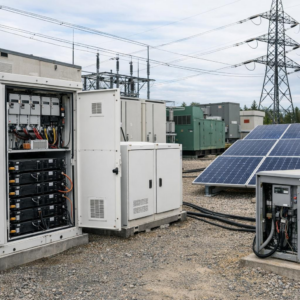
A practical approach is to verify power, cabling, termination resistance, device addressing, and protocol settings before replacing hardware. For example, in a solar-plus-storage site, a battery rack may appear offline in the energy management system simply because two modules share the same CAN ID. That is a low-cost fix, but only if the technician checks communication mapping before ordering replacement parts.
Document every change with timestamps, screenshots, and test readings. This reduces downtime, supports warranty claims, and helps commercial battery maintenance providers avoid repeat service calls.
Expert Verdict on Troubleshooting Communication Errors in Commercial Battery Management Systems
Reliable BMS communication is ultimately a risk-control issue, not just a technical nuisance. When errors appear, the best approach is to verify the physical layer first, confirm protocol settings, review logs, and escalate only when evidence points beyond site-level causes.
For commercial systems, the practical decision is clear: intermittent faults should not be ignored, especially where safety, uptime, or warranty compliance is involved. If communication errors persist after basic checks, involve the battery manufacturer, integrator, or controls specialist before resetting parameters or replacing hardware. A disciplined troubleshooting process protects system availability, battery life, and operational confidence.