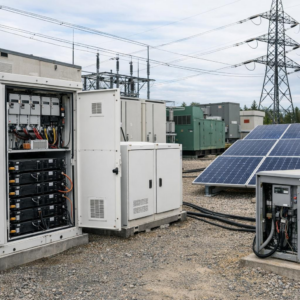
What fails first in a high-capacity energy storage system: the battery cells-or the heat you failed to control?
As storage projects scale into megawatt-hour and gigawatt-hour territory, thermal management becomes a core performance, safety, and profitability factor-not an auxiliary design choice.
The best thermal management systems do more than keep batteries “cool”; they maintain cell-to-cell temperature uniformity, prevent thermal runaway propagation, extend cycle life, and protect revenue under demanding charge and discharge profiles.
This guide breaks down the leading solutions-from liquid cooling and air cooling to phase-change materials and hybrid architectures-so you can identify the right approach for high-capacity energy storage applications.
What Defines an Effective Thermal Management System for High-Capacity Energy Storage?
An effective thermal management system keeps every battery module within a safe, narrow temperature range under real operating conditions-not just in a lab test. For high-capacity energy storage, that means handling peak charge and discharge loads, hot weather, cabinet airflow restrictions, and aging cells without creating thermal imbalance across the battery energy storage system.
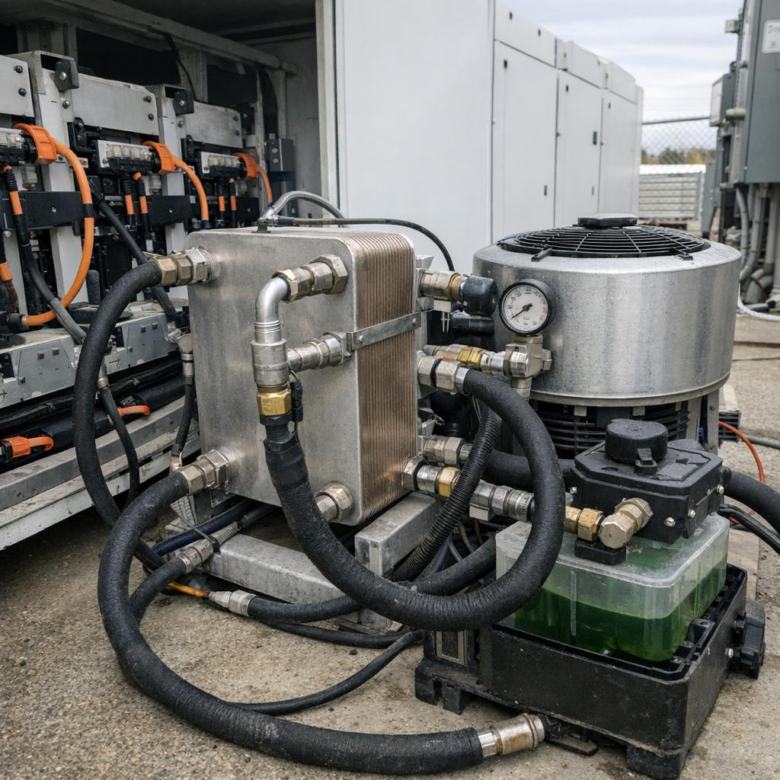
The best systems combine hardware, controls, and monitoring. Liquid cooling plates, precision HVAC units, heat exchangers, insulation, fire suppression integration, and a smart battery management system all need to work together. In utility-scale projects, I’ve seen well-designed liquid cooling reduce hot spots that basic forced-air cooling struggled to control during repeated high-load cycling.
- Temperature uniformity: fewer hot cells means better battery life, lower replacement cost, and safer operation.
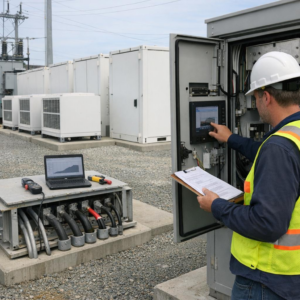
- Real-time monitoring: sensors, alarms, and predictive maintenance software help detect cooling failure before it becomes downtime.
- Serviceability: filters, pumps, coolant lines, and HVAC components should be easy to inspect and replace.
Design validation is also critical. Engineering teams often use tools such as Ansys Fluent or Siemens Simcenter STAR-CCM+ to model airflow, coolant paths, and heat buildup before installation. This helps avoid expensive retrofits after commissioning, especially in containerized battery storage systems where space is tight.
A practical benchmark is simple: the system should protect battery performance while lowering total cost of ownership. If it reduces thermal runaway risk, supports warranty compliance, improves energy efficiency, and gives operators clear data through a reliable monitoring platform, it is doing its job.
How to Match Cooling Technologies to Battery Chemistry, Load Profile, and System Scale
Start with battery chemistry because each cell type tolerates heat differently. Lithium iron phosphate (LFP) is more forgiving and often works well with forced-air cooling in small commercial battery energy storage systems, while NMC batteries usually justify liquid cooling because tighter temperature control reduces degradation risk and supports better thermal runaway prevention.
Next, match the cooling system to the load profile, not just the nameplate capacity. A solar-plus-storage site with one daily discharge may manage with HVAC-assisted air cooling, but a grid services battery doing frequent charge-discharge cycles needs faster heat removal, higher sensor density, and stronger battery management system integration.
- Small C&I systems: air cooling or packaged HVAC is usually lower cost and easier to service.
- High-power or containerized BESS: liquid cooling offers better temperature uniformity and longer cell life.
- Data center UPS or microgrid storage: redundancy matters, so consider N+1 chillers, leak detection, and remote monitoring.
System scale changes the economics. In my experience, owners often focus on upfront cooling equipment cost, but the real decision should include energy consumption, maintenance access, warranty requirements, and replacement downtime. For example, a 20-foot containerized LFP system at a commercial solar site may be fine with aisle-based HVAC, while a utility-scale NMC installation in a hot climate will usually need liquid cooling plates and a dedicated chiller loop.
Before procurement, model worst-case ambient temperature, peak C-rate, and enclosure airflow using tools such as Ansys Fluent or COMSOL Multiphysics. This helps avoid expensive redesigns after commissioning and gives suppliers clearer specifications for pumps, heat exchangers, coolant, controls, and thermal monitoring devices.
Common Thermal Management Mistakes That Reduce Safety, Efficiency, and Battery Lifespan
One of the most expensive mistakes in high-capacity energy storage is treating cooling as an accessory instead of a core safety system. In commercial battery energy storage systems, poor airflow design, undersized HVAC units, or blocked cabinet vents can create temperature differences between battery racks, causing uneven cell aging and higher maintenance costs.
A real-world example is a solar-plus-storage site where the battery container was installed with inadequate clearance around the air intake. The system appeared normal during commissioning, but summer peak loads triggered repeated thermal alarms and forced derating, reducing revenue from energy arbitrage and demand charge management.
Common issues worth checking include:
- Relying only on ambient cooling: This may work in mild climates but fails quickly in hot, dusty, or humid locations.
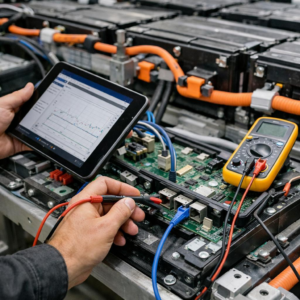
- Ignoring sensor calibration: Inaccurate temperature readings can delay alarms and hide hot spots inside battery modules.
- Skipping preventive maintenance: Dirty filters, weak fans, and degraded coolant reduce system efficiency long before a visible failure occurs.
Operators should review thermal data through platforms such as Schneider Electric EcoStruxure, battery management system dashboards, or SCADA monitoring tools. Look for recurring temperature imbalance, frequent HVAC cycling, and sudden cooling power increases, because these often signal design or maintenance problems before battery capacity loss becomes obvious.
The best thermal management strategy is not always the most expensive one. It is the one matched to battery chemistry, enclosure design, climate, fire safety requirements, and lifecycle cost.
Closing Recommendations
Choosing the best thermal management system for high-capacity energy storage is ultimately a risk, performance, and lifecycle-cost decision-not just a cooling choice. The right solution should match the battery chemistry, power profile, site conditions, safety requirements, and long-term maintenance capabilities.
For most large-scale projects, prioritize systems that offer stable temperature control, fault detection, scalability, and proven field reliability. Avoid selecting based on upfront cost alone; poor thermal design can shorten battery life, reduce usable capacity, and increase safety exposure. The practical takeaway is clear: invest in a thermal management strategy that protects performance today while supporting safer, more predictable operation over the system’s full lifespan.