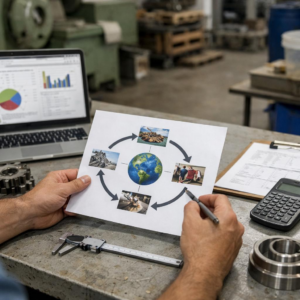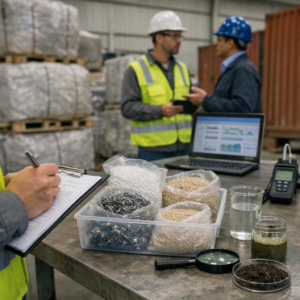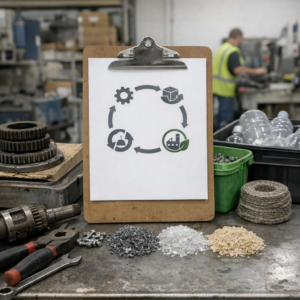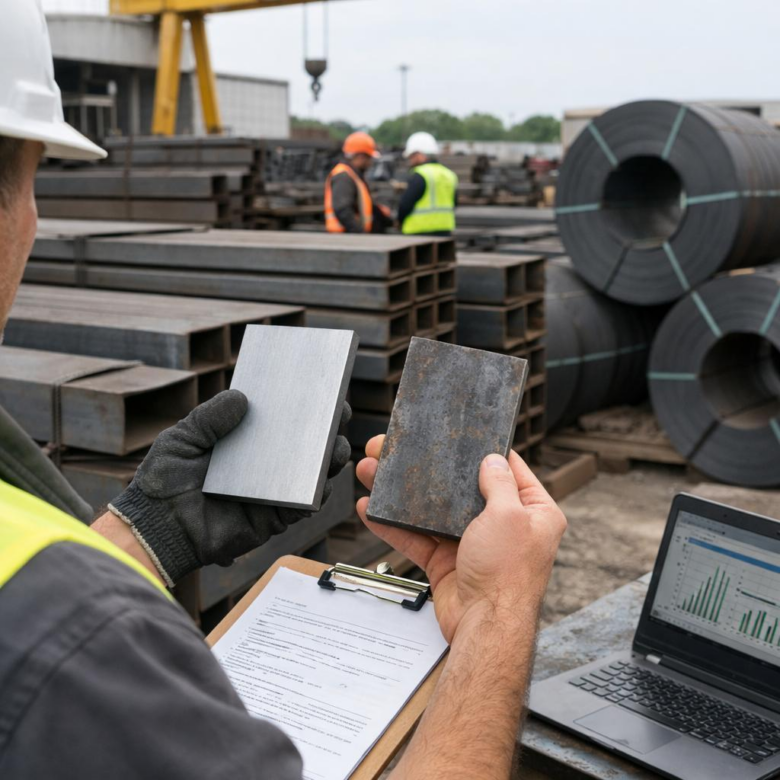
What if the biggest risk in your steel package is no longer price-but carbon?
For large-scale industrial construction, steel decisions now shape more than structural performance; they influence permitting, financing, ESG credibility, and long-term asset value.
Sourcing low-carbon steel requires more than asking for “green” material. Buyers must verify production routes, emissions data, recycled content, mill certifications, logistics impacts, and contract language before tonnage is committed.
This guide explains how to identify credible low-carbon steel suppliers, compare emissions claims, and build procurement strategies that reduce carbon without compromising schedule, quality, or project economics.
What Defines Low-Carbon Steel in Industrial Construction Procurement?
In industrial construction procurement, low-carbon steel is not defined by a marketing label alone. It usually refers to structural steel, plate, rebar, pipe, or fabricated components produced with lower embodied carbon than conventional steel, supported by verified documentation such as Environmental Product Declarations, mill certificates, and product carbon footprint reports.
The key procurement issue is comparability. A beam made through an electric arc furnace using recycled scrap may have a different emissions profile than blast furnace steel, but the buyer still needs to confirm strength grade, coating requirements, weldability, lead time, and total installed cost. Low carbon cannot come at the expense of code compliance.
- Carbon data: request EPDs aligned with ISO 14025 or EN 15804 where available.
- Technical fit: verify ASTM, EN, or project-specific steel specifications before price negotiation.
- Supply risk: check mill capacity, fabrication slots, transport emissions, and substitution options.
A practical example: on a warehouse or data center project, the procurement team may compare wide-flange beams from a regional EAF mill against imported structural steel with a lower unit price. Once freight, carbon reporting, Buy Clean requirements, and schedule risk are included, the local low-carbon option can become the more competitive choice.
Tools such as EC3 help buyers compare embodied carbon across steel products using EPD data, while procurement platforms and construction cost estimating software can track supplier pricing, lead times, and approval status. In practice, the best definition is simple: low-carbon steel is steel that meets the project’s engineering requirements with a verified, lower carbon footprint and a commercially workable supply chain.
How to Evaluate Suppliers, EPDs, and Emissions Data for Low-Carbon Steel Sourcing
Start by asking every steel supplier for a current, third-party verified Environmental Product Declaration, not a marketing sheet. A usable EPD should follow ISO 14025 or EN 15804 and clearly show global warming potential, usually reported as kg CO2e per metric ton of steel for modules A1-A3. If the supplier cannot explain the production route, scrap content, electricity source, and boundary assumptions, treat the emissions claim carefully.
For large industrial construction, compare products in the same category and strength grade. For example, do not compare an EAF-produced rebar EPD with a plate steel EPD from a different standard and assume the lower number wins. I have seen procurement teams choose “low-carbon steel” on paper, then lose much of the benefit through long-distance shipping, extra fabrication waste, or a coating system excluded from the original EPD.
- Check whether the EPD is product-specific, plant-specific, or industry average.
- Confirm A1-A3 emissions, transport assumptions, recycled content, and verification date.
- Use carbon accounting software or an embodied carbon calculator to compare bids consistently.
Tools such as EC3 and One Click LCA are useful for screening EPDs, benchmarking suppliers, and supporting ESG reporting or green building certification documentation. They also help procurement, engineering, and sustainability teams work from the same emissions data instead of relying on spreadsheets that are easy to misread.
Finally, include emissions data requirements directly in the RFQ. Ask bidders to provide price, lead time, mill location, EPD reference, and estimated delivered carbon cost. That makes low-carbon steel sourcing a commercial decision, not just a sustainability preference.
Common Procurement Mistakes That Increase Steel Embodied Carbon and Project Risk
One of the biggest mistakes is buying steel on lowest unit cost without checking the Environmental Product Declaration, mill route, or scrap content. On large industrial construction projects, that can lock the team into higher embodied carbon before engineering has finished optimizing the steel package.
A practical example: a contractor may approve wide-flange beams from a basic oxygen furnace supplier because the bid is cheaper, while a nearby electric arc furnace mill could offer lower-carbon structural steel with shorter transport distance and better EPD documentation. The material price may look higher, but the avoided redesign, reporting delays, and carbon compliance risk can change the real project cost.
- Ignoring EPD quality: Ask for product-specific EPDs, not generic industry averages, and verify they match the steel grade, section type, and production route.
- Separating procurement from carbon accounting: Use platforms like One Click LCA or EC3 to compare embodied carbon alongside price, lead time, and supplier location.
- Ordering too late: Low-carbon steel availability can be limited, especially for plate, rebar, and heavy structural sections. Early supplier engagement reduces premium pricing and schedule risk.
Another common issue is accepting “green steel” claims without contract language. Procurement teams should include carbon limits, documentation requirements, substitution rules, and audit rights in purchase orders. That simple step protects the project if a supplier changes mills, switches feedstock, or delivers material that no longer supports LEED, Buy Clean, or corporate carbon reduction targets.
Wrapping Up: How to Source Low-Carbon Steel for Large-Scale Industrial Construction Insights
Sourcing low-carbon steel at industrial scale is ultimately a procurement discipline, not a marketing exercise. The strongest decisions combine verified emissions data, reliable mill capacity, technical compatibility, and long-term price certainty.
Practical takeaway: prioritize suppliers that can prove carbon performance through transparent documentation, meet project specifications without redesign risk, and support consistent delivery across construction phases. When cost, availability, and embodied-carbon targets conflict, choose the option that protects structural integrity while reducing emissions measurably-not theoretically. Early supplier engagement gives project teams the best leverage to secure cleaner steel without compromising schedule, compliance, or commercial control.