What if the most useful plastics in industry are also the hardest to replace?
From ABS in electronics to PVC in construction and polycarbonate in safety gear, high-impact industrial plastics deliver strength, durability, and low cost-but often carry heavy carbon, toxicity, and end-of-life burdens.
The best sustainable substitutes are not simple “green swaps.” They must match performance, survive real manufacturing conditions, reduce lifecycle impacts, and fit existing supply chains.
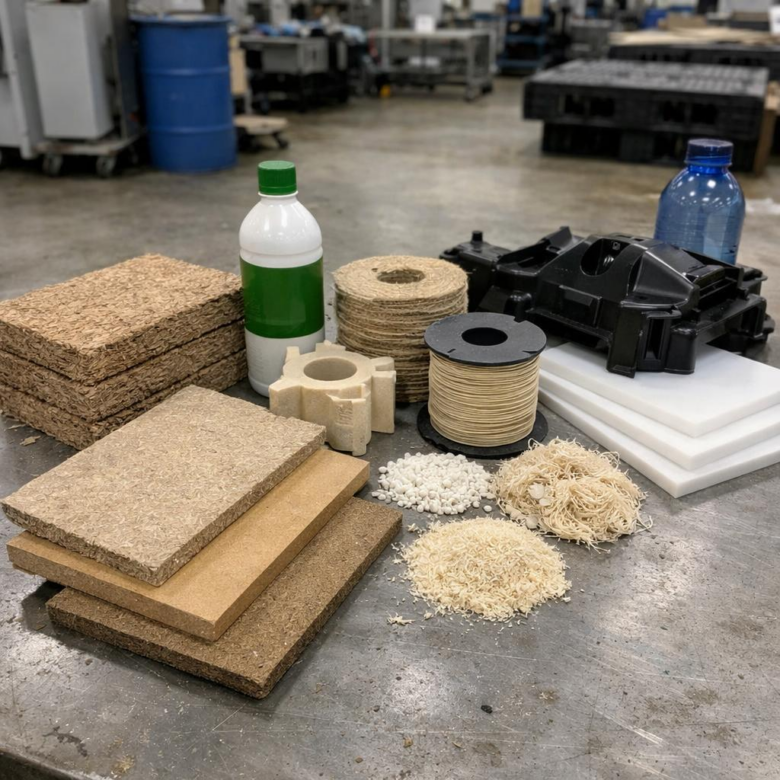
This guide compares the most promising alternatives, including bio-based polymers, recycled engineering plastics, natural fiber composites, and advanced materials designed for circularity.
What Makes Industrial Plastics High-Impact-and When Sustainable Substitutes Are Viable
High-impact industrial plastics earn their place because they survive repeated stress, vibration, moisture, chemicals, and temperature swings without cracking or deforming. Materials such as ABS, polycarbonate, nylon, HDPE, and reinforced polypropylene are used in machine guards, electrical housings, automotive parts, warehouse bins, and medical device components because failure can mean downtime, warranty claims, or safety risks.
The key question is not “Can this plastic be replaced?” but “What performance must the replacement prove?” In real procurement work, I’ve seen recycled HDPE perform well for heavy-duty pallets and storage containers, while bio-based plastics often need tighter testing before use in load-bearing or heat-exposed parts.
- Mechanical load: impact strength, flexural strength, and fatigue resistance matter for moving parts and protective covers.
- Operating environment: UV exposure, oils, cleaning chemicals, and temperature cycles can quickly eliminate weaker substitutes.
- Total cost: tooling, certification, maintenance, and replacement frequency often matter more than raw material price.
Sustainable substitutes become viable when recycled plastic, biocomposites, or bio-based polymers can match the application’s risk level. For example, a manufacturer may replace virgin ABS packaging trays with recycled PET or recycled PP, but still keep polycarbonate for transparent safety shields where optical clarity and impact resistance are critical.
Before switching, run material comparison and lifecycle checks using tools like Granta EduPack or supplier platforms such as UL Prospector. These help compare plastic material properties, compliance data, sustainability claims, and cost implications before committing to new tooling or large-volume purchasing.
How to Match Bio-Based, Recycled, and Compostable Materials to Industrial Performance Requirements
Start with the performance requirement, not the sustainability claim. In industrial applications, the right substitute depends on load, heat exposure, chemical resistance, moisture, dimensional tolerance, and end-of-life infrastructure. A recycled HDPE may be ideal for pallets or cable conduits, while a compostable PLA blend can fail quickly near heat, oils, or continuous outdoor exposure.
A practical screening process should compare materials against the current plastic using real test data, supplier certifications, and total cost of ownership. Tools like Granta EduPack or commercial materials databases can help engineers compare tensile strength, impact resistance, melt flow, carbon footprint, and processing temperature before committing to tooling or supplier contracts.
- Bio-based plastics: Best when you need lower fossil-based content but still require durability, such as bio-PE bottles, caps, and molded packaging components.
- Recycled plastics: Strong fit for high-volume industrial products where appearance variation is acceptable, including crates, sheets, pipes, and protective packaging.
- Compostable materials: Use only where collection and composting systems exist, such as food-service packaging, agricultural films, or disposable liners.
In real projects, the biggest issue is often not material strength but process compatibility. For example, switching an injection-molded polypropylene part to recycled PP may require changes to melt temperature, drying, color control, and quality inspection. Asking for trial batches, safety data sheets, ISO certifications, and lifecycle assessment documentation can prevent expensive production delays and warranty problems.
Common Substitution Mistakes That Increase Cost, Emissions, or Product Failure Risk
One of the most expensive mistakes is swapping a high-impact plastic based only on the resin’s bio-based or recycled content. A recycled PET or bio-PE option may look better on a supplier sheet, but if it needs thicker walls, extra additives, or higher processing temperatures, the total carbon footprint and manufacturing cost can rise quickly.
Another common issue is ignoring performance in the real operating environment. For example, replacing glass-filled nylon in an under-hood automotive bracket with a lower-carbon polymer can fail if heat aging, vibration, and chemical exposure are not tested together. In practice, the “greener” part may lead to warranty claims, redesign costs, and more scrap.
- Skipping lifecycle assessment: Use tools like SimaPro or Sphera GaBi to compare emissions across raw material sourcing, production, transport, use phase, and end-of-life.
- Overlooking processing compatibility: A substitute resin that requires new molds, drying equipment, or slower cycle times can erase material savings.
- Assuming compostable means sustainable: PLA or PHA may be poor choices for durable goods, hot-fill packaging, or regions without industrial composting services.
A practical approach is to test substitutes through pilot runs, accelerated aging, and cost modeling before full conversion. Procurement teams should ask suppliers for environmental product declarations, regulatory compliance documents, and processing data-not just sustainability claims. The best sustainable plastic substitute is the one that reduces impact without creating hidden failures downstream.
The Bottom Line on Best Sustainable Substitutes for High-Impact Industrial Plastics
The best sustainable substitute is not the newest material-it is the one that matches performance, processing, end-of-life options, and real supply conditions. For low-risk applications, recycled or bio-based plastics can deliver immediate impact reductions. For demanding industrial uses, prioritize proven alternatives with verified durability, certifications, and lifecycle data.
- Choose materials based on application requirements, not sustainability claims alone.
- Favor solutions that fit existing manufacturing and recycling systems.
- Validate cost, compliance, and long-term performance before scaling.
A smarter plastics strategy combines substitution, design efficiency, reuse, and responsible sourcing-not a one-material replacement for every problem.