When a hazardous material spills, your team’s first mistake may happen long before the alarm sounds.
A spill response drill exposes whether procedures, equipment, communication, and decision-making will hold up under pressure-or collapse into confusion when seconds matter.
Done well, the drill is more than a compliance exercise. It becomes a controlled stress test that reveals gaps in training, PPE readiness, containment strategy, evacuation routes, and incident command.
This guide walks you through how to plan, run, evaluate, and improve a hazardous material spill response drill so your organization is prepared for the real event, not just the audit.
What a Hazardous Material Spill Response Drill Must Test Before an Emergency Occurs
A hazardous material spill response drill should test more than whether employees know where the spill kit is stored. It must confirm that people can recognize the chemical hazard, activate the emergency response plan, use the right personal protective equipment, and control the area before exposure spreads.
Start by testing notification and decision-making. For example, if a forklift punctures a drum of solvent in a warehouse, the drill should show whether workers know when to evacuate, who contacts the EHS manager, and whether the incident requires outside hazardous waste cleanup services or internal spill containment only.
- Response time from spill discovery to area isolation
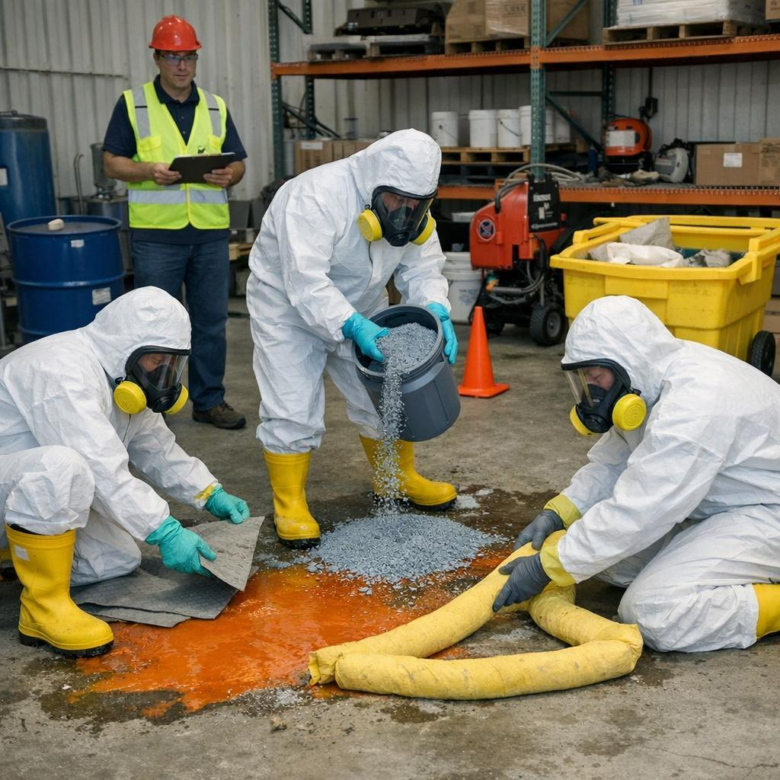
- Correct use of SDS information, PPE, absorbents, and spill containment kits
- Communication with security, maintenance, emergency responders, and management
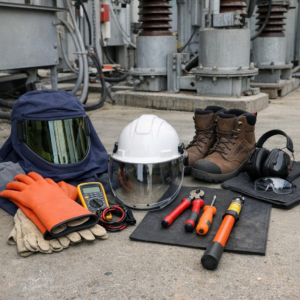
The drill should also test equipment readiness. Check whether absorbent socks, neutralizers, drain covers, chemical-resistant gloves, and gas detection devices are available, labeled, and usable. Tools like the Dräger X-am 8000 can help teams practice air monitoring decisions during vapor-release scenarios.
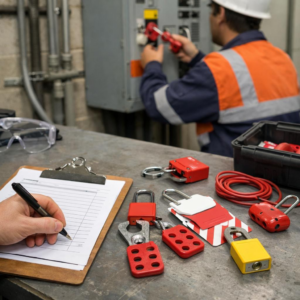
Documentation matters too. A strong drill verifies that incident reports, OSHA compliance records, HAZWOPER training logs, and corrective actions can be completed without confusion. In real facilities, I’ve seen response delays happen not because employees lacked training, but because no one knew who had authority to stop operations or call a remediation contractor.
The best test is simple: can the team protect people, contain the spill, prevent environmental release, and document the event under pressure? If not, the drill has done its job by exposing the gap before a real emergency makes it expensive.
How to Plan and Run a Realistic Hazmat Spill Drill Step by Step
Start by choosing a believable scenario based on your actual risk profile, not a generic “chemical spill.” For example, a warehouse that stores corrosive cleaners could simulate a leaking 55-gallon drum near a floor drain, testing containment, evacuation, spill kit access, and hazardous waste disposal procedures.
Write a short drill plan that defines the chemical involved, location, weather or ventilation conditions, expected response time, and safety boundaries. Review the Safety Data Sheet, required PPE, spill containment supplies, and emergency communication steps before anyone enters the drill area.
- Assign roles: incident commander, first responders, evacuation wardens, observer, and recorder.
- Use real equipment: spill berms, absorbent pads, neutralizers, labels, two-way radios, and gas detection monitors.
- Track performance with a checklist inside SafetyCulture or another emergency response software platform.
During the drill, make the scene realistic but controlled. Place a labeled training container, mark the “spill” with water or non-hazardous dye, and require employees to identify the substance, isolate the area, notify supervisors, and decide whether in-house response is allowed or if a licensed hazmat cleanup contractor is needed.
One practical insight: the biggest failures are often simple ones, such as blocked spill kits, outdated SDS binders, or employees not knowing who can authorize emergency services. Have observers record these gaps without interrupting the exercise unless there is an actual safety risk.
Afterward, hold a quick debrief and document corrective actions for OSHA compliance, insurance audits, and environmental risk management. Update training records, replace used supplies, revise response procedures, and estimate potential cleanup cost savings from fixing weak points before a real incident happens.
Common Hazmat Drill Mistakes That Undermine Response Readiness
One of the biggest mistakes is treating the drill like a paperwork exercise instead of a live operational test. If employees know the exact scenario in advance, the response may look smooth on paper but fail when a real chemical spill happens near a loading dock, storage room, or production line.
Another common issue is testing only the cleanup team while ignoring supervisors, security, maintenance, and front-desk staff. In a real incident, the first person who notices a leaking drum may not be hazmat-trained, so the drill should verify alarm activation, evacuation routes, emergency communication, and spill response kit access.
- Using expired absorbents, damaged PPE, or incomplete spill kits during the drill
- Failing to test gas detection monitors, eyewash stations, and ventilation controls
- Skipping documentation in safety compliance software such as SafetyCulture
A practical example: in one warehouse drill, responders arrived quickly but lost several minutes because the SDS binder was stored in a locked office after hours. That small detail exposed a serious gap in chemical safety compliance and showed why digital SDS management, clear labeling, and accessible emergency response equipment matter.
Many facilities also forget to review the cost impact of poor readiness. Delayed containment can increase hazardous waste disposal fees, damage inventory, trigger regulatory reporting, and raise insurance concerns. After every drill, update the emergency response plan, retrain affected employees, and assign owners for corrective actions-not just “discuss improvements” in a meeting.
Wrapping Up: How to Conduct a Hazardous Material Spill Response Drill Insights
A hazardous material spill response drill is most valuable when it drives better decisions under pressure. Treat each exercise as a test of readiness, not a checkbox for compliance. The key takeaway is simple: crews should know when to act, when to isolate, when to escalate, and when to wait for specialized support.
If the drill reveals confusion, delays, or unsafe improvisation, revise the plan before the next incident does it for you. Strong spill response depends on clear roles, realistic scenarios, usable equipment, and honest after-action review. A well-run drill turns uncertainty into disciplined action.