One missed anchor point can turn routine maintenance into a fatal incident.
High-altitude work leaves no room for improvised safety measures, outdated equipment, or unclear rescue plans. A fall protection system must be engineered, inspected, and used as a complete life-safety strategy.
Whether crews are servicing towers, rooftops, cranes, tanks, or industrial structures, the goal is the same: prevent falls, limit fall distance, and ensure rapid recovery if a fall occurs.
This guide explains how to implement fall protection systems that meet real jobsite conditions-not just compliance checklists.
What Defines a Compliant Fall Protection System for High-Altitude Maintenance?
A compliant fall protection system is not just a harness and lanyard. For high-altitude maintenance, it must be designed around the work location, fall clearance, anchor strength, rescue access, and the specific tasks being performed, whether that is servicing rooftop HVAC units, inspecting telecom towers, or cleaning industrial facades.
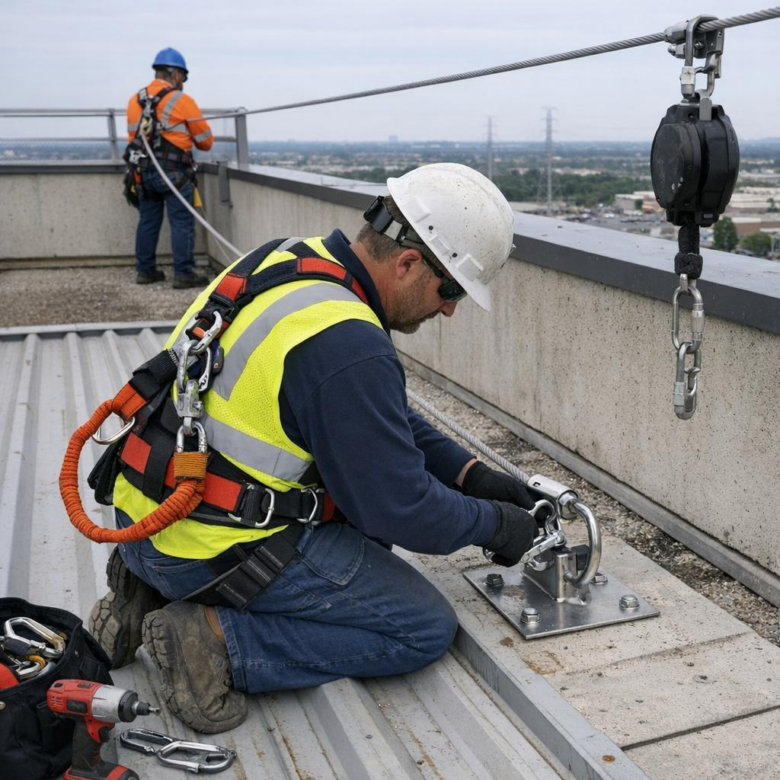
In the U.S., compliance usually starts with OSHA fall protection requirements and is strengthened by ANSI Z359 standards for fall arrest equipment. A practical system should include certified anchor points, full-body harnesses, self-retracting lifelines, guardrails where possible, and a written rescue plan that workers actually understand.
- Use rated equipment from trusted manufacturers such as 3M DBI-SALA or Honeywell Miller.
- Document inspections with a platform like SafetyCulture to support audits and insurance reviews.
- Verify fall clearance before work begins, especially around roof edges, ladders, and suspended platforms.
One common mistake I see on commercial rooftops is installing anchor points without checking the swing-fall hazard. For example, a technician tied off near the center of a roof may still strike a parapet or lower structure if the lifeline is too long or positioned poorly.
Compliance also depends on training, equipment maintenance, and site-specific procedures. The upfront installation cost of a professional fall arrest system is far less painful than a failed inspection, work stoppage, injury claim, or legal liability after an incident.
How to Select, Install, and Inspect Anchorage, Harness, and Lifeline Systems
Start by matching the fall protection equipment to the actual work task, not just the height. A rooftop HVAC service job may need a permanent roof anchor and self-retracting lifeline, while tower maintenance often requires a full-body harness, vertical lifeline, rope grab, and compatible connectors rated for the work environment.
Anchorage points should be selected by a qualified person and installed according to manufacturer instructions, OSHA fall protection requirements, and the building structure’s capacity. In practice, I’ve seen the biggest failures come from “convenient” tie-off points, such as guardrails, pipe supports, or unverified steel members that were never designed for fall arrest loads.
- Anchorage: verify rating, substrate condition, corrosion, fasteners, and placement to reduce swing fall risk.
- Harness: check webbing, stitching, D-rings, buckles, labels, fit, and comfort for long-duration maintenance work.
- Lifeline system: inspect cable, rope, energy absorber, snap hooks, tension, clearance, and compatibility with the harness.
Use inspection software or asset tracking tools such as SafetyCulture to document serial numbers, inspection dates, photos, corrective actions, and replacement costs. This is especially useful for facility managers handling multiple roof access points, telecom sites, or industrial maintenance contracts where missed inspections can create liability and insurance problems.
Before each use, workers should perform a hands-on pre-use inspection and remove damaged gear from service immediately. After any fall event, the anchorage, harness, lanyard, and lifeline must be taken out of service until reviewed by a competent person or the manufacturer.
Common Fall Protection Implementation Mistakes That Increase Maintenance Risk
One of the biggest mistakes is treating fall protection as a one-time equipment purchase instead of a working safety system. A roof anchor, horizontal lifeline, or self-retracting lifeline may meet the specification on paper, but if it blocks access to HVAC units, façade equipment, or telecom hardware, technicians will work around it. That is where risk increases fast.
In real maintenance environments, I often see problems caused by poor layout planning. For example, placing fixed anchors too far from rooftop air-handling units can force workers to disconnect and reconnect multiple times, creating unnecessary fall exposure. A better approach is to map actual service routes before installation using tools like AutoCAD or site-specific roof safety inspection software.
- Choosing the wrong fall arrest equipment: A cheap lanyard may not provide enough clearance on low roofs or platforms, where a self-retracting lifeline is safer.
- Skipping documented inspections: Harnesses, anchors, guardrails, and lifelines need routine inspection records for compliance, insurance claims, and OSHA audit readiness.
- Ignoring rescue planning: A worker suspended after a fall needs a practical rescue procedure, not just a written policy stored in the office.
Another common issue is installing systems without considering future maintenance costs. Stainless steel hardware, certified anchor testing, and professional fall protection services may cost more upfront, but they usually reduce downtime, repairs, and liability exposure. The safest system is not always the most expensive one; it is the one workers can use correctly every time.
Summary of Recommendations
Effective fall protection is ultimately a management decision, not just an equipment choice. The safest programs begin with a clear assessment of work conditions, then match anchors, lifelines, guardrails, harnesses, training, and rescue plans to the actual risks at height.
For high-altitude maintenance, prioritize systems that are compliant, easy to use, regularly inspected, and supported by documented rescue procedures. If the task, structure, or exposure changes, reassess before work begins. The right decision is the one that keeps workers productive while ensuring a fall is prevented-or, if it occurs, controlled and recoverable.