Is your bottomless portafilter exposing a bad shot-or a bad habit?
Channeling is the moment espresso stops being forgiving: thin jets, uneven flow, sour bitterness, and messy sprays reveal exactly where water found the easiest path through your puck.
The good news is that channeling is rarely random. It usually comes down to grind size, puck prep, dose, distribution, tamping, basket fit, or machine pressure-and each one leaves clues you can diagnose.
In this guide, you’ll learn how to read what your bottomless portafilter is showing you, fix the root cause, and pull cleaner, sweeter, more consistent shots.
What Channeling Looks Like in a Bottomless Portafilter-and Why It Ruins Espresso Extraction
Channeling in a bottomless portafilter is easy to spot because there is no spout hiding the problem. Instead of a smooth, centered flow that forms into one steady stream, you may see thin jets spraying sideways, coffee blonding too early, or extraction starting from one edge of the basket before the rest of the puck is saturated.
A common real-world example: you lock in the portafilter, start the shot, and within five seconds a sharp spray hits the drip tray or even the side of your espresso machine. That usually means water has found a weak path through the coffee puck, often caused by clumps, uneven tamping, poor grinder consistency, or gaps around the basket wall.
- Side sprays: usually indicate cracks or voids in the puck.
- Fast blonding: suggests water is bypassing dense areas and over-extracting a small section.
- Uneven dripping: often points to poor distribution before tamping.
The problem is not just messy countertops. Channeling ruins espresso extraction because some coffee grounds are over-extracted and bitter, while others are under-extracted and sour, leaving the shot thin, harsh, and unbalanced even if your brew ratio looks correct.
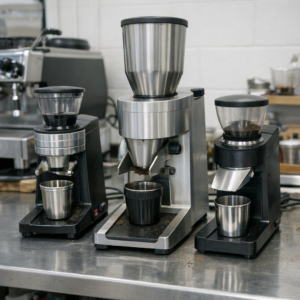
In daily use, I see channeling most often when people upgrade to a bottomless portafilter before improving puck preparation. A good burr grinder, a precision basket, and a simple WDT tool can make a bigger difference than buying a more expensive espresso machine, because they help water move evenly through the entire puck.
How to Fix Channeling with Better Grind Size, Distribution, WDT, and Tamping Technique
If your bottomless portafilter sprays from one side or forms fast blond streaks, start with grind size. Channeling often happens when the espresso grind is too coarse, too fine, or inconsistent, causing water to punch through weak spots instead of flowing evenly through the coffee puck.
A good rule is to adjust one variable at a time. For example, if an 18g dose runs 36g out in 18 seconds with spurting, grind finer on a quality espresso grinder like the Baratza Sette 270 or Eureka Mignon Specialita, then test again before changing dose or tamp pressure.
- Grind size: Aim for a steady extraction around 25-30 seconds, but judge by taste and flow, not time alone.
- Distribution: Level the grounds before tamping so one side of the basket is not denser than the other.
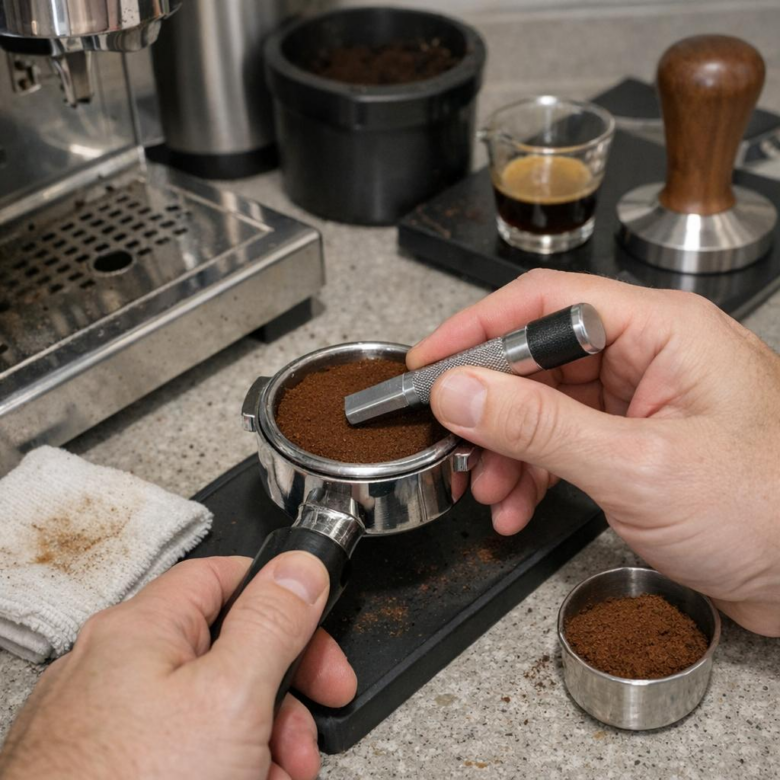
- WDT: Use a thin-needle WDT tool to break clumps, especially with fluffy or static-heavy grounds.
In real use, I often see channeling improve immediately when clumps are removed before tamping. A simple WDT tool can perform better than an expensive distribution tool if the problem is uneven density inside the puck, not just an uneven surface.
After distribution, tamp straight down with firm, consistent pressure. You do not need to crush the puck; you need a level tamp. If the tamper tilts, water will usually find the lower-density edge first, which is exactly what a bottomless portafilter exposes.
For best results, pair a precision espresso basket, a well-fitted tamper, and a consistent grinder setting. These small equipment upgrades can reduce waste, improve shot consistency, and make espresso troubleshooting much easier at home or in a café setup.
Common Bottomless Portafilter Mistakes That Cause Spraying, Spurting, and Uneven Flow
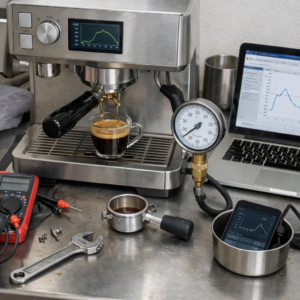
Most spraying from a bottomless portafilter is not an espresso machine defect; it usually starts with puck preparation. If the coffee bed has weak spots, water will find them fast, creating side jets, blond streaks, or one-sided flow before the shot even reaches proper pressure.
A common mistake is grinding too fine to “fix” a fast shot, then tamping harder to compensate. On many home espresso setups, especially with entry-level grinders, this creates clumps and uneven resistance rather than better extraction.
- Uneven distribution: Use a WDT tool such as the Normcore WDT Tool to break clumps before tamping.
- Poor basket dosing: Overfilling a precision basket can press coffee into the shower screen and fracture the puck.
- Angled tamping: A tilted puck often causes espresso to rush from one edge first.
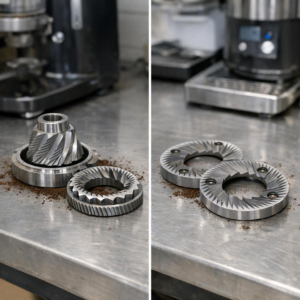
In real use, I often see spraying when someone upgrades to a bottomless portafilter but keeps using the same cheap blade-style grinder or inconsistent espresso grinder settings. The portafilter is simply exposing problems that a spouted portafilter used to hide.
Also check your puck screen, group head gasket, and basket size before blaming technique. A worn gasket, dirty shower screen, or low-quality filter basket can cause uneven flow even with good tamping and distribution.
For a cleaner shot, pair a consistent burr coffee grinder with a calibrated tamper, proper dose scale, and a basket matched to your espresso machine. These espresso accessories cost less than unnecessary machine repairs and usually solve the issue faster.
Summary of Recommendations
Channeling is not a portafilter problem-it is a puck preparation signal. A bottomless portafilter simply makes weak points visible, so treat every spray, split stream, or fast blonding shot as useful feedback rather than failure.
- If defects are random, improve distribution, tamp consistency, and puck prep.
- If shots run too fast overall, grind finer before changing dose.
- If channeling persists with good prep, check basket quality, grinder consistency, and coffee freshness.
The best decision is to change one variable at a time, taste the result, and let the extraction-not appearance alone-guide your next adjustment.