What if your most powerful kitchen tool is a controlled microbial ecosystem? Fermentation is not guesswork or rustic nostalgia-it is applied food science with direct consequences for flavor, safety, texture, and consistency.
In professional kitchens, fermentation can turn surplus into signature ingredients, deepen umami without additives, and create acidity, aroma, and complexity that cooking alone cannot reproduce.
But reliable results depend on understanding what bacteria, yeasts, enzymes, salt, temperature, oxygen, and time are actually doing inside the product.
This article breaks down the science of fermentation for chefs and kitchen teams who need repeatable processes, safer workflows, and flavors precise enough for service.
Fermentation Science Fundamentals: Microbes, Enzymes, Acids, and Flavor Development
In a professional kitchen, fermentation is controlled microbial work, not guesswork. Yeasts, lactic acid bacteria, molds, and enzymes convert sugars, proteins, and fats into acids, alcohol, gases, and aroma compounds that change texture, shelf life, and flavor.
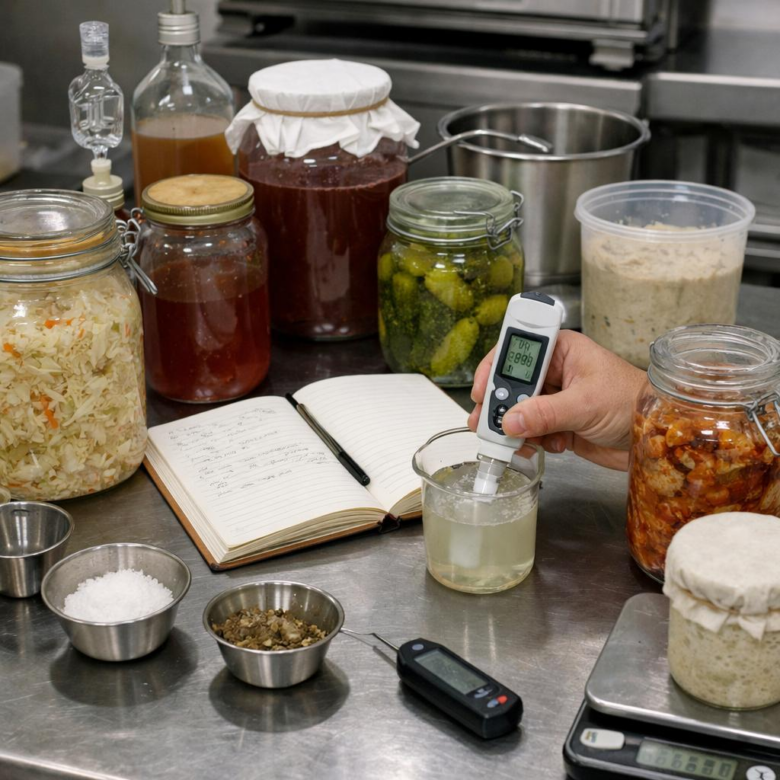
Lactic acid bacteria are central to foods like sauerkraut, kimchi, yogurt, and sourdough because they lower pH and create a cleaner, sharper taste. A reliable digital pH meter, such as the Hanna Instruments pH Tester, is a practical food safety tool because flavor alone cannot confirm that a ferment is progressing safely.
- Microbes: Drive fermentation by consuming available nutrients.
- Enzymes: Break down starches, proteins, and fats into flavorful smaller compounds.
- Acids: Improve preservation, balance richness, and shape final taste.
A real-world example is sourdough production. If the dough is too cold, fermentation slows and the bread tastes flat; if it is too warm, acidity can become harsh and gluten structure may weaken. That is why many bakeries use temperature-controlled proofing cabinets or fermentation chambers to improve consistency and reduce waste.
The best results come from controlling salt, time, temperature, oxygen exposure, and sanitation. In practice, I’ve seen small changes-such as using a 2% salt ratio for vegetable ferments or logging batch temperatures-make the difference between a vibrant product and one that tastes muddy or over-acidified.
How Professional Kitchens Control Fermentation: Temperature, Salt, Time, pH, and Oxygen
In a professional kitchen, fermentation control is less about guesswork and more about repeatable systems. Chefs manage temperature, salt concentration, time, pH, and oxygen because small changes can affect flavor, texture, shelf life, and food safety compliance.
Temperature is usually the first control point. A fermentation chamber, proofing cabinet, or temperature-controlled refrigerator helps keep batches stable, while a data logger such as Testo or ThermoWorks makes it easier to document conditions for HACCP records and insurance audits.
- Salt: Use a digital scale, not volume measurements, especially for sauerkraut, kimchi, cured vegetables, and brines.
- pH: A calibrated digital pH meter helps confirm acidity before service or packaging.
- Oxygen: Airlocks, vacuum bags, and weighted crocks reduce mold risk and improve consistency.
Time should be treated as a range, not a fixed recipe. For example, a restaurant fermenting hot sauce may find that seven days works in summer, while the same recipe needs ten to fourteen days in a cooler prep room.
A useful real-world habit is to label every batch with start date, salt percentage, target pH, storage temperature, and tasting notes. This turns fermentation from a “chef’s instinct” process into a controlled production method that supports menu consistency, reduces waste, and protects the food cost margin.
For busy kitchens, the best investment is often simple: accurate scales, clean containers, a reliable pH meter, and a written log. Fancy equipment helps, but disciplined monitoring matters more.
Fermentation Troubleshooting and Optimization: Preventing Spoilage, Inconsistency, and Off-Flavors
Most fermentation failures in a professional kitchen come from poor temperature control, weak salt measurement, contaminated containers, or stopping the process before acidity is stable. For food safety compliance, especially in HACCP-driven operations, treat fermentation like a controlled production process rather than a “set it and forget it” prep task.
Use a calibrated digital scale for salt, a reliable pH meter such as Hanna Instruments, and a temperature monitoring system if batches are stored in a walk-in or fermentation chamber. The upfront equipment cost is usually easier to justify when it prevents discarded product, inconsistent flavor, and service-day shortages.
- Soft, mushy vegetables: often caused by warm fermentation, low salt, or old produce; use fresh product and keep temperatures steady.
- Yeasty or alcoholic aromas: usually linked to excess sugar, oxygen exposure, or fermentation running too warm.
- Surface mold: remove only if minor and product remains acidic and clean-smelling; when in doubt, discard for food safety.
A real-world example: in a busy restaurant, kimchi that tastes sharp one week and flat the next often traces back to inconsistent storage temperatures after prep. Moving the batch to a dedicated fermentation refrigerator and logging pH daily can make the flavor far more predictable.
For optimization, standardize batch size, salt percentage, cut size, vessel type, and fermentation time. Record pH, temperature, aroma, texture, and tasting notes in a production log so your team can repeat successful batches and identify problems before they reach the menu.
Key Takeaways & Next Steps
Fermentation becomes most valuable in a professional kitchen when it is treated as both a culinary tool and a controlled production process. The best results come from balancing creativity with disciplined monitoring of time, temperature, salt, acidity, and sanitation.
- Use fermentation intentionally: choose it when it improves flavor, preservation, texture, or menu identity.
- Standardize successful batches: document variables so quality can be repeated at scale.
- Prioritize safety: if conditions are uncertain, test, adjust, or discard rather than risk service.
In practice, mastery comes from measured experimentation, not guesswork.