What happens when your most delicate garnish is at its peak for only a few days?
In fine dining, seasonal microgreens are more than decoration-they deliver aroma, texture, color, and a precise sense of place on the plate.
Preserving them without flattening their flavor or destroying their structure requires more than refrigeration; it demands chef-level control over moisture, temperature, handling, and timing.
This guide explores the best preservation methods for keeping microgreens vibrant, expressive, and service-ready when seasonality, sourcing, and menu consistency all matter.
What Fine-Dining Kitchens Must Preserve in Seasonal Microgreens: Flavor, Texture, Color, and Aroma
For fine-dining kitchens, preserving microgreens is not just about extending shelf life; it is about protecting the sensory details that justify premium plating. A tray of basil microgreens may still look usable after poor storage, but if the aroma has faded or the stems feel limp, the dish loses its impact.
The first priority is texture. Microgreens should stay crisp without becoming wet, so chefs often use breathable clamshells, food-safe absorbent pads, and calibrated commercial refrigeration set close to 2-4°C. In service, I have seen pea shoots hold beautifully for a tasting menu when stored dry in shallow layers, while the same batch deteriorated quickly when packed too tightly in a deep container.
- Flavor: avoid washing until needed, unless food safety protocols require it, because excess moisture dilutes delicate notes.
- Color: limit light exposure and temperature swings to prevent yellowing, especially in radish, beet, and amaranth microgreens.
- Aroma: keep pungent varieties away from neutral greens to prevent flavor transfer in cold storage.
Reliable cold chain monitoring also matters. Tools like ThermoWorks temperature loggers help chefs verify that walk-in coolers, prep fridges, and delivery boxes stay within safe ranges, which supports HACCP compliance and reduces expensive product loss.
For high-end restaurants, the best preservation method is the one that keeps microgreens tasting freshly cut at the moment they reach the plate. That means gentle handling, precise humidity control, and storage systems chosen for quality-not just cost.
How to Preserve Seasonal Microgreens for Restaurant Service: Cold Storage, Dehydration, Freezing, and Fermentation Compared
For fine dining, preservation should protect flavor, color, texture, and food safety standards. Cold storage is the best first choice for live-looking garnishes: hold dry microgreens in breathable containers with a paper towel, inside a commercial refrigeration unit set close to 34-38°F. In service, I’ve seen chefs lose more product from condensation than age, so never seal freshly cut greens while they are damp.
- Cold storage: Best for pea shoots, radish, sunflower, and broccoli microgreens used fresh within a few days.
- Dehydration: Best for herbaceous microgreens turned into powders, finishing salts, tuile mixes, or seasoning blends.
- Freezing or fermentation: Best for back-of-house applications where texture is less important, such as sauces, oils, broths, and savory gels.
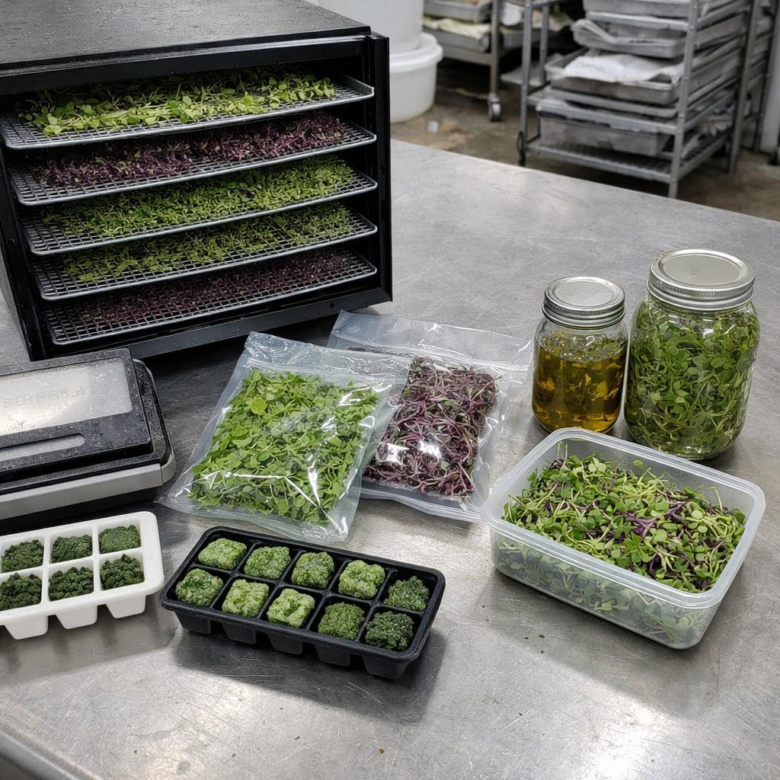
Dehydration offers the best shelf-life-to-cost ratio if you use a reliable food dehydrator such as Excalibur. Keep temperatures low to preserve aroma, then store the dried greens in airtight jars or vacuum-sealed bags with clear date labels. Basil microgreens, for example, can become a bright green powder for pasta dough, compound butter, or a plated seafood dish.
Freezing works poorly for delicate garnish because ice crystals collapse the stems, but a blast freezer or vacuum sealer can make it useful for purées and infused oils. Fermentation is more specialized: mustard, radish, and cabbage-family microgreens can add acidity and depth to dressings, but they need strict sanitation, salt control, and HACCP-style labeling. For most restaurants, the smartest system is simple: refrigerate premium garnish, dehydrate surplus, freeze prep bases, and ferment only when the flavor has a clear menu purpose.
Common Microgreen Preservation Mistakes That Reduce Plating Quality, Shelf Life, and Menu Consistency
One of the fastest ways to ruin premium microgreens is storing them wet. After rinsing, even a light film of moisture can cause bruising, slime, and uneven texture, especially with delicate varieties like amaranth, basil, and cilantro microgreens. In a fine dining kitchen, this shows up immediately on the plate: collapsed stems, dull color, and inconsistent garnish volume.
Another common mistake is using standard produce bags instead of breathable, food-safe storage systems. Microgreens need humidity control, not suffocation. A perforated container lined with dry absorbent paper, stored in a calibrated refrigerator such as a True Refrigeration unit, gives chefs better control over temperature, airflow, and shelf life.
- Overpacking containers: compresses leaves and causes mechanical damage before service.
- Mixing varieties: radish, pea shoots, and shiso age differently, so one fading crop can compromise the whole batch.
- Skipping date labels: creates rotation problems and makes menu consistency harder during busy prep.
A real-world example: a tasting menu that uses red vein sorrel for acidity and color may look inconsistent if Monday’s garnish is crisp and vibrant, but Wednesday’s batch is wilted from poor cold storage. That kind of inconsistency affects perceived value, food cost control, and guest experience.
Chefs should also avoid freezing fresh microgreens for garnish use. Freezing works for purees, oils, and compound butters, but it destroys the cellular structure needed for elegant plating. For high-end service, preservation should protect texture first, then color and flavor.
Summary of Recommendations
Preserving seasonal microgreens for fine dining is ultimately a question of intent: protect freshness when texture matters, or transform the crop when flavor is the priority. Refrigeration and humidity control remain the best choice for short service windows, while freezing, dehydration, oils, and powders suit mise en place, garnishes, sauces, and off-season menu continuity.
- Choose fresh storage for plated elegance and delicate bite.
- Choose drying or freezing for flavor concentration and consistency.
- Choose infused formats when the microgreen should support rather than dominate the dish.