Your rare spices are going stale long before they look old.
The first thing to disappear is not color or texture-it’s the volatile oils that carry aroma, heat, sweetness, and complexity.
Saffron, cardamom, vanilla, cloves, and other precious spices can lose their character quickly when exposed to light, air, heat, or moisture.
Proper storage is not just about neat jars on a shelf; it is about preserving the chemistry that makes rare spices worth buying in the first place.
Why Rare Spices Lose Volatile Oils: Aroma Chemistry, Shelf Life, and Flavor Degradation
Rare spices get their value from volatile oils-fragile aromatic compounds that evaporate, oxidize, or break down when exposed to heat, light, oxygen, and moisture. Saffron, cardamom, vanilla, mace, and long pepper can smell vibrant one month and flat the next if stored in a warm pantry near the stove. The loss is gradual, but once those oils fade, no premium spice grinder or recipe adjustment fully brings the flavor back.
In real kitchens, the biggest problem is repeated exposure. Every time a jar is opened, fresh oxygen and humidity enter, especially in busy home kitchens or commercial food prep areas. A small ThermoPro digital hygrometer inside a spice cabinet can reveal whether humidity is quietly damaging expensive ingredients before you notice clumping or weak aroma.
- Oxygen dulls essential oils and creates stale, dusty flavors.
- Heat speeds aroma loss, especially near ovens, dishwashers, and sunny shelves.
- Moisture encourages clumping, microbial risk, and faster flavor degradation.
Whole spices usually retain volatile oils longer than ground spices because their structure protects the aromatic compounds. For example, whole green cardamom pods stay noticeably brighter than pre-ground cardamom in baking blends, particularly when stored in airtight glass spice jars or vacuum-sealed bags using a FoodSaver vacuum sealer. For high-cost spices, portioning small amounts for daily use and keeping the rest sealed in a cool, dark place is one of the simplest ways to protect shelf life and preserve flavor quality.
How to Store Rare Spices Correctly: Airtight Containers, Light Control, Temperature, and Humidity
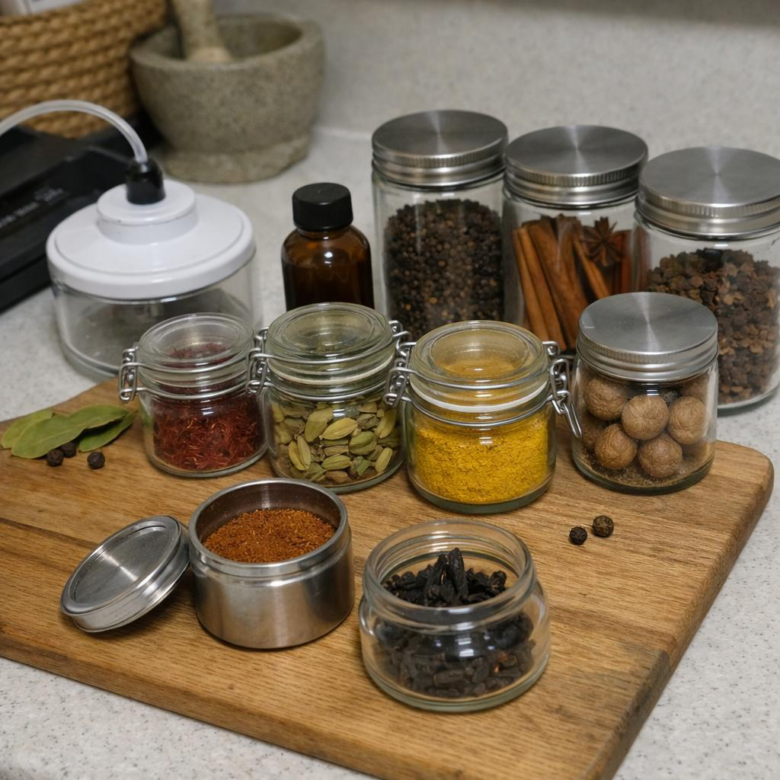
Rare spices lose value quickly when volatile oils are exposed to oxygen, heat, light, and moisture. For saffron, cardamom, vanilla, grains of paradise, or true cinnamon, use airtight glass spice jars with silicone seals, not loose tins or decorative racks near the stove. If the spice is expensive, a small vacuum-sealed pouch inside a jar offers better protection than a standard container alone.
Light control matters more than many home cooks realize. Clear jars look attractive, but UV exposure can flatten aroma and fade color, especially in saffron and paprika-style spices. Use amber glass jars, opaque food storage containers, or keep clear jars inside a closed cabinet.
- Airtight storage: Use gasket-sealed jars, Mylar bags, or a FoodSaver vacuum sealer for bulk rare spices.
- Temperature control: Store spices in a cool pantry, away from ovens, dishwashers, windows, and under-cabinet lighting.
- Humidity control: Add food-safe silica gel packets for whole spices in humid kitchens, but avoid placing them directly against delicate powders.
A real-world example: saffron kept in a tiny amber jar inside a pantry cabinet will usually retain its aroma better than saffron stored in a clear jar on a countertop spice rack. I’ve seen premium cardamom lose its bright, eucalyptus-like fragrance simply because it sat above a warm cooktop for a few months.
For serious storage, consider a small digital hygrometer, such as one from ThermoPro, to monitor pantry humidity. Aim for a dry, stable environment rather than chasing refrigeration, which can cause condensation when jars are opened. Buy smaller quantities when possible; the best storage system still cannot fully stop volatile oil loss once a spice is repeatedly exposed to air.
Common Spice Storage Mistakes That Accelerate Volatile Oil Loss
One of the fastest ways to ruin rare spices is storing them near heat, even if the jars look neatly arranged. A spice rack beside the stove may be convenient, but saffron, cardamom, mace, and long pepper can lose aroma quickly when exposed to repeated temperature swings and steam.
Another common mistake is keeping spices in clear glass jars under cabinet lights or near a sunny window. Light degrades delicate volatile oils, especially in premium whole spices, so opaque airtight containers or UV-protected jars are a better investment for long-term spice storage.
- Opening jars too often: every opening introduces oxygen and moisture, which weakens fragrance and flavor.
- Buying oversized bulk packs: the lower cost per ounce is wasted if the spice fades before you use it.
- Using decorative containers without seals: many look good but allow air exchange.
A practical fix is to keep a small “working jar” in the kitchen and store the main supply in a cool pantry or vacuum-sealed bag. For example, I’ve seen high-quality green cardamom stay noticeably brighter when the bulk portion was sealed with a FoodSaver vacuum sealer and opened only to refill a smaller jar.
Also avoid grinding rare spices too early. Ground spices have far more surface area exposed to oxygen, so use a burr grinder or spice mill only when needed. The upfront cost of proper airtight containers, humidity control packets, or a compact vacuum sealer is usually lower than repeatedly replacing expensive spices that have gone flat.
The Bottom Line on How to Properly Store Rare Spices to Prevent Volatile Oil Loss
Protecting rare spices is less about perfection and more about making the right storage choices consistently. Light, heat, air, and moisture are the real enemies of volatile oils, so choose airtight, opaque containers, keep quantities small, and store them away from cooking heat.
- Buy whole spices when possible and grind only what you need.
- Replace delicate spices sooner rather than waiting for them to become flavorless.
- Use your most valuable spices deliberately, not decoratively.
The best rule is simple: store spices like ingredients with a shelf life, not pantry ornaments.