What if the most important solar asset isn’t the panel-but the inverter controlling every watt behind it?
For grid-scale commercial solar projects, inverter technology now defines far more than DC-to-AC conversion. It shapes energy yield, grid compliance, fault response, power quality, and long-term project bankability.
As utility requirements tighten and projects scale into hundreds of megawatts, choosing between central, string, hybrid, and grid-forming inverter architectures has become a strategic engineering decision. The right platform can improve uptime, simplify O&M, support storage integration, and protect revenue under demanding grid conditions.
This guide examines the inverter technologies that matter most for large commercial and utility-scale solar deployments-and how to evaluate them for performance, resilience, and future-ready grid participation.
What Defines the Best Inverter Technologies for Grid-Scale Commercial Solar Projects?
The best inverter technologies for grid-scale commercial solar projects are defined by more than conversion efficiency. For developers, EPC contractors, and asset owners, the real value comes from grid compliance, uptime, monitoring capability, serviceability, and total lifecycle cost.
At utility scale, a high-performing solar inverter must handle voltage fluctuations, reactive power control, fault ride-through, and advanced grid support without frequent shutdowns. This is where central inverters, modular string inverters, and hybrid inverter systems are evaluated not just by price, but by how well they protect energy yield and reduce operations and maintenance costs.
- Grid support features: voltage regulation, frequency response, and power factor control for utility interconnection requirements.
- Advanced monitoring: integration with SCADA platforms, cloud dashboards, and tools like PVsyst for performance modeling and loss analysis.
- Service design: modular components, local spare parts, and fast diagnostics to reduce downtime during peak generation hours.
For example, a commercial solar farm built near an industrial load center may benefit from modular string inverters because one failure affects only a small section of the array. In contrast, a large open-field utility project with uniform conditions may choose central inverters to simplify medium-voltage station design and reduce upfront equipment cost.
In real projects, the “best” inverter is usually the one that matches the grid connection agreement, site layout, maintenance strategy, and financing model. A slightly higher inverter cost can be justified if it improves availability, simplifies warranty claims, and supports long-term solar asset management.
How to Evaluate Central, String, and Modular Inverters for Commercial Solar Deployment
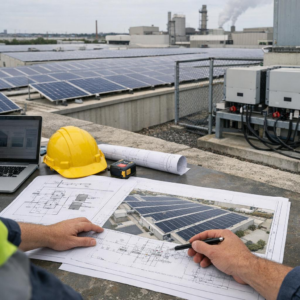
Choosing between central, string, and modular inverters should start with the project’s electrical design, not the equipment price alone. For a flat-roof warehouse with multiple orientations and shading from HVAC units, string inverters often reduce energy loss and simplify fault isolation. For a 50 MW ground-mount solar farm with uniform rows, central inverters may still deliver better cost per watt and easier medium-voltage integration.
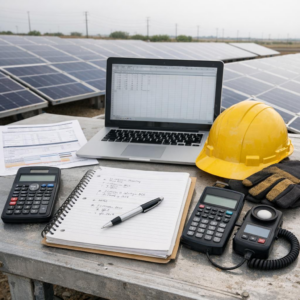
Use bankable modeling tools such as PVsyst to compare inverter clipping, DC/AC ratio, expected yield, and temperature-related derating. In the field, I’ve seen projects save maintenance time by choosing string or modular inverter systems where technicians can replace one failed unit without taking a large block of production offline. That operational detail can matter as much as the initial commercial solar inverter cost.
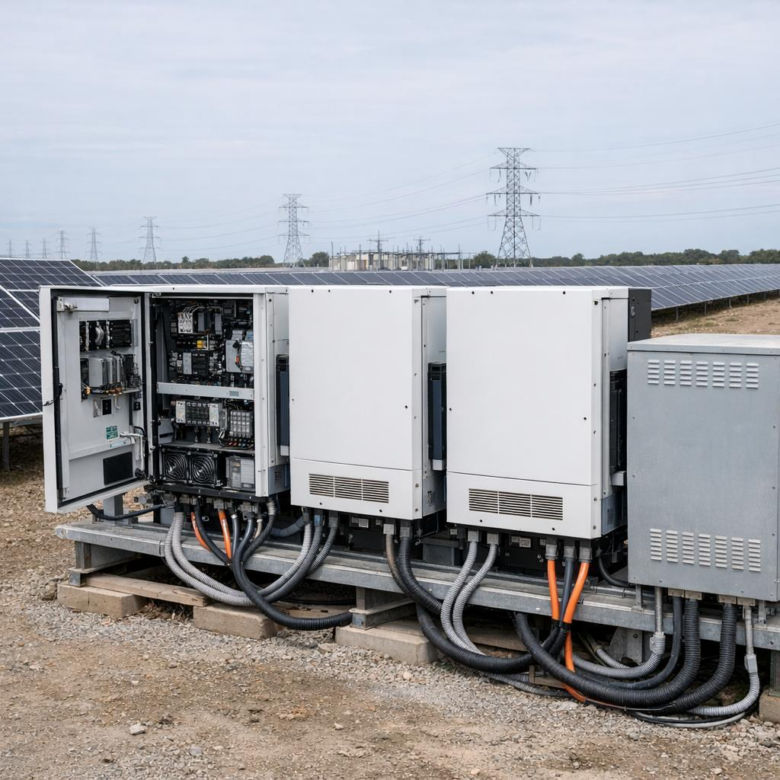
- Central inverters: Best for large, uniform utility-scale solar projects where low equipment cost, skid-based installation, and centralized monitoring are priorities.
- String inverters: Better for rooftops, carports, and uneven terrain where module-level performance, design flexibility, and faster troubleshooting improve long-term ROI.
- Modular inverters: Useful when uptime, scalable capacity, and serviceability are critical, especially for industrial solar power systems with strict production schedules.
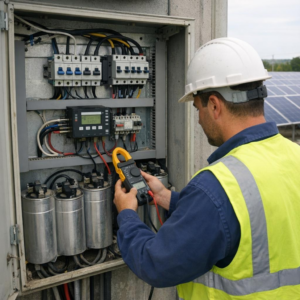
Also review warranty terms, spare parts availability, remote monitoring software, cybersecurity features, grid-code compliance, and service response times. A cheaper inverter with limited technical support can increase O&M costs quickly, especially when grid interconnection requirements or reactive power control settings become more complex.
Common Inverter Selection Mistakes That Reduce Grid-Scale Solar Performance and ROI
One of the most expensive mistakes in grid-scale solar inverter selection is focusing only on upfront equipment cost. A lower-cost central inverter may look attractive in procurement, but if it has weaker grid support functions, limited monitoring, or poor service coverage, the project can lose revenue through curtailment, longer downtime, and higher operations and maintenance costs.
Another issue is oversizing or undersizing the inverter without properly modeling clipping losses, DC/AC ratio, temperature behavior, and utility interconnection requirements. For example, on a hot site in Arizona, a developer may choose an aggressive DC/AC ratio to improve energy yield, but without thermal derating analysis in tools like PVsyst, the plant could see reduced output during peak price hours.
- Ignoring grid code compliance: Inverters must support voltage ride-through, frequency response, reactive power control, and utility SCADA integration.
- Choosing weak monitoring software: Poor diagnostics can delay fault detection across combiner boxes, transformers, or inverter blocks.
- Overlooking warranty and service terms: Response time, spare parts availability, and extended warranty cost matter as much as efficiency ratings.
A practical approach is to compare inverter technology using total cost of ownership, not just price per watt. Review bankability, cybersecurity features, utility approval history, power conversion efficiency, and compatibility with battery energy storage systems if future hybrid solar-plus-storage is planned.
In real projects, the best inverter is not always the highest-efficiency model on the datasheet. It is the one that keeps the solar farm compliant, visible, serviceable, and financially predictable over its operating life.
The Bottom Line on Best Inverter Technologies for Grid-Scale Commercial Solar Projects
Choosing the right inverter technology is ultimately a risk-management decision, not just an equipment selection. For grid-scale commercial solar projects, the strongest choice is the one that aligns with interconnection requirements, site conditions, maintenance strategy, and long-term revenue goals. Prioritize proven grid-support capabilities, high uptime, scalable monitoring, and supplier bankability over headline efficiency alone. Developers should evaluate inverter options early in project design, model lifecycle performance, and confirm compatibility with storage or future grid-service needs. The best inverter is the one that protects project yield, simplifies operations, and supports predictable returns over decades.