What if your plant’s largest unmanaged cost is sitting unused on the roof, yard, or parking lot?
For industrial manufacturers, large-scale solar is no longer a sustainability add-on-it is a strategic infrastructure decision that can reduce energy volatility, strengthen operating margins, and support long-term production resilience.
Designing a solar array for a manufacturing plant requires far more than calculating panel count. Load profiles, peak demand, roof and land constraints, interconnection limits, equipment durability, and future expansion plans all determine whether the system delivers real financial and operational value.
This guide breaks down how to approach large-scale solar array design for industrial facilities with the same rigor used for any mission-critical production asset.
What Defines an Industrial-Scale Solar Array: Load Profiles, Demand Charges, and Plant Energy Goals
An industrial-scale solar array is not defined only by megawatts installed; it is defined by how well the system matches the plant’s electrical load profile. A manufacturing facility with steady daytime production, HVAC loads, compressed air systems, and motor-driven equipment can often use more solar power onsite than a warehouse with low midday demand.
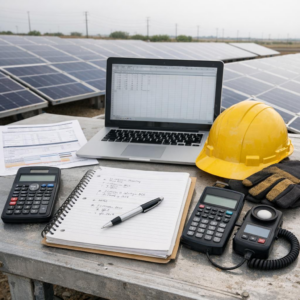
The first step is reviewing 12 to 24 months of interval meter data, utility bills, and production schedules. Tools like PVsyst, HelioScope, and utility-grade energy management software help model solar generation against real demand, not just annual kWh totals.
Demand charges are often the deciding factor in commercial solar design. If a plant pays high peak demand rates, a solar array alone may reduce energy consumption but not always lower the monthly peak unless production peaks align with solar output.
- Energy offset: Reducing purchased electricity during operating hours.
- Peak shaving: Using solar plus battery storage to control demand charges.
- Resilience goals: Supporting critical loads with solar, storage, and backup power controls.
For example, a plastics manufacturer running injection molding machines from 7 a.m. to 5 p.m. may benefit from a rooftop and carport solar system because its highest load occurs during strong solar production. A cold storage facility, however, may need battery energy storage or load scheduling because refrigeration demand can continue heavily into evening hours.
In real projects, the best results come when the solar EPC contractor, facility manager, and utility consultant review demand charges, power factor penalties, interconnection limits, and future expansion plans together. That early coordination prevents oversized systems, missed incentives, and expensive electrical upgrades later.
How to Engineer Solar Capacity, Site Layout, Interconnection, and Storage for Manufacturing Facilities
Start with the plant’s interval load data, not the roof size. A manufacturing facility with high daytime demand, compressed air systems, chillers, CNC equipment, or electric ovens can often use more onsite solar power than a warehouse, but the right solar capacity depends on demand charges, utility tariffs, power factor penalties, and shutdown schedules.
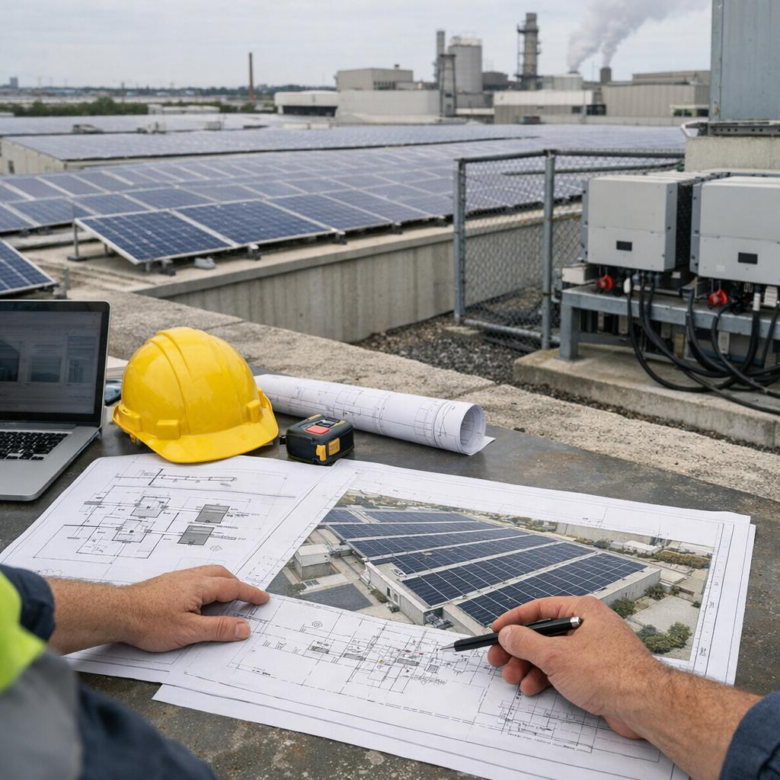
For layout, separate “available area” from “usable area.” Roof-mounted solar panels must account for structural loading, fire setbacks, skylights, HVAC access, and future roof replacement, while ground-mount arrays need grading, drainage, fencing, and truck circulation reviewed early in the engineering process.
- Use HelioScope or PVsyst to compare production, shading loss, inverter clipping, and annual energy yield.
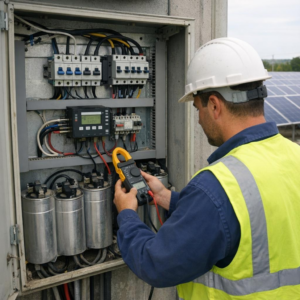
- Run electrical studies for short-circuit current, protection coordination, and transformer capacity before finalizing equipment.
- Model battery storage against peak demand windows, not just average energy use.
Interconnection is often the schedule risk that gets underestimated. In practice, I’ve seen a factory solar project with a strong financial payback delayed because the existing service transformer could not accept the planned export capacity without utility upgrades, so the design shifted to export limiting plus battery storage.
Battery energy storage systems are most valuable when they solve a specific operational problem: peak shaving, backup power for critical loads, time-of-use rate optimization, or improving solar self-consumption. For example, a food processing plant may prioritize battery backup for refrigeration controls and compressors, while a metal fabrication plant may use storage mainly to reduce demand charges during welding peaks.
The best design balances solar installation cost, interconnection fees, electrical safety, maintenance access, and long-term energy savings. Treat solar, switchgear, meters, inverters, and battery controls as one integrated industrial power system.
Common Design Mistakes That Reduce Solar ROI in Industrial Manufacturing Plants
One of the most expensive mistakes is sizing the solar array only around available roof or land area instead of the plant’s actual load profile. Manufacturing sites with high daytime consumption, demand charges, and weekend shutdowns need detailed interval data analysis, not a simple annual kWh estimate. Tools like PVsyst or HelioScope help model production, shading, inverter clipping, and financial performance before capital is committed.
Another common issue is ignoring electrical infrastructure limits. A plant may have enough space for a large solar PV system, but the switchgear, transformers, interconnection point, or utility service agreement may not support the full export capacity without costly upgrades. In one food processing facility I reviewed, the proposed rooftop solar system looked profitable on paper, but the main distribution panel required major modification, which changed the payback calculation completely.
- Poor shading analysis: vents, silos, cranes, parapet walls, and future equipment can reduce solar energy production more than expected.
- Wrong inverter strategy: undersized or poorly located inverters increase losses, heat exposure, and maintenance costs.
- No operations planning: failing to include monitoring, cleaning access, and preventive maintenance can quietly reduce long-term ROI.
Battery storage is another area where assumptions can become expensive. Industrial battery energy storage systems should be justified by demand charge reduction, backup power needs, or time-of-use electricity rates, not added because they sound advanced. The best solar design balances engineering, utility billing, tax incentives, financing cost, and real plant operations-not just the lowest installation price.
Closing Recommendations
Designing a large-scale solar array for an industrial manufacturing plant is ultimately a business-critical infrastructure decision, not just an energy project. The strongest outcomes come from aligning system capacity, load behavior, site constraints, interconnection options, and long-term operational goals before procurement begins.
Practical takeaway: prioritize lifecycle value over lowest upfront cost. Choose partners who can model production accurately, engineer for industrial reliability, and support compliance, monitoring, and maintenance. A well-designed solar array should reduce energy risk, improve cost predictability, and strengthen operational resilience for decades.