What breaks first in IT: the endpoint, the network, or your ability to see what’s happening?
For IT admins and MSPs, Remote Monitoring and Management (RMM) tools are no longer optional-they are the control center for keeping devices patched, secure, compliant, and online across distributed environments.
The best RMM platforms go beyond basic monitoring, combining automation, remote access, alerting, patch management, asset tracking, scripting, and integrations into one operational workflow.
This guide compares the top RMM tools for IT teams that need faster issue resolution, fewer manual tasks, stronger security visibility, and scalable endpoint management.
What IT Admins Need from Remote Monitoring and Management Tools
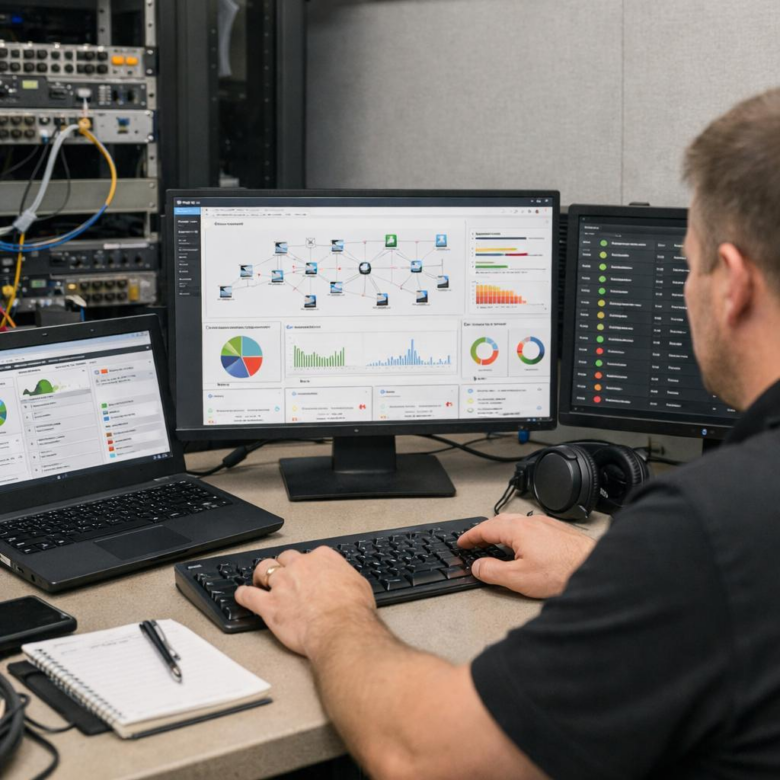
IT admins need RMM tools that reduce manual work without hiding important details. A good remote monitoring and management platform should show device health, patch status, antivirus protection, disk usage, failed backups, and network issues from one dashboard. The real value is not just monitoring; it is knowing which alert needs action first.
In a typical managed IT services environment, one technician may support laptops, servers, printers, and mobile devices across several client locations. For example, if a Windows server starts running out of storage after business hours, an RMM tool like NinjaOne, Datto RMM, or ConnectWise Automate can trigger an alert, run a cleanup script, and document the action before users notice downtime.
The best RMM software should help admins handle daily operations faster, including:
- Automated patch management for Windows, macOS, and third-party applications
- Remote access and troubleshooting without requiring users to explain every error
- Reporting and asset management for audits, compliance, billing, and lifecycle planning
Cost matters too. Some RMM pricing models charge per endpoint, while others bundle remote support, endpoint security, backup monitoring, and professional services automation. IT teams should compare the total cost of ownership, not just the monthly subscription fee.
From real-world use, the most overlooked benefit is consistency. When alerts, scripts, patch policies, and documentation are standardized, admins spend less time firefighting and more time improving security, uptime, and user experience.
How to Compare the Best RMM Tools by Features, Integrations, and Pricing
When comparing RMM tools, start with the daily work your IT team actually handles: patch management, remote access, endpoint monitoring, antivirus alerts, backup checks, and software deployment. A platform like NinjaOne, Datto RMM, or ConnectWise Automate may look similar on paper, but the difference often shows up in how fast technicians can resolve issues across Windows, macOS, servers, and mobile devices.
Focus on integrations because they directly affect service quality and operating cost. If your team already uses PSA software, ticketing tools, cloud backup services, Microsoft 365, or endpoint security platforms, the best RMM software should connect cleanly without forcing manual workarounds.
- Features: Look for automated patching, scripting, remote control, asset inventory, alerting, reporting, and endpoint protection options.
- Integrations: Check compatibility with PSA platforms, help desk software, cybersecurity tools, cloud storage, and billing systems.
- Pricing: Compare per-device cost, minimum contracts, onboarding fees, add-ons, and support charges.
In real MSP environments, cheap RMM pricing can become expensive if technicians spend extra time fixing false alerts or logging into separate tools. For example, a 50-device business may benefit more from an RMM platform with built-in remote support and automated patch policies than from a lower-cost tool that requires third-party services for basic tasks.
Before committing, request a trial and test the workflows that matter most: deploying patches, restarting services, generating client reports, and responding to an offline device alert. The best RMM tool is not just the one with the longest feature list; it is the one that reduces technician effort, improves endpoint security, and fits your IT budget.
Common RMM Implementation Mistakes That Reduce Security and Automation Value
One of the biggest mistakes IT teams make is deploying an RMM tool without cleaning up device inventory first. If old laptops, duplicate endpoints, inactive servers, or unmanaged network devices remain in the system, alerts become noisy and automation policies may run on the wrong machines. In real environments, I’ve seen patch jobs fail simply because retired endpoints were still listed as active assets.
Another common issue is using default monitoring templates without tailoring them to business-critical systems. A workstation, a domain controller, and a cloud backup server should not have the same alert thresholds. Platforms like NinjaOne, Atera, and ConnectWise Automate offer strong monitoring and automation features, but their real value comes from well-planned policies, role-based access, and properly segmented device groups.
- Weak access control: Giving every technician admin-level permissions increases risk, especially for remote access, scripting, and patch deployment.
- Poor patch testing: Automatically pushing every Windows, driver, or third-party software update without a pilot group can break line-of-business applications.
- No alert tuning: Too many low-priority alerts lead to alert fatigue, causing teams to miss real security incidents.
A practical approach is to start with a small group of devices, validate monitoring rules, test automation scripts, and then expand gradually. For example, an MSP managing healthcare clients may separate endpoint security policies for reception PCs, billing systems, and clinical workstations to protect sensitive data and reduce downtime. This improves RMM security, lowers support cost, and helps teams get more value from remote IT management services.
Wrapping Up: Best Remote Monitoring and Management (RMM) Tools for IT Admins Insights
The best RMM tool is the one that fits your team’s operational reality-not just the longest feature list. Prioritize reliable automation, fast alerting, patch management, security integrations, and clear reporting. Smaller IT teams may benefit from simpler deployment and bundled pricing, while MSPs should look closely at scalability, multi-tenant management, and billing workflows.
Before committing, run a trial with real endpoints, test response times, and confirm how well the platform handles your most common support tasks. A strong RMM solution should reduce manual work, improve visibility, and help your team prevent issues before users notice them.