Your 3D printer may be producing more than failed prints-it could be releasing invisible toxic fumes into your workspace.
Heated plastics, resins, solvents, and post-processing chemicals can emit ultrafine particles and volatile organic compounds that linger in the air long after a print finishes.
Safe 3D printing is not just about ventilation; it also requires the right filtration setup, controlled airflow, and responsible disposal of contaminated filters, resin waste, and chemical residues.
This guide breaks down how to reduce exposure, choose effective air filtration, and dispose of hazardous 3D printing waste without turning your workshop into a health risk.
What Makes 3D Printer Fumes Toxic: VOCs, Ultrafine Particles, and Resin Off-Gassing Risks
3D printer fumes become risky because they are a mix of gases and microscopic particles, not just “plastic smell.” FDM printers can release VOCs such as styrene from ABS, while resin printers give off stronger chemical vapors from uncured photopolymer resin and cleaning solvents like isopropyl alcohol.
The particles are often the bigger hidden issue. Ultrafine particles are small enough to stay airborne for long periods and can bypass basic dust masks, which is why a proper enclosure, exhaust fan, HEPA filtration, and activated carbon filter matter more than simply opening a window.
- VOCs: chemical gases linked to odors, irritation, and poor indoor air quality.
- Ultrafine particles: tiny emissions from heated filament, especially during long prints.
- Resin off-gassing: fumes from liquid resin, curing stations, and contaminated paper towels or gloves.
In a real home office setup, the worst exposure often happens after the print finishes: removing supports, washing resin parts, or leaving waste resin in an open trash bin. A low-cost indoor air quality monitor like Airthings View Plus or a VOC meter can help show when ventilation is actually working, but it should not replace source control.
For safer printing, treat fumes like a workshop hazard: isolate the printer, seal resin waste before disposal, and vent contaminated air outdoors when possible. If outdoor venting is not practical, use a dedicated 3D printer enclosure with a high-quality activated carbon filter and replace filters on schedule, not only when odors return.
How to Set Up Safe 3D Printer Ventilation: Enclosures, HEPA Filtration, Activated Carbon, and Exhaust Routing
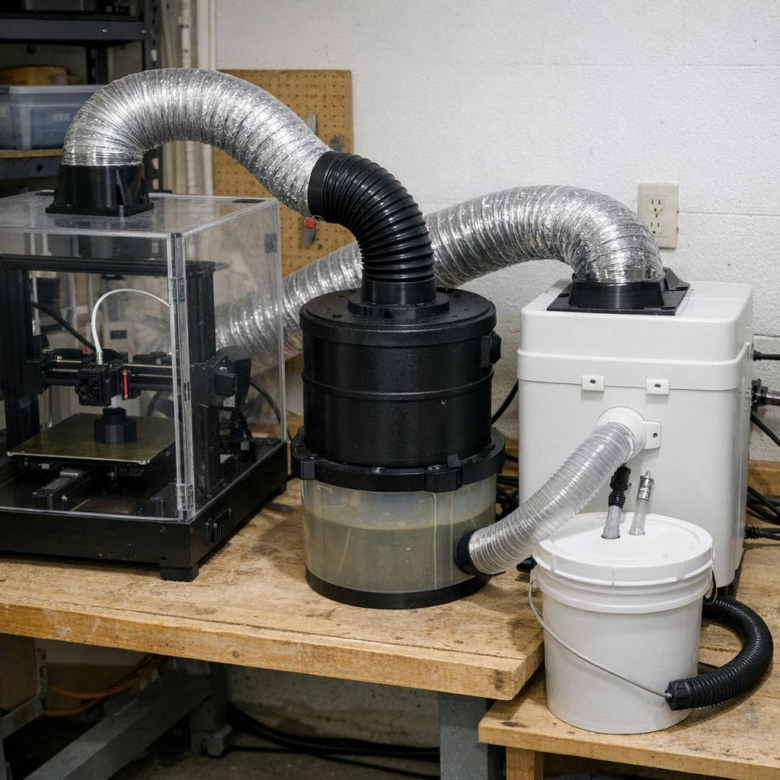
A safe 3D printer ventilation setup starts with containment. Place the printer inside a sealed enclosure, then create slight negative pressure so fumes move toward the filter or exhaust duct instead of leaking into the room. This matters most for ABS, ASA, nylon, resin printers, and any setup running in a bedroom, office, classroom, or apartment.
For filtration, use both HEPA and activated carbon because they handle different risks. HEPA filtration helps capture ultrafine particles, while activated carbon adsorbs VOCs such as styrene and resin odors. In practice, a desktop HEPA unit alone often reduces smell but does not properly manage chemical vapors unless it has a substantial carbon bed.
- Enclosure: acrylic, metal, or fire-resistant cabinet with sealed gaps and cable pass-throughs.
- Filtration: true HEPA filter plus replaceable activated carbon pellets, not just a thin carbon sheet.
- Exhaust routing: inline fan, flexible ducting, window vent kit, and a backdraft damper.
For a real-world setup, many users run an enclosed Prusa or Bambu printer with a 4-inch inline fan such as the AC Infinity CLOUDLINE S4, pulling air through a carbon filter and exhausting it through a window panel. Keep the duct short and straight when possible; long bends reduce airflow and make odor control noticeably worse.
Avoid venting fumes into an attic, crawlspace, shared hallway, or attached garage. If outside exhaust is not possible, use a high-capacity air purifier with true HEPA and heavy activated carbon, then replace filters on schedule based on printing hours and odor return. A basic VOC monitor can also help you spot poor ventilation before it becomes obvious.
Common Disposal and Filtration Mistakes: Handling Resin Waste, Saturated Filters, Solvents, and Contaminated PPE
One of the most common mistakes is treating liquid resin, dirty IPA, and solvent-soaked wipes like normal trash. Uncured photopolymer resin should be considered hazardous waste until it is fully cured, and contaminated alcohol should be stored in a sealed, labeled HDPE container for hazardous waste disposal or solvent recycling.
Do not pour resin wash water or isopropyl alcohol down the drain, even if it “looks clear.” In a small print shop I visited, the biggest odor problem was not the printer itself but an open bucket of used IPA sitting beside the wash station; a simple gasketed container would have reduced VOC exposure immediately.
- Using a HEPA filter alone for resin fumes; HEPA captures particles, not VOCs.
- Running an activated carbon filter after it is saturated, which can release odors back into the room.
- Throwing away uncured gloves, paper towels, supports, and failed prints without UV curing them first.
For filtration, pair a sealed enclosure or fume extractor with activated carbon designed for VOC filtration, and replace filters based on odor breakthrough, runtime, and manufacturer guidance. A VOC monitor such as Airthings View Plus can help you spot ventilation problems, but it should not replace proper exhaust, carbon filtration, and PPE.
Contaminated nitrile gloves, respirator prefilters, resin wipes, and failed prints should be cured under UV light before disposal when local rules allow. Saturated carbon cartridges, dirty HEPA filters, and solvent containers may need municipal household hazardous waste drop-off, especially for commercial 3D printing services where disposal compliance and cleanup costs matter.
Key Takeaways & Next Steps
Safe 3D printing is ultimately a control decision, not an accessory choice. If you print occasionally with low-emission materials, a sealed enclosure with reliable HEPA and activated carbon filtration may be sufficient. If you print ABS, ASA, nylon, resin, or run multiple machines, prioritize external exhaust, documented filter maintenance, and proper waste handling.
- Choose ventilation based on material risk and print volume.
- Replace filters before odor or irritation appears.
- Treat resin, solvents, and contaminated filters as chemical waste.
The best setup is the one that reduces exposure consistently, not just visibly.