Your camera doesn’t create the look-your lens does.
A sharp portrait, sweeping landscape, cinematic street shot, or crisp wildlife image all depend on choosing glass that matches the way you see and shoot.
The right lens affects far more than zoom range: it shapes perspective, background blur, low-light performance, distortion, and how close you can get to your subject.
This guide breaks down how to choose the best camera lens for different photography styles, so every purchase supports your creative goals instead of collecting dust in your bag.
Lens Fundamentals: How Focal Length, Aperture, and Sensor Size Shape Your Photos
Focal length controls how much of the scene you capture and how compressed the background looks. A 24mm lens is great for real estate photography, travel, and tight interiors, while an 85mm lens is more flattering for portraits because it reduces facial distortion and creates stronger background separation.
Aperture affects both exposure and depth of field. A lens with an f/1.8 or f/2.8 maximum aperture lets in more light, which is useful for weddings, indoor events, and low-light photography where raising ISO can hurt image quality. In real shoots, I often see beginners buy a camera body first, then realize a faster lens would have improved their results more than a more expensive camera.
- Wide aperture: better for portraits, product photography, and blurred backgrounds.
- Narrow aperture: better for landscapes, architecture, and scenes needing edge-to-edge sharpness.
- Zoom range: helpful when you need flexibility, such as events or family sessions.
Sensor size changes how a lens behaves in practice. On an APS-C camera, a 50mm lens gives a tighter field of view, closer to what a 75mm lens looks like on full-frame, depending on the brand’s crop factor. Before buying, check sample images on DPReview or use a lens simulator to compare focal lengths, lens cost, camera compatibility, and the benefits for your photography style.
Matching Lenses to Photography Styles: Portraits, Landscapes, Wildlife, Street, and Events
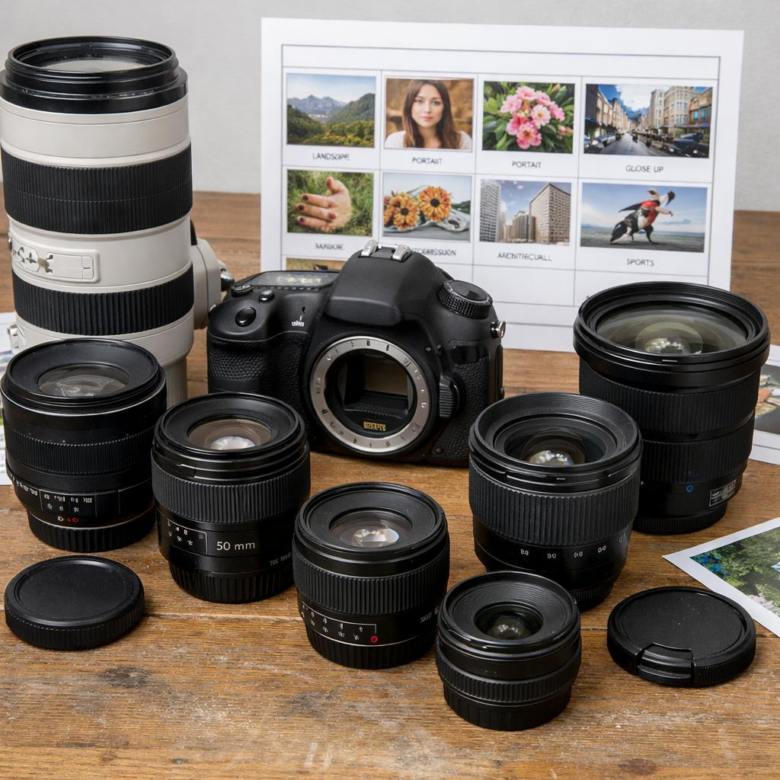
Choosing the best camera lens starts with the subject, not the price tag. For portrait photography, a 50mm f/1.8 or 85mm f/1.8 prime lens gives flattering compression, soft background blur, and strong low-light performance without the cost of professional glass. If you shoot paid headshots or weddings, the upgrade to a 70-200mm f/2.8 can be worth it for cleaner separation and more flexibility.
Landscape photography usually benefits from wide-angle lenses such as 16-35mm or 14-24mm, especially when photographing mountains, interiors, or city skylines. Look for sharp corner performance, weather sealing, and compatibility with filters like ND and polarizers; tools such as Adobe Lightroom can help correct lens distortion, but they cannot fix weak optics. A tripod and good lens hood often matter more than buying the most expensive ultra-wide lens.
- Wildlife: Choose a 100-400mm, 150-600mm, or similar telephoto zoom with fast autofocus and image stabilization.
- Street: A compact 35mm or 50mm lens keeps your camera discreet and responsive in busy locations.
- Events: A 24-70mm f/2.8 is a dependable workhorse for receptions, conferences, concerts, and family gatherings.
In real-world event work, I’ve found that changing lenses too often can mean missing the actual moment, so a reliable zoom is often more valuable than a sharper prime. For travel or hybrid creators, one high-quality standard zoom paired with a fast prime is a practical lens kit that balances image quality, cost, and portability.
Common Lens-Buying Mistakes: Overlooking Weight, Compatibility, Low-Light Needs, and Future Growth
One of the most expensive camera lens buying mistakes is choosing specs on paper and ignoring how the lens feels after two hours of shooting. A 70-200mm f/2.8 may be excellent for wedding photography and sports photography, but if it stays in your bag because it is too heavy, the real value drops fast.
Compatibility is another area where buyers lose money. Always check lens mount, sensor coverage, autofocus support, and whether features like image stabilization work properly with your camera body. For example, an APS-C photographer upgrading later to a full-frame mirrorless camera may regret investing heavily in crop-only lenses.
- Weight: Test the lens on your actual camera body, not just in a store display case.
- Low light: For events, indoor portraits, or night street photography, consider f/1.8, f/1.4, or f/2.8 lenses before slower zooms.
- Future growth: Buy lenses that match where your photography is going, not only what you shoot today.
A practical move is to rent before buying from a platform like Lensrentals, especially for premium camera lenses with a high upfront cost. I have seen photographers save serious money by renting a wide-angle lens for real estate photography, only to discover they preferred a lighter ultra-wide zoom over a faster prime.
Also factor in filters, lens hoods, protective cases, and camera insurance if you travel or work professionally. The best lens is not always the most expensive one; it is the one that fits your camera system, shooting conditions, budget, and long-term creative direction.
Closing Recommendations
The right lens is the one that helps you make the image you already have in mind-not simply the sharpest, fastest, or most expensive option. Start with your subject, shooting distance, light conditions, and desired perspective, then choose a focal length and aperture that support that goal.
If you’re unsure, rent before buying, study your favorite photos’ focal lengths, and invest gradually. A versatile zoom can build confidence, while a well-chosen prime can refine your style. Let your creative needs-not gear trends-guide the decision.