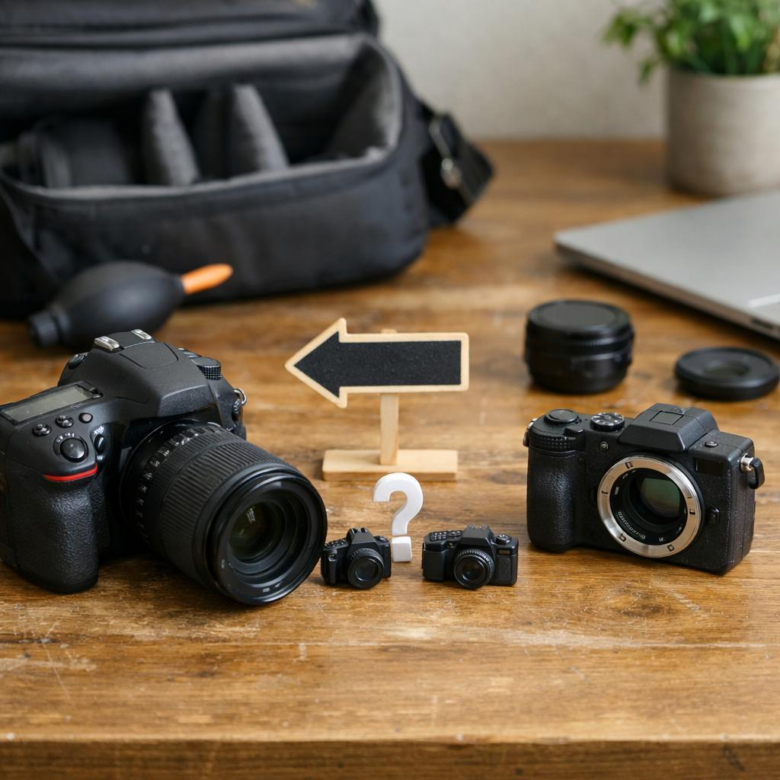
Buying the “wrong” first camera can slow your learning more than you think. For beginners, the DSLR vs mirrorless debate is not about which camera is more professional-it is about which one helps you take better photos sooner.
DSLRs offer proven reliability, great battery life, and excellent value on the used market. Mirrorless cameras bring lighter bodies, smarter autofocus, real-time previews, and better video features.
The best choice depends on how you plan to shoot: travel, portraits, sports, video, or everyday family moments. This guide breaks down the real differences so you can choose your first camera with confidence-not confusion.
DSLR vs Mirrorless Cameras: Key Differences Beginners Should Understand First
The biggest difference is how you see the image before taking the shot. A DSLR uses a mirror and optical viewfinder, while a mirrorless camera shows a digital preview through an electronic viewfinder or rear screen, which helps beginners see exposure, white balance, and depth of field before pressing the shutter.
In real use, this matters a lot. For example, if you are photographing your child’s football game or recording travel videos for YouTube, a mirrorless camera often gives faster autofocus tracking, better face detection, and smoother video features compared with many entry-level DSLR cameras.
- Size and weight: Mirrorless bodies are usually lighter, which is useful for travel photography, street photography, and daily carry.
- Battery life: DSLRs often last longer per charge because they do not rely heavily on electronic screens.
- Lens cost: DSLR lenses can be cheaper on the used market, while mirrorless lens systems may offer newer technology and better long-term upgrade paths.
One practical tip: check lens prices before buying the camera body. A beginner camera deal may look affordable, but adding a portrait lens, camera bag, memory card, tripod, and camera insurance can change the total cost quickly.
If you are unsure, compare models on B&H Photo Video or rent a camera kit for a weekend before committing. From hands-on experience, beginners often learn faster with mirrorless cameras because the live preview reduces guesswork, but a budget DSLR can still be a smart choice for photography basics and low-cost lenses.
How to Choose Your First Camera Based on Budget, Learning Curve, and Shooting Style
Start with your total budget, not just the camera body price. A beginner camera kit should include at least one lens, a fast memory card, a spare battery, a camera bag, and basic editing software like Adobe Lightroom. A cheaper DSLR may leave more room for lenses, while an entry-level mirrorless camera often costs more upfront but gives you newer autofocus, better video features, and a smaller travel-friendly setup.
If you want the easiest learning curve, mirrorless usually has the edge because the electronic viewfinder shows exposure, white balance, and depth of field before you press the shutter. That feedback helps beginners learn manual settings faster. However, DSLRs still make sense if you prefer longer battery life, an optical viewfinder, and access to affordable used lenses from platforms like MPB or KEH.
- Travel and everyday photography: choose a lightweight mirrorless camera with a compact zoom lens.
- Sports, wildlife, or school events: consider a DSLR with a telephoto lens if budget is tight.
- YouTube, vlogging, or online courses: mirrorless is usually better for autofocus, 4K video, and flip screens.
For example, someone photographing family trips and short videos will likely enjoy a Canon EOS R50 or Sony ZV-E10 more than a bulky DSLR. But a beginner shooting local soccer games on a limited budget may get better value from a used Nikon DSLR plus a 70-300mm lens. Match the camera to what you actually shoot, not what looks best on a spec sheet.
Common Beginner Mistakes When Comparing DSLR and Mirrorless Cameras
One common mistake is judging a camera only by the body price. A cheap DSLR may look like the better deal, but once you add camera lenses, memory cards, a camera bag, and possible lens adapters, the total photography gear cost can change quickly.
Beginners also tend to compare megapixels instead of real-world usability. For travel photography, family portraits, YouTube videos, or product photography, autofocus performance, image stabilization, battery life, and lens availability often matter more than a bigger number on the box.
- Ignoring lens ecosystems: Check whether affordable prime lenses, zoom lenses, and used camera lenses are easy to find.
- Forgetting video needs: If you plan to film content, mirrorless cameras often offer better autofocus and modern video features.
- Not testing ergonomics: A camera that feels uncomfortable will stay at home, no matter how good the specs are.
A real-world example: a beginner buying a DSLR for school sports may later realize the camera body is fine, but a fast telephoto lens costs more than expected. On the other hand, someone buying a compact mirrorless camera for vlogging may need to budget for an external microphone, tripod, and extra batteries.
Before buying, compare prices on B&H Photo Video or check used gear from reputable camera stores. If possible, rent the camera for a weekend first; it is one of the smartest ways to understand handling, autofocus, and low-light performance before spending serious money.
Summary of Recommendations
The better beginner camera is the one you’ll use confidently and often. If you want a lighter setup, modern autofocus, and easier live previews, mirrorless is usually the smarter long-term choice. If budget matters most and you’re comfortable learning through an optical viewfinder, a DSLR can still be excellent value.
- Choose mirrorless for portability, video, and future-proof features.
- Choose DSLR for lower cost, longer battery life, and used-lens bargains.
Before buying, handle both if possible. Comfort, lens options, and your willingness to practice matter more than the camera type itself.