What if the “best” time to see the Great Migration is not when everyone else goes?
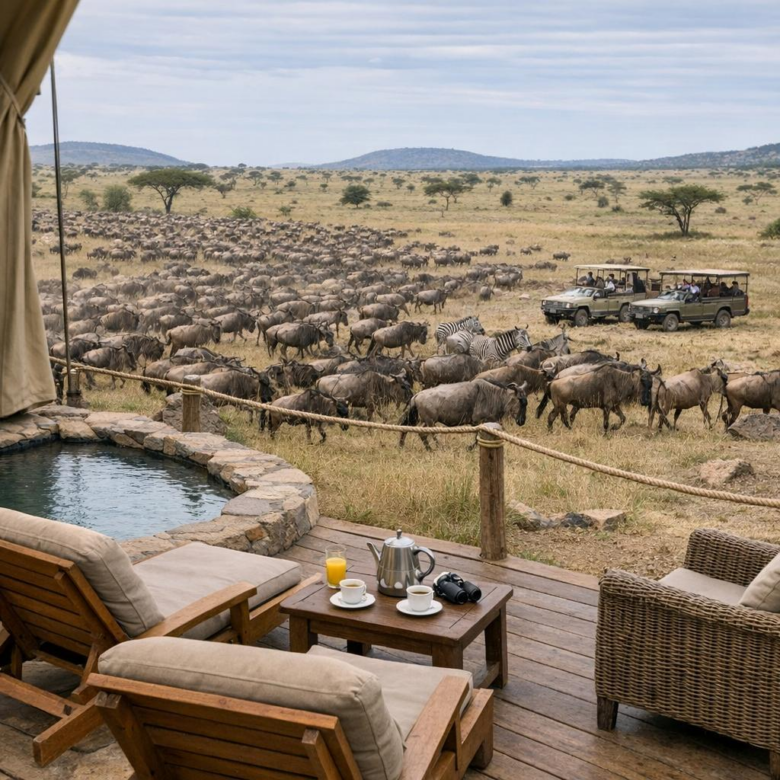
The Serengeti-Mara migration is a year-round drama, but luxury access changes what “best” really means: fewer vehicles, expert guiding, private conservancies, and front-row positioning when the herds move.
From the calving season in the southern Serengeti to the high-stakes river crossings in the northern Serengeti and Maasai Mara, each window offers a different kind of spectacle-and a different level of exclusivity.
This guide breaks down when to go, where to stay, and how to experience the Great Migration with comfort, privacy, and exceptional wildlife viewing.
Great Migration Timing by Region: Calving Season, Grumeti Crossings, and Mara River Peak Months
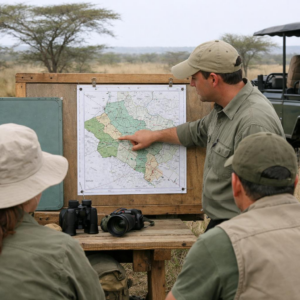
For luxury safari planning, timing matters as much as the lodge you book. The Great Migration does not follow a fixed calendar, so use seasonal patterns, recent guide reports, and tools like Google Earth or lodge location maps to check how close your camp is to the action.
- January to March: Southern Serengeti and Ndutu – Best for calving season, predator sightings, and shorter game drives from high-end mobile camps. This is a strong choice for photographers who want newborn wildebeest, big cats, and softer light without the long transfer times of peak river-crossing months.
- May to June: Western Corridor and Grumeti River – Ideal for travelers seeking fewer vehicles and excellent luxury lodge availability before the busiest season. Grumeti crossings are less predictable than Mara crossings, but the region offers superb private concessions, charter flight access, and premium safari packages.
- July to October: Northern Serengeti and Masai Mara – The classic period for Mara River crossings, especially from late July through September. Expect higher safari lodge rates, limited room availability, and the need to book private guides or vehicles well in advance.
A practical example: if you want river crossings with luxury access, staying in the Northern Serengeti in August often gives better positioning than basing only in central Serengeti and driving north each day. For smoother logistics, compare fly-in safari costs, travel insurance coverage, and cancellation terms before paying deposits.
How to Secure Luxury Safari Access During the Best Migration Windows
For peak Great Migration dates, especially July to October in the Serengeti and Masai Mara, book luxury safari lodges 9-15 months ahead. The best river-crossing locations have limited beds, and premium camps near the Mara River or Northern Serengeti often sell out before flight prices even become attractive.
Work with a reputable luxury safari travel advisor rather than relying only on hotel websites. A good specialist can access held inventory, private guide availability, charter flight options, and flexible routing if herds shift unexpectedly. Platforms like SafariBookings are useful for comparing verified operators, but confirm whether the quote includes park fees, internal flights, conservation charges, and emergency evacuation cover.
- Choose location over lodge branding: a slightly simpler camp in the right wildlife corridor can outperform a famous property in the wrong area.
- Ask about vehicle policy: private 4×4 safari vehicles cost more, but they prevent wasted time coordinating with other guests.
- Protect the investment: buy comprehensive travel insurance that covers medical evacuation, delays, and cancellation for high-value safari packages.
A real-world example: for an August river-crossing safari, I would prioritize four nights in the Northern Serengeti, then three nights in the Masai Mara, instead of moving camps every two nights. Fewer transfers means more time on game drives when guides are tracking fresh movement reports.
Also check flight logistics before paying deposits. Luxury access is not just about the lodge; it is about landing close to the action, minimizing road transfers, and having a guide who can adjust the day’s plan quickly.
Luxury Migration Safari Mistakes to Avoid: Crowds, Overbooked Camps, and Poor River-Crossing Positioning
The biggest mistake is assuming a higher safari cost automatically guarantees privacy. In peak migration months, even premium Serengeti and Masai Mara camps can feel crowded if they sit near famous crossing points like Mara River’s Lookout Hill or Kogatende’s busiest access roads. Ask your luxury safari operator how many vehicles typically use the same area, not just how elegant the tented camp looks.
Overbooked camps are another hidden problem, especially when travelers book late and accept “similar standard” alternatives. A real-world example: a guest booked a high-end migration safari near Kogatende but was moved farther south because the preferred camp was full; they spent extra hours driving each day and missed two possible river-crossing windows. Confirm the exact camp name, location, transfer time, and cancellation terms before paying a deposit.
- Check location maps: Use Google Earth to see whether the camp is genuinely close to migration corridors or just marketed as “Northern Serengeti.”
- Prioritize private vehicles: A private 4×4 safari vehicle gives your guide freedom to wait quietly instead of rushing back for shared-camp schedules.
- Review access logistics: Compare road transfers, fly-in safari options, luggage limits, and travel insurance coverage for missed connections.
Poor river-crossing positioning can ruin an expensive trip. The best guides avoid parking in the obvious crowd and instead read herd movement, wind direction, and pressure from other vehicles. For luxury migration travel, pay for guiding quality and flexible routing first; marble bathrooms matter less when the wildebeest cross two bends away.
Expert Verdict on Best Time of Year to Witness the Great Migration with Luxury Access
The best time to witness the Great Migration with luxury access depends on the experience you value most. Choose July to September for dramatic river crossings and iconic safari scenes, or January to March for quieter, wildlife-rich calving season in the southern Serengeti.
For the most seamless journey, book early, prioritize camps in prime private or low-density locations, and match timing to your comfort with crowds, travel style, and photography goals. The Migration is never guaranteed to perform on schedule, but with expert planning and flexible routing, luxury access turns uncertainty into an advantage.