What’s the point of premium high-CRI LEDs if the controller quietly ruins the light?
In architectural lighting, color accuracy depends on more than the strip or fixture-it depends on how precisely the controller handles dimming, tuning, scenes, and signal stability.
The best smart LED controllers for high-CRI installations preserve smooth fades, consistent white points, and accurate color rendering across coves, millwork, galleries, hospitality spaces, and residential interiors.
This guide focuses on controllers that meet the real demands of design-led lighting: reliable protocols, low flicker, strong app or automation support, and performance worthy of high-end architectural projects.
What Makes a Smart LED Controller Suitable for High-CRI Architectural Lighting?
A smart LED controller for high-CRI architectural lighting must do more than turn strips on and off. It needs clean dimming, stable color output, and enough power capacity to protect premium CRI 90+ or CRI 95+ LED tape from flicker, color shift, and premature failure.
In real projects, the weak point is often the controller, not the LED strip. For example, a warm white cove light in a hotel lobby can look excellent at full brightness but turn slightly green or uneven at 10% dimming if the controller uses poor PWM control or low-quality drivers.
- High PWM frequency: Helps reduce visible flicker, especially for restaurants, retail stores, galleries, and spaces where cameras are used.
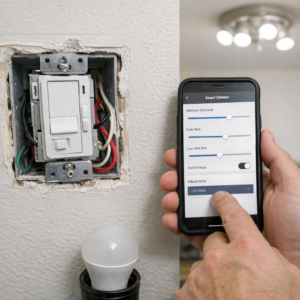
- Fine dimming resolution: Look for smooth low-end dimming, not just basic app-based brightness control.
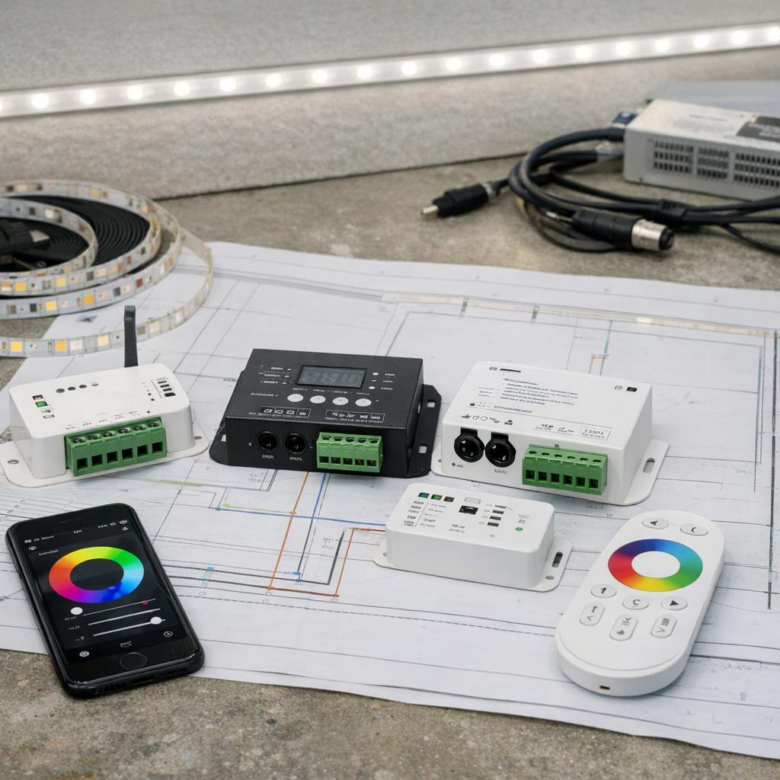
- Protocol compatibility: DALI, DMX, 0-10V, Zigbee, or platforms like Casambi can make installation easier and more scalable.
Load capacity is just as important. A controller should match the LED strip voltage, total wattage, and installation layout, with a sensible safety margin to avoid overheating and expensive service calls later.
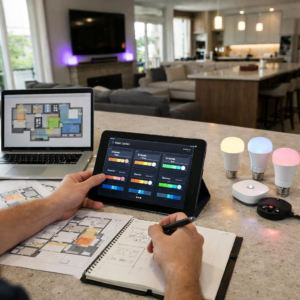
For premium architectural lighting systems, also check whether the controller supports tunable white, RGBW, or RGB+CCT control if the design requires scene setting. Integration with lighting control systems, occupancy sensors, schedules, and energy management tools can improve both user experience and operating cost.
The best choice is usually not the cheapest Wi-Fi LED controller. It is the device that preserves color accuracy, dims predictably, works with professional lighting controls, and fits the electrical requirements of the space.
How to Match LED Controllers with Dimming Protocols, CCT Control, and Fixture Loads
Start by matching the controller to the dimming protocol already used by the fixture or lighting control system. A 0-10V LED driver needs a 0-10V controller, while addressable architectural lighting may require DALI-2, DMX512, or a wireless platform such as Casambi. Mixing protocols without the right gateway usually causes flicker, limited dimming range, or fixtures that never fully turn off.
For high-CRI tunable white lighting, confirm the controller supports CCT control, not just single-channel dimming. Warm-to-cool LED strips typically need a dual-channel PWM controller, while RGBW or RGB+CCT fixtures need more channels and higher current capacity. In a retail display, for example, a 2700K-5000K high-CRI linear fixture should be paired with a tunable white controller so staff can shift from warm ambience to crisp product lighting without replacing drivers.
- Check voltage: match 12V, 24V, or constant-current requirements exactly.
- Calculate load: total fixture wattage should stay below the controller’s rated output, with headroom for heat and voltage drop.
- Verify dimming curve: logarithmic dimming often feels smoother in hospitality, galleries, and luxury residential lighting.
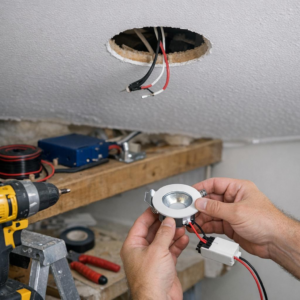
One field lesson: the controller is often blamed when the real issue is an undersized power supply or long cable run. Use a multimeter and the driver spec sheet before ordering replacement smart lighting controls. For larger projects, platforms like Lutron HomeWorks, DALI-2 commissioning tools, or DMX decoders can reduce service calls and make future fixture upgrades easier.
Common Smart LED Controller Mistakes That Reduce Color Accuracy, Flicker Performance, and System Reliability
One of the most common mistakes is pairing a premium high-CRI LED strip with a low-quality smart LED controller that uses poor PWM dimming. On paper, the strip may be CRI 95+, but if the controller creates visible flicker or uneven low-end dimming, the lighting will look cheap in a kitchen, gallery, retail display, or architectural cove.
Another issue is ignoring voltage drop and load capacity. For example, a 24V tunable white installation running around a long ceiling perimeter may shift warmer or dimmer at the far end if the installer feeds power from only one side. In real projects, using proper wire gauge, multiple power injection points, and a reliable LED power supply often matters as much as the controller itself.
- Wrong protocol choice: Wi-Fi controllers are convenient, but DMX, DALI, or 0-10V systems are usually better for commercial lighting control and large architectural lighting projects.
- Poor calibration: RGBW and tunable white channels should be balanced with a light meter or app-based testing tool such as LightSpectrum Pro to avoid color mismatch between zones.
- Undersized drivers: Running LED drivers near maximum load can increase heat, shorten lifespan, and cause unstable dimming performance.
Also avoid mixing LED strips from different batches without testing them side by side. I have seen reception desks where two “3000K” strips looked noticeably different after installation, even though both were from reputable brands. For high-end smart lighting systems, always test the controller, LED strip, dimmer, and power supply together before final mounting.
Closing Recommendations
The right smart LED controller should protect both color quality and design intent. For high-CRI architectural lighting, choose a controller based on dimming precision, protocol compatibility, load capacity, and long-term reliability-not just app features.
- Use DMX or DALI where accuracy, zoning, and commissioning control matter most.
- Choose Wi-Fi or Zigbee for smaller projects needing convenience and automation.
- Prioritize smooth low-end dimming, stable output, and fixture compatibility before final specification.
A well-matched controller turns high-CRI LEDs into a dependable architectural tool rather than just a connected lighting accessory.