What if the hardest part of your safari isn’t finding wildlife-but reaching the wilderness at all?
Private bush planes turn remote lodges, floodplains, salt pans, and desert camps into reachable destinations without losing days to rough roads or complicated connections.
Booking one, however, is not the same as reserving a standard charter. Aircraft type, runway conditions, baggage limits, weather windows, permits, and pilot experience can all shape the success of your transfer.
This guide explains how to book private bush planes for remote safari transfers with confidence-so your journey into the wild is efficient, safe, and seamlessly matched to your itinerary.
What Private Bush Plane Transfers Include-and When They Make Sense for Remote Safaris
A private bush plane transfer usually includes the aircraft, licensed pilot, fuel planning, basic airport or airstrip coordination, and direct routing between safari camps or regional hubs. Depending on the charter company, the quoted private charter flight cost may also include landing fees, passenger taxes, luggage handling, and meet-and-assist service, but always ask for an itemized invoice.
The real value is time and access. For example, flying privately from Nairobi Wilson Airport to a conservancy airstrip near the Maasai Mara can avoid a full day of road travel, especially when connecting to a high-end lodge with limited scheduled flights.
- Best use case: remote camps with no daily scheduled service or difficult road access.
- Key benefit: flexible departure times that match international flights and lodge check-in windows.
- Watch closely: baggage weight limits, soft-bag requirements, and weather-related delays.
Private transfers make the most sense for families, photographers carrying expensive camera gear, honeymoon travelers, mobility-limited guests, or groups splitting aircraft charter services across several seats. They are also practical when combining multiple parks, such as Amboseli, Laikipia, and the Mara, without losing safari hours to road transfers.
Before booking, confirm the aircraft type, luggage allowance, airstrip condition, cancellation terms, and whether medical evacuation insurance is included or separate. I also recommend carrying offline documents and emergency contacts in a tool like TripIt, plus checking whether your operator provides satellite communication support for very remote routes.
How to Book a Private Bush Plane: Routes, Operators, Permits, Luggage, and Timing
Start by mapping the exact safari route, not just the nearest town. A quote for Nairobi to the Masai Mara is very different from Nairobi Wilson to a specific conservancy airstrip, and operators will ask for GPS coordinates or the airstrip name before pricing the private charter flight cost.
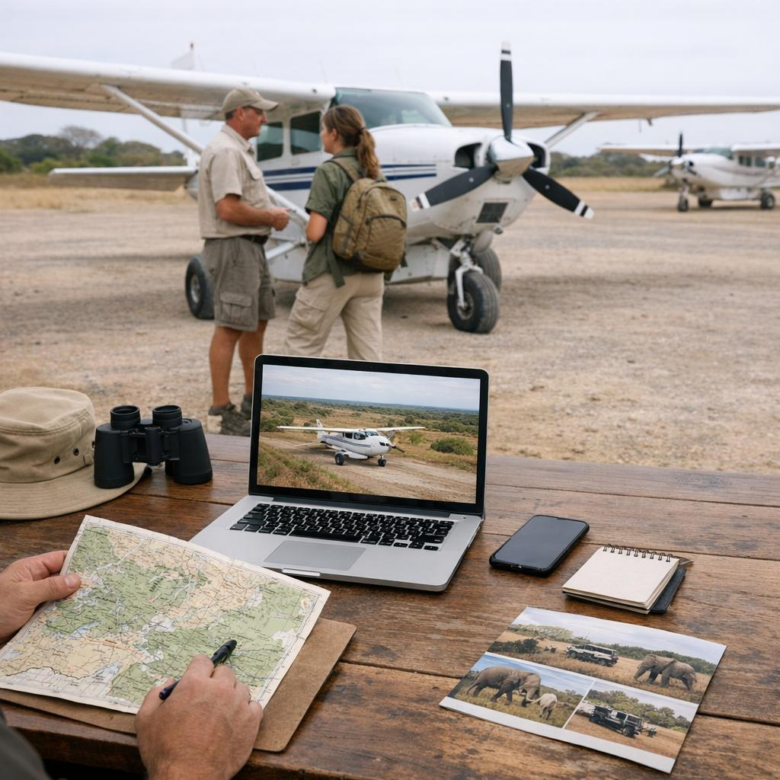
Use reputable safari aviation companies, destination management companies, or platforms such as SafariBookings to compare aircraft options, safety standards, and routing feasibility. For example, a family flying from Arusha to Serengeti, then onward to Ruaha, may need a Cessna Caravan for luggage volume rather than a smaller Cessna 206, especially with camera gear and soft bags.
- Permits: Confirm landing permissions, park fees, immigration requirements for cross-border flights, and airstrip operating hours.
- Luggage: Most bush planes require soft-sided bags, often with strict weight limits; hard suitcases can be refused.
- Timing: Book early for peak safari seasons, and avoid late-afternoon arrivals when daylight and weather margins are tighter.
Ask the operator for a written itinerary showing aircraft type, passenger capacity, luggage allowance, fuel stops, cancellation terms, and medical evacuation options. In practice, the cheapest aircraft is not always the best value if it requires extra stops or leaves no room for professional camera equipment.
Share passenger weights honestly, including children, because bush plane balance calculations matter on short dirt airstrips. A good operator will also advise whether a road transfer, scheduled safari flight, or private air charter gives the best mix of cost, comfort, and reliability for your specific trip.
Common Charter Mistakes to Avoid: Weight Limits, Weather Delays, Airstrip Access, and Hidden Costs
The most common mistake is treating a bush plane transfer like a normal airport flight. Light aircraft have strict payload limits, and your “20 kg luggage allowance” may include camera gear, handbags, and even soft-sided duffels only. Hard suitcases can be refused because they do not fit safely into small cargo compartments.
A real-world example: on a Botswana safari route, two guests carrying heavy DSLR kits and wine purchases may force the operator to offload bags or book an extra seat, increasing the private aircraft charter cost. Always send your passenger weights and baggage estimates honestly before payment. It is better to be mildly embarrassed than stranded at the airstrip.
- Weather delays: Remote safari flights can be held by storms, smoke, high winds, or poor visibility, especially on dirt strips.
- Airstrip access: Some lodges require advance permission, ranger clearance, or daylight-only landing windows.
- Hidden costs: Ask about landing fees, waiting time, fuel surcharges, empty-leg positioning, and cancellation penalties.
Use tools like Windy to monitor weather patterns, but rely on the operator’s pilot-in-command for the final decision. For remote areas, a satellite communicator such as Garmin inReach is useful if road transfers or backup plans become necessary.
Before confirming, request a written quote that separates aircraft hire, taxes, baggage rules, lodge transfer fees, and emergency evacuation or travel insurance requirements. Also ask who pays if the aircraft cannot land and you need a vehicle transfer, overnight stay, or rerouting to another airstrip. Those details matter more than the headline charter price.
Expert Verdict on How to Book Private Bush Planes for Remote Safari Transfers
Booking a private bush plane is ultimately a balance between access, timing, safety, and budget. The smartest choice is not always the lowest quote, but the operator that understands remote airstrips, weather patterns, payload limits, and safari logistics.
- Choose private charters when time, privacy, or remote access matter most.
- Confirm details early to avoid baggage, routing, or runway restrictions.
- Work with specialists who coordinate aircraft, camps, permits, and contingency plans.
A well-planned flight turns a difficult transfer into part of the safari experience.