Is your induction cooktop pulsing, shutting down, or heating like it has a mind of its own? Power fluctuations are more than an annoyance-they can point to anything from cookware mismatch to voltage instability or a failing control board.
Because induction systems react instantly to electrical and magnetic changes, small issues can look like major failures. The key is knowing how to separate normal cycling from a real power problem.
This step-by-step guide walks you through the checks that matter first: cookware, ventilation, outlet supply, error codes, breaker behavior, and internal warning signs. By the end, you’ll know what you can safely fix yourself-and when to stop and call a qualified technician.
Understanding Why Induction Cooktop Power Fluctuations Happen
Induction cooktop power fluctuations usually happen when the appliance is not receiving stable electricity or when the cookware is not interacting properly with the magnetic field. Unlike gas or radiant electric stoves, induction cooking depends on precise power control, so even small issues with voltage, wiring, or pan contact can cause pulsing, clicking, or sudden heat drops.
A common real-world example is a cooktop that works fine on one burner but loses power when two or three zones are used together. In many homes, this points to an overloaded circuit, loose terminal connection, or an undersized electrical supply rather than a faulty cooktop. Checking the breaker size, dedicated circuit, and installation manual can save you from paying unnecessary appliance repair costs.
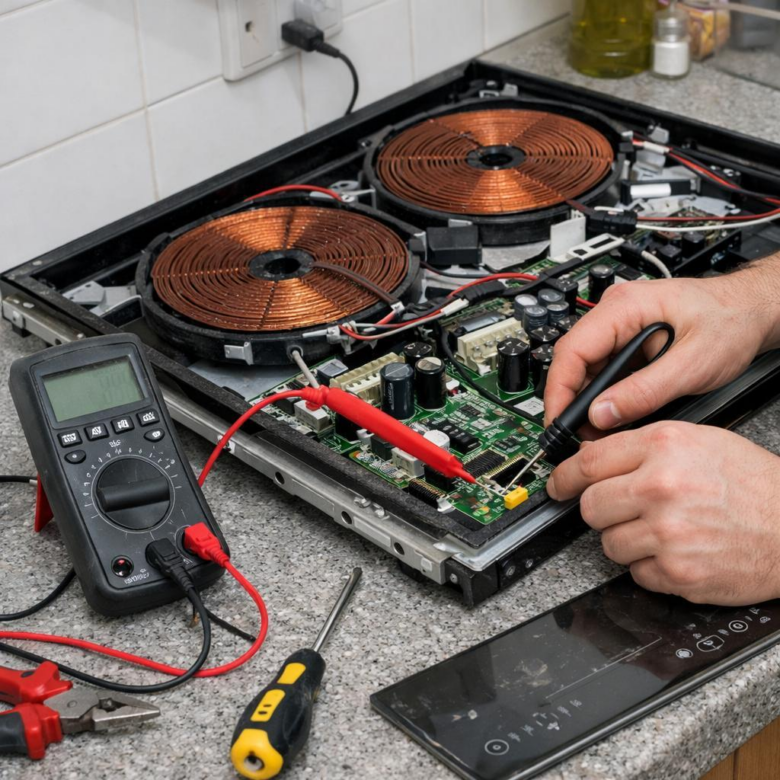
Some fluctuations are normal. Many induction models cycle power at lower heat settings to maintain temperature, especially during simmering. However, if the display flickers, the unit shuts off, or cooking performance changes randomly, it is worth testing the outlet or hardwired connection with a Fluke digital multimeter or calling a licensed electrician.
- Cookware issue: Thin, warped, or non-magnetic pans can cause unstable heating.
- Electrical issue: Voltage drops, shared circuits, or loose wiring may interrupt power delivery.
- Control board issue: Faulty sensors or electronics can create irregular burner output.
From experience, the fastest clue is timing: if the fluctuation happens only with certain pans, start with cookware; if it happens under heavy load, inspect the electrical circuit. This simple distinction helps narrow the problem before spending money on replacement parts or professional cooktop service.
How to Diagnose Voltage, Cookware, and Control Panel Issues Step by Step
Start by checking the power supply, because induction cooktop power fluctuations often come from unstable voltage rather than a bad appliance. Use a Fluke digital multimeter at the outlet or junction box to confirm the voltage matches the cooktop rating, typically 120V or 240V depending on the model and installation.
If the reading drops when multiple appliances run, such as an oven, dryer, or HVAC system, the issue may be circuit overload or loose wiring. In that case, stop testing and call a licensed electrician, especially if you smell heat, see flickering lights, or notice a breaker that trips repeatedly.
- Voltage test: Measure supply voltage while the cooktop is on a medium setting, not just when idle.
- Cookware test: Try a flat magnetic pan that fully covers the induction zone.
- Control test: Reset the unit by switching off the breaker for 5-10 minutes.
Next, rule out cookware problems. A common real-world case is a cooktop that pulses on and off with a thin stainless-steel pan but works perfectly with a heavy cast-iron skillet; that usually means the pan base is not induction-compatible or is too small for the burner sensor.
Finally, inspect the control panel for moisture, grease buildup, or touch sensitivity issues. Clean it with a soft cloth, avoid excess liquid, and check for error codes in the owner’s manual or manufacturer service app if available; replacing a control board can be expensive, so confirm voltage and cookware first.
Common Troubleshooting Mistakes That Can Worsen Induction Cooktop Power Problems
One of the biggest mistakes is repeatedly resetting the breaker without checking why it tripped. If an induction cooktop loses power under high heat settings, the issue may be an overloaded circuit, loose terminal connection, or failing control board-not something a reset will fix.
Avoid testing voltage with cheap, inaccurate tools or guessing based on visible symptoms. A reliable multimeter, such as a Fluke digital multimeter, can confirm whether the outlet, junction box, or dedicated circuit is supplying stable voltage before you blame the appliance.
- Do not use extension cords or power strips with an induction cooktop; they can overheat and cause voltage drop.
- Do not keep using cookware that triggers repeated shutoffs, especially warped pans or non-compatible stainless steel.
- Do not open the cooktop housing while it is connected to power, even if the display is off.
A real-world example: a homeowner may assume the cooktop is defective because it shuts off when two burners run on boost mode. In many cases, the actual problem is a shared kitchen circuit that cannot handle the load, which may require a licensed electrician and a dedicated 240V circuit upgrade.
Another common error is replacing expensive parts too soon. Before paying for an induction cooktop control board replacement or appliance repair service, check the breaker rating, wiring connections, ventilation clearance, and error codes in the user manual. This saves money and prevents turning a simple power supply issue into a costly repair.
Summary of Recommendations
Power fluctuations in an induction cooktop should never be treated as “normal” if they happen repeatedly. The practical approach is to separate simple causes-unstable cookware placement, shared circuits, loose plugs, or ventilation issues-from faults that need professional attention.
Key takeaway: if the problem disappears after basic checks, continue monitoring usage conditions. If flickering, shutdowns, error codes, burning smells, or breaker trips continue, stop using the cooktop and call a qualified technician. Choosing repair early can prevent control board damage, electrical hazards, and unnecessary appliance replacement.