Your resin cure is only as reliable as the temperature profile behind it.
Too cold, and parts stay tacky, weak, or under-cured; too hot, and you risk warping, bubbles, shrinkage, or runaway exotherm.
Consistent resin curing depends on controlling heat before, during, and after the reaction-not just setting a room temperature and hoping for the best.
This guide breaks down the most effective temperature control methods for stable curing, better mechanical properties, fewer defects, and repeatable production results.
Why Temperature Stability Determines Resin Cure Strength, Clarity, and Defect Rates
Resin curing is not just about reaching the “right” temperature; it is about holding that temperature steadily long enough for the chemical reaction to complete evenly. When epoxy resin or UV resin cures in a room that swings between cool drafts and hot spots, the result can be soft areas, cloudy patches, bubbles, warping, or weak bonding. This is especially costly for resin flooring, countertops, jewelry casting, carbon fiber parts, and small-batch manufacturing.
In real shop conditions, I’ve seen a clear casting turn hazy simply because the workbench sat near a garage door on a cold morning. The resin looked fine at first, but the temperature drop slowed the cure and trapped microbubbles before they could rise out. A simple setup using a Inkbird digital temperature controller, heat mat, and insulated curing box would have prevented the defect for far less than the cost of wasted resin and labor.
Stable temperature helps control three key outcomes:
- Cure strength: consistent heat supports proper crosslinking, which improves hardness, adhesion, and durability.
- Optical clarity: steady warmth reduces cloudiness, blush, and trapped bubbles in clear epoxy projects.
- Defect rates: fewer temperature swings mean fewer failed pours, rework costs, and customer complaints.
For better quality control, use a digital thermometer, infrared temperature gun, or temperature data logger instead of guessing by room feel. In professional resin work, a curing oven, heated enclosure, or climate-controlled workspace is not a luxury-it is a cost-control tool.
How to Control Resin Curing Temperature with Heat Mats, Ovens, Chambers, and Ambient Monitoring
Consistent resin curing starts with controlling both surface temperature and room conditions. A silicone heat mat with a digital thermostat is one of the most affordable temperature control methods for small molds, coasters, jewelry, and tabletop pours because it keeps heat under the workpiece instead of warming the entire room.
For better accuracy, place a probe near the mold, not just on the bench. Tools like the Inkbird ITC-308 thermostat controller are popular because they let you set a target temperature and prevent overheating, which can cause bubbles, warping, soft spots, or yellowing in epoxy resin.
- Heat mats: Best for small resin projects and low-cost curing setups.
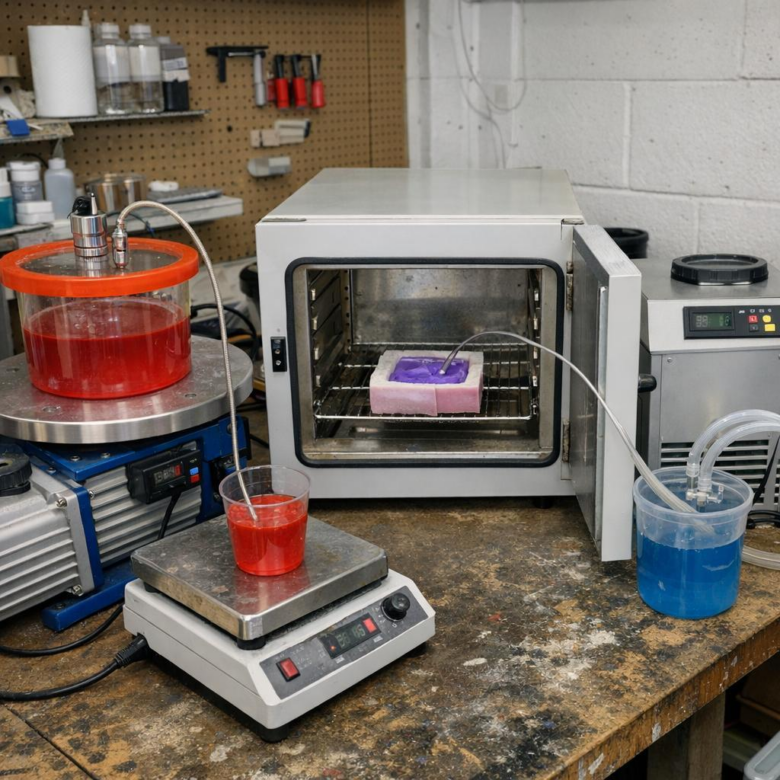
- Curing ovens: Better for silicone molds, resin casting blanks, and repeat production.
- Insulated chambers: Useful for larger pours where stable ambient temperature matters.
A small curing oven or DIY insulated chamber can be a smarter investment if you sell resin products. For example, a maker casting pen blanks in a cold garage may get cloudy or tacky results at night, but an insulated box with a thermostat-controlled ceramic heater can keep the curing environment stable without heating the whole workspace.
Always monitor ambient temperature with a separate digital thermometer or hygrometer, especially in basements, garages, and winter workshops. In real-world use, the biggest mistake is trusting the room thermostat; the air near the floor, workbench, and mold can be several degrees different, which directly affects resin cure time, finish quality, and production consistency.
Common Temperature Control Mistakes That Cause Soft Spots, Bubbles, Warping, and Incomplete Cures
One of the most common mistakes is judging room temperature instead of resin temperature. A workshop may read 72°F, but a cold silicone mold, concrete floor, or metal table can pull heat from epoxy resin and leave soft spots or a tacky surface, especially in deep pours.
Overheating is just as risky. Using a heat gun too aggressively, placing resin too close to a space heater, or curing inside a poorly ventilated box can trap bubbles, speed up the exothermic reaction, and cause warping or yellowing.
- Skipping a thermometer: Use an infrared thermometer or a probe-style digital thermometer to check the mold, resin, and curing area.
- Changing temperature mid-cure: Sudden drops from opening doors, turning off HVAC, or moving the piece overnight can interrupt curing.
- Using uneven heat: Heat mats, lamps, and DIY curing chambers need spacing and temperature control to avoid hot spots.
A practical example: in a small resin jewelry studio, coasters cured near a window looked fine on top but stayed flexible underneath because the mold base was cold. Moving the molds onto an insulated board and monitoring them with a ThermoPro digital thermometer helped keep the cure more consistent without buying expensive industrial equipment.
For better results, pre-warm resin bottles in lukewarm water, keep molds off cold surfaces, and use a thermostat-controlled curing chamber when production quality matters. The cost of a basic temperature controller is usually lower than replacing wasted epoxy, pigments, molds, and customer orders.
The Bottom Line on Best Temperature Control Methods for Consistent Resin Curing
Consistent resin curing comes down to controlling the environment, not guessing the cure time. Choose the method that matches your resin system, part size, workflow, and tolerance requirements. For small projects, a stable room or heated enclosure may be enough; for production or precision parts, ovens, thermal controllers, and documented temperature profiles are worth the investment.
The practical rule is simple: keep temperature steady, measure it where curing actually happens, and avoid sudden changes. Better control reduces defects, improves repeatability, and helps every batch perform as intended.