What if your home office is making you tired before the workday even starts?
Light is one of the strongest signals your brain uses to regulate focus, alertness, mood, and sleep. When your lighting fights your circadian rhythm, productivity becomes harder than it should be.
Circadian rhythm lighting uses brightness, color temperature, and timing to support your body’s natural energy cycle-from crisp morning focus to calmer evening recovery.
In this guide, you’ll learn how to design home lighting that helps you work better during the day without sabotaging your sleep at night.
What Circadian Rhythm Lighting Means for Home Productivity and Daily Energy
Circadian rhythm lighting means adjusting your home lighting to support the body’s natural sleep-wake cycle, especially when you work from home. In practical terms, it uses brighter, cooler light during focus hours and warmer, dimmer light in the evening so your brain gets the right “time of day” signal.
This matters because poor lighting can make a home office feel tiring even when your workload is reasonable. For example, someone taking video calls in a dim spare bedroom may feel sluggish by mid-afternoon, while a 4000K-5000K LED desk lamp or smart bulb setup can make the same workspace feel more alert and usable.
A simple circadian lighting plan often includes:
- Morning: bright white light near your desk to support focus and reduce grogginess.
- Afternoon: balanced task lighting that prevents eye strain without creating glare on screens.
- Evening: warm, low-level light to help the body wind down before sleep.
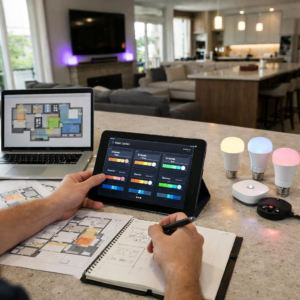
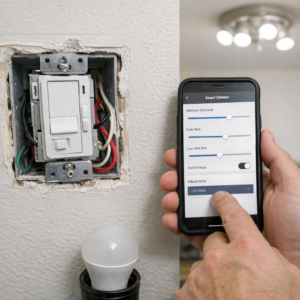
Smart lighting systems such as Philips Hue, tunable LED bulbs, daylight lamps, and automated dimmer switches make this easier because you can schedule color temperature and brightness changes throughout the day. If you are comparing home office lighting cost, energy-efficient LED fixtures usually offer better long-term value than leaving overhead lights on all day.
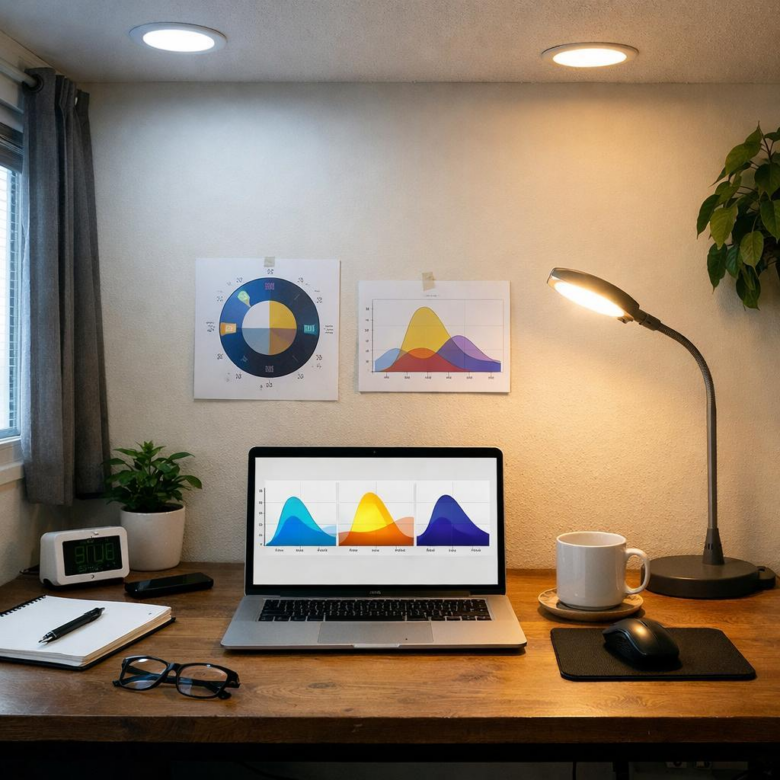
In real homes, the biggest improvement usually comes from layering light: daylight from a window, a quality desk lamp, and soft ambient lighting. That combination supports productivity without making the room feel clinical or harsh.
How to Design a Room-by-Room Circadian Lighting Plan for Focus, Breaks, and Evening Wind-Down
Start by matching each room to the job it supports, then choose tunable white LED bulbs, smart lighting controls, or a circadian lighting system that can shift color temperature through the day. In a home office, use bright, cool-white light in the morning and early afternoon, ideally around your desk rather than behind you, so video calls, paperwork, and deep work feel easier on the eyes.
- Home office: Set task lights to cool white during focus blocks, then dim slightly after lunch to reduce screen glare.
- Kitchen or dining area: Use medium-bright neutral light for breaks, meals, and informal work sessions.
- Bedroom and living room: Shift to warm, low-level lighting after sunset to support evening wind-down.
A practical example: if you use Philips Hue, you can create a “Focus” scene for 9 a.m., a softer “Break” scene for 2 p.m., and a warm “Relax” scene for 8 p.m. This is where smart home automation adds real value, because you are not relying on willpower to adjust every lamp manually.
For better results, avoid putting high-brightness blue-rich bulbs in bedrooms, even if they are energy-efficient. I’ve seen many home offices fail because the desk lighting was excellent, but the evening lighting stayed too bright, making it harder to mentally disconnect from work.
If budget matters, prioritize the office first, then the bedroom. A full lighting control system can increase installation cost, but a few smart bulbs and scheduled scenes often deliver most of the daily productivity benefits.
Common Circadian Lighting Mistakes That Disrupt Sleep, Focus, and Work-from-Home Performance
One of the biggest mistakes is using bright, cool-white lighting too late in the evening. A 5000K desk lamp may feel great for spreadsheets at 10 a.m., but the same light at 9 p.m. can make it harder to wind down, especially if your home office is also in your bedroom or living room.
Another common issue is relying on ceiling lights only. Overhead lighting often creates glare on monitors, uneven brightness, and eye strain during video calls, which can reduce focus over a long workday. A better setup combines ambient lighting, a dimmable task lamp, and warmer accent lights for evening use.
- Using one color temperature all day: choose cooler light for daytime productivity and warmer light after sunset.
- Ignoring smart lighting schedules: tools like Philips Hue or Lutron Caséta can automate brightness and color changes.
- Placing lights in the wrong position: keep task lights beside the screen, not behind it or directly in your eyes.
A real-world example: many remote workers buy an expensive ergonomic chair and standing desk but keep a harsh LED bulb above their workstation. The result is decent posture but poor visual comfort, afternoon fatigue, and trouble sleeping after late work sessions.
Also avoid cheap non-dimmable bulbs if you work flexible hours. Investing in smart bulbs, adjustable LED desk lamps, or a circadian lighting system may cost more upfront, but the benefits include better work-from-home comfort, improved sleep hygiene, and a more professional home office setup.
Key Takeaways & Next Steps
Circadian lighting works best when it is treated as a daily performance tool, not a decorative upgrade. The right decision is not the brightest fixture or the most advanced smart system, but the setup you will use consistently.
- Choose tunable lighting if your workspace supports both focused work and evening wind-down.
- Prioritize daylight exposure before relying on artificial solutions.
- Automate color temperature changes to reduce guesswork and protect routine.
Design for alignment, not excess: bright, cool light when you need alertness; warm, dim light when your body needs recovery.