What if your shower water could cut your outdoor water use almost in half?
Smart graywater recycling systems make that possible by capturing lightly used water from showers, bathroom sinks, and laundry, then filtering and redirecting it for safe reuse where local codes allow.
Installing one is not just a plumbing upgrade-it is a water-efficiency strategy that combines sensors, valves, filtration, and app-based controls to reduce waste without sacrificing convenience.
This step-by-step guide walks you through planning, code checks, system selection, installation basics, and setup so you can approach a smart graywater project with confidence.
What a Smart Graywater Recycling System Does and Where It Fits in Your Home
A smart graywater recycling system collects gently used water from showers, bathroom sinks, and laundry, then filters and redirects it for approved non-potable uses such as landscape irrigation or toilet flushing. The “smart” part usually includes sensors, automated valves, pump controls, app monitoring, and leak detection, so the system can adjust flow instead of wasting water or overloading your plumbing.
In most homes, the best installation points are near the laundry room, bathroom drain lines, garage utility area, or an exterior wall close to irrigation zones. For example, a homeowner with a washing machine on an outside wall can often route laundry graywater to a subsurface drip irrigation system with fewer plumbing changes than a full whole-home retrofit.
- Laundry-to-landscape systems are often the simplest and lowest-cost option.
- Bathroom graywater systems may need more filtration and professional plumbing services.
- Toilet reuse systems usually require storage tanks, pumps, backflow protection, and local code approval.
Smart controllers can also connect with irrigation devices such as Rachio or home automation platforms like Home Assistant to pause watering after rain or divert water to sewer when soaps, bleach, or heavy sediment are detected. In real installations, this control matters because graywater quality changes from load to load, especially with laundry detergents and cleaning products.
The right location depends on access, slope, maintenance space, and permit requirements. A licensed plumber or graywater installation service can help estimate installation cost, check building code compliance, and confirm whether your existing drainage layout can support a safe water recycling system.
How to Install a Smart Graywater Recycling System Step by Step
Start by identifying safe graywater sources: bathroom sinks, showers, tubs, and laundry drains. Avoid kitchen sink and toilet wastewater because grease, food waste, and pathogens can damage filtration systems and may violate local plumbing code. Before buying equipment, check permit requirements and backflow prevention rules with your local building department or a licensed plumbing contractor.
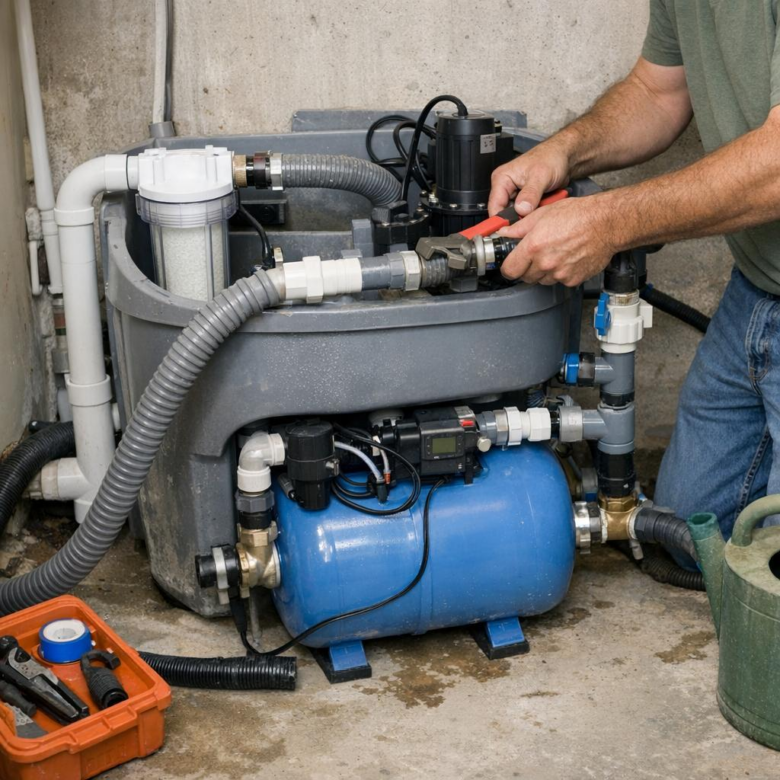
Next, map the plumbing route from the graywater source to the treatment unit, storage tank, or irrigation zone. In most homes, the easiest setup is a laundry-to-landscape system with a smart valve controller, inline filter, and drip irrigation tubing. For example, a homeowner upgrading a laundry room can divert washer discharge to mulch basins around fruit trees instead of sending it straight to the sewer line.
- Install a three-way diverter valve so water can switch between sewer and reuse mode.
- Add a sediment filter and accessible cleanout point for maintenance.
- Connect smart monitoring through a controller such as Rachio or a compatible smart irrigation system.
After the plumbing is secured, connect sensors for flow rate, tank level, leak detection, and automatic shutoff. This is where smart graywater recycling systems provide real value: they help prevent overwatering, alert you to clogs, and reduce water waste when outdoor irrigation is not needed.
Test the system with a small water load before full operation. Watch for slow drainage, leaks, odors, or pooling near plants, then adjust filter placement and irrigation flow. In real installations, the most common issue is not the smart device-it is poor slope or inaccessible filters, so leave room for service access from day one.
Common Installation Mistakes and Optimization Tips for Long-Term Water Savings
One of the most expensive mistakes is connecting graywater lines to blackwater sources, such as toilets or kitchen sinks. This can violate plumbing code, create health risks, and force a full reinstallation by a licensed plumbing contractor. Always label pipes clearly and verify connections with a simple drain test before sealing walls or trenches.
Another common issue is poor filtration placement. Filters should be easy to access, not buried behind drywall or under a deck where maintenance becomes a hassle. In one retrofit project, a homeowner placed the filter too close to the laundry outlet, causing lint buildup every few days; moving it downstream and adding a lint trap reduced service calls immediately.
- Use a flow meter such as Flume Smart Water Monitor to track actual water savings and detect leaks early.
- Install a bypass valve so water can switch back to the sewer during maintenance or when using harsh cleaning products.
- Choose drip irrigation over spray heads to reduce evaporation and protect plants from oversaturation.
For long-term efficiency, match the system size to real household usage, not guesswork. A smart graywater recycling system connected to one washing machine may be enough for landscape irrigation, while whole-home graywater systems require stronger pumps, better filtration, and higher installation cost. If your area offers water conservation rebates, check local utility requirements before buying equipment, because approved devices and professional installation services may qualify for incentives.
Small adjustments matter. Set irrigation zones for early morning, inspect emitters monthly, and avoid sending bleach, salts, or heavy detergents into the system. These habits protect your graywater pump, extend filter life, and improve the return on investment from your water-saving upgrade.
Expert Verdict on Step-by-Step Guide to Installing Smart Graywater Recycling Systems
Installing a smart graywater recycling system is ultimately a decision about long-term efficiency, not just water savings. The best results come from choosing equipment that matches your household’s water use, local codes, landscape needs, and maintenance capacity.
- Move forward if you want lower water demand and can commit to routine upkeep.
- Consult a professional if plumbing changes, permits, or filtration requirements are complex.
- Start small when unsure-expand once the system proves reliable.
Done thoughtfully, graywater recycling becomes a practical, resilient upgrade for a smarter home.