What if the wrong combi-oven is the bottleneck between flawless service and a six-figure catering disaster?
For high-volume gourmet caterers, a combi-oven is not just another piece of kitchen equipment-it is the engine behind consistency, speed, moisture control, and menu flexibility at scale.
Comparing models means looking beyond capacity and price to evaluate recovery time, steam precision, programmable cooking, rack compatibility, cleaning systems, and how well the oven performs under relentless event-day pressure.
This guide breaks down what truly matters when choosing a combi-oven for premium catering operations where every tray, plate, and minute has to deliver.
What Defines a High-Volume Combi-Oven for Gourmet Catering?
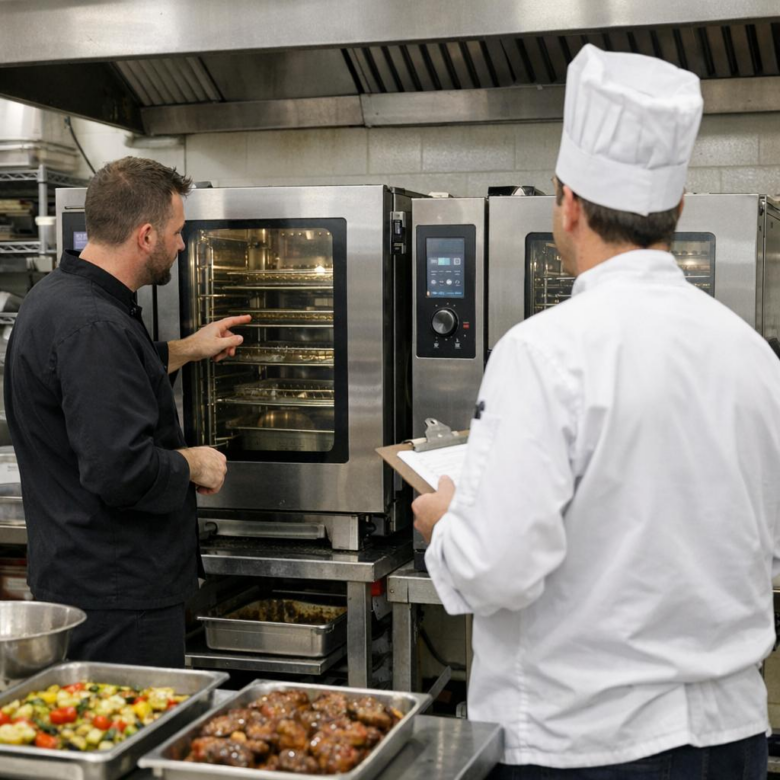
A high-volume combi-oven is not just a larger oven; it is a production system built to handle repeated cooking cycles without losing consistency. For gourmet catering, that means precise humidity control, fast heat recovery, programmable cooking modes, and enough rack capacity to manage proteins, vegetables, pastry, and banquet trays during the same service window.
In practical terms, look beyond the headline capacity. A 20-grid model may sound impressive, but the real question is whether it can maintain temperature after frequent door openings, cook evenly across every shelf, and support overnight cooking or regeneration for plated events. This is where premium commercial kitchen equipment such as the RATIONAL iCombi Pro or Convotherm combi ovens often earns its higher equipment cost.
- Capacity: GN 1/1 or GN 2/1 compatibility, trolley loading, and enough spacing for airflow.
- Control: core temperature probes, recipe storage, steam injection, and automatic cleaning systems.
- Efficiency: energy-saving modes, water filtration compatibility, and service-friendly diagnostics.
For example, a caterer preparing 300 plated beef tenderloin portions needs more than raw oven space. They need reliable low-temperature cooking, quick finishing, and holding quality without drying the meat. In real kitchens, the best high-capacity combi oven is the one that reduces labor, protects food cost, and keeps presentation consistent when the event schedule gets tight.
Also consider installation requirements early: ventilation, water quality, drainage, electrical load, and access for maintenance. These details directly affect total ownership cost and can matter as much as the purchase price.
How to Compare Capacity, Cooking Modes, Controls, and Recovery Speed
Start with capacity in real catering terms, not just tray count. A 20-grid combi oven may look ideal on paper, but if your team regularly cooks whole beef joints, hotel pans, or plated banquets, check usable cavity space, rack spacing, trolley compatibility, and whether it fits your commercial kitchen ventilation plan.
Cooking modes matter because high-volume gourmet catering rarely uses one process all day. Compare steam, convection, combination mode, low-temperature cooking, regeneration, sous vide support, and programmable multi-stage recipes. For example, a kitchen producing 300 wedding portions might steam vegetables, combi-roast chicken, then regenerate plated meals in waves without drying them out.
- Capacity: Match pan size, batch volume, and peak service timing, not just manufacturer capacity claims.
- Controls: Look for touchscreen recipe storage, HACCP logging, USB export, and cloud connectivity through platforms like RATIONAL ConnectedCooking.
- Recovery speed: Test how quickly temperature and humidity rebound after door openings during real service.
Controls can affect labor cost as much as cooking performance. In busy catering operations, programmable recipes help junior staff repeat premium results, while chef-controlled settings allow fine adjustments for delicate items like fish, laminated pastry, or slow-cooked proteins.
Recovery speed is often the difference between smooth banquet service and inconsistent plates. When comparing combi oven cost, energy efficiency, maintenance plans, and warranty coverage, ask for a live demo using your own menu items. In my experience, that test reveals more than any brochure, especially when the oven is loaded near capacity.
Common Combi-Oven Buying Mistakes That Reduce Catering Output and Food Quality
One costly mistake is buying a commercial combi oven based only on tray capacity. A 20-grid oven may look ideal on paper, but if the recovery time is slow or the steam generator is undersized, banquet service can fall behind during peak plating.
Another issue is ignoring menu-specific cooking demands. For example, a caterer producing glazed salmon, roasted vegetables, and artisan rolls for the same event needs precise humidity control, fast mode switching, and reliable core temperature probes-not just a large cavity.
- Underestimating installation cost: water filtration, drainage, electrical load, ventilation, and hood compliance can add major expense beyond the oven price.
- Skipping service coverage: without a local technician, warranty support, and a preventive maintenance contract, one breakdown can disrupt a full weekend of events.
- Choosing weak controls: inconsistent recipe programs lead to staff guesswork, uneven browning, and higher food waste.
In real catering kitchens, I’ve seen teams buy premium catering equipment but overlook workflow: the oven door opened into a narrow prep lane, slowing loading and increasing heat loss. Always check the kitchen layout, rack compatibility, and blast chiller distance before signing off on a model.
Look closely at energy efficiency, cleaning systems, and connected cooking tools such as RATIONAL ConnectedCooking or UNOX Data Driven Cooking. These platforms help standardize recipes across staff shifts, track usage, and reduce costly errors when volume jumps from a 50-cover tasting to a 500-guest reception.
Final Thoughts on Comparing Combi-Oven Models for High-Volume Gourmet Catering
The right combi-oven is the one that protects output quality when the schedule is at its most demanding. For high-volume gourmet catering, prioritize capacity, recovery speed, humidity precision, programmable consistency, and service support over headline features alone.
- Choose scalable rack capacity if banquet volume is growing.
- Invest in advanced controls when menu consistency depends on repeatable results.
- Favor proven reliability and local technical support to reduce downtime risk.
Best decision: match the oven to peak-service pressure, not average daily use.