What if your blast chiller is passing inspections-but still putting food safety at risk?
In commercial kitchens, blast chillers are critical control points, not just refrigeration equipment. If they fail to cool food fast enough, bacteria can multiply in the danger zone before anyone notices.
Proper maintenance helps protect HACCP compliance, temperature records, product quality, and customer safety. It also reduces breakdowns that can lead to discarded inventory, failed audits, or service disruption.
This guide explains the essential maintenance practices that keep blast chillers performing reliably and supporting food safety compliance every day.
Why Blast Chiller Maintenance Is Critical for HACCP Food Safety Compliance
Blast chillers are a control point in many HACCP food safety plans because they reduce cooked food through the temperature danger zone quickly and consistently. If the unit has dirty condenser coils, weak door seals, blocked airflow, or inaccurate probes, cooling times can drift outside critical limits without anyone noticing until a temperature log fails.
In a real kitchen, this often shows up during batch cooling. For example, a hotel kitchen may chill large pans of cooked rice or sauces after service; if the blast chiller sensor is out of calibration, the display may show a safe reading while the product core temperature is still too high. That creates a food safety risk and a documentation problem during a health inspection or third-party audit.
Routine maintenance supports HACCP compliance by keeping equipment performance measurable, not assumed. Practical checks should include:
- Probe calibration using a reliable thermometer or data logger
- Cleaning condenser coils and fan guards to protect cooling efficiency
- Inspecting gaskets, drain lines, alarms, and temperature recording systems
Using digital monitoring tools such as Testo Saveris or similar temperature monitoring devices can help kitchens capture cooling records, alarm events, and maintenance history for audit-ready documentation. This is especially useful for restaurants, catering operations, hospitals, and food production facilities where compliance failures can lead to product waste, service interruption, inspection penalties, or higher repair costs.
The main benefit is control. A well-maintained blast chiller helps protect food quality, reduces emergency service calls, and gives managers stronger evidence that HACCP procedures are being followed in daily operations.
How to Clean, Inspect, and Calibrate Blast Chillers for Safe Cooling Performance
Start with a written cleaning schedule that matches production volume, not just a weekly reminder on the wall. In busy kitchens, blast chillers used for soups, sauces, cooked meats, and bakery fillings often need daily interior cleaning because spilled starches and proteins can block airflow and create food safety risks.
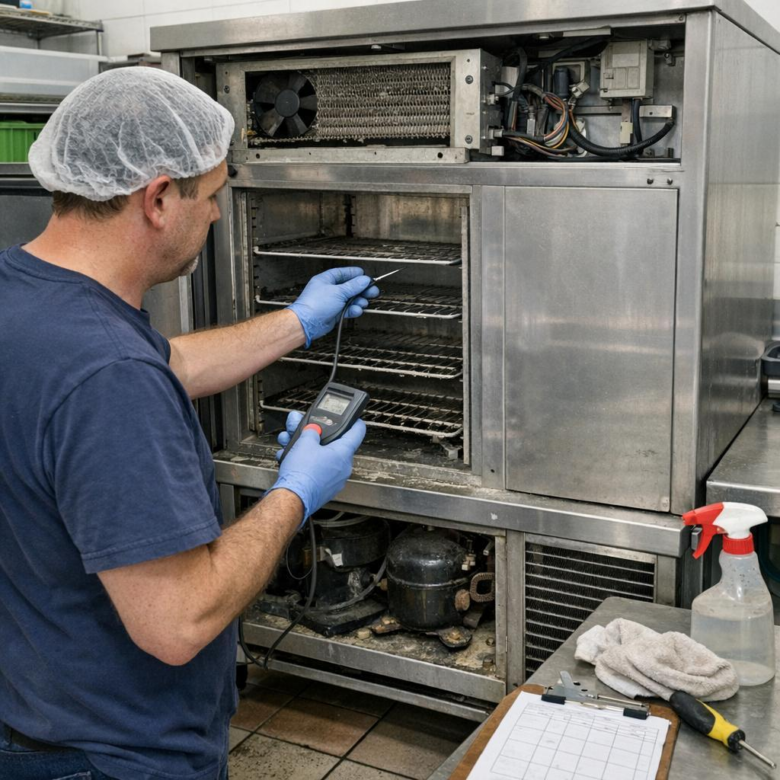
After shutting the unit down safely, remove trays, racks, and fan guards where allowed by the manufacturer, then wash food-contact surfaces with approved commercial kitchen sanitizer. Pay close attention to door gaskets, drain lines, probe sockets, and evaporator areas, as these are common places where residue builds up and cooling performance drops.
- Inspect door seals for cracks, loose corners, or moisture leaks.
- Check condenser coils for grease and dust that increase energy cost.
- Verify that the core temperature probe is clean, undamaged, and reading correctly.
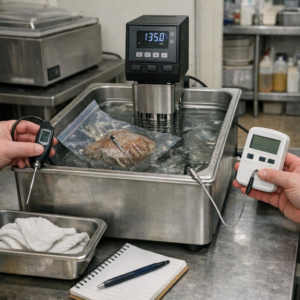
Calibration is where many operators get caught during a food safety audit. Use a calibrated reference thermometer, such as a ThermoWorks Thermapen, to compare readings against the blast chiller probe in an ice-water test or a controlled product test, then record any adjustment in your HACCP log.
A real-world example: if cooked chicken consistently cools slower on the top rack, the issue may not be the recipe-it could be a blocked fan guard or overloaded tray spacing. Regular inspection helps avoid unnecessary repair cost, failed cooling logs, and emergency refrigeration service calls.
For higher-risk operations, consider digital temperature monitoring software or wireless data loggers that alert managers when cooling cycles fall outside safe limits. These devices support compliance documentation and give maintenance teams clearer evidence before a small performance issue becomes a costly equipment failure.
Common Blast Chiller Maintenance Mistakes That Put Food Safety Audits at Risk
One of the biggest mistakes is treating blast chiller maintenance as a “repair-only” task instead of a food safety control. If the unit still runs but pulls food down too slowly, you may be creating a compliance issue long before anyone notices a mechanical failure.
A common audit problem is missing or incomplete temperature records. Health inspectors and food safety auditors often want proof that cooked food passed through the danger zone quickly, not just a verbal explanation. Using a digital thermometer and a cloud logging tool like ThermoWorks Cloud can help document cooling cycles, corrective actions, and equipment performance in one place.
- Ignoring door gaskets: Cracked seals let warm air enter, increasing compressor workload and slowing cooling times.
- Skipping condenser coil cleaning: Dust and grease buildup reduce efficiency and can lead to costly refrigeration repair services.
- Overloading trays: Dense containers or stacked pans block airflow, even when the blast chiller itself is working properly.
In real kitchens, I’ve seen audit failures come from simple habits, such as staff placing deep containers of soup in the chiller without using shallow pans. The equipment was not defective, but the cooling log showed unsafe times, which created a food safety compliance problem.
Another overlooked issue is calibration. Probe thermometers, onboard sensors, and HACCP monitoring devices should be checked regularly against a reliable reference thermometer. A small temperature error can affect cooling records, product quality, and insurance or liability concerns after a foodborne illness complaint.
Final Thoughts on How to Maintain Blast Chillers to Ensure Food Safety Compliance
Maintaining a blast chiller is not just an equipment task-it is a food safety decision. A well-serviced unit protects product quality, supports HACCP compliance, and reduces the risk of temperature abuse before it becomes a liability.
Practical takeaway: treat maintenance as a scheduled control point, not a reactive repair. Keep accurate records, verify performance regularly, and act quickly when cooling times, alarms, seals, or airflow show signs of decline.
When choosing service priorities, focus first on anything that affects core temperature reduction. Compliance depends on proof, consistency, and prompt corrective action.